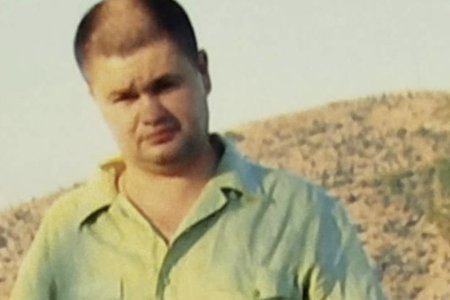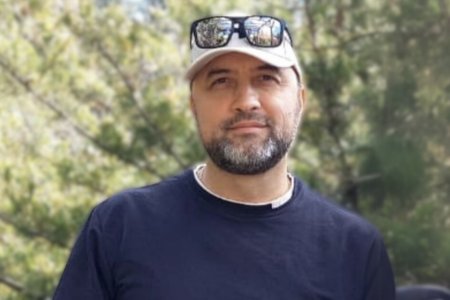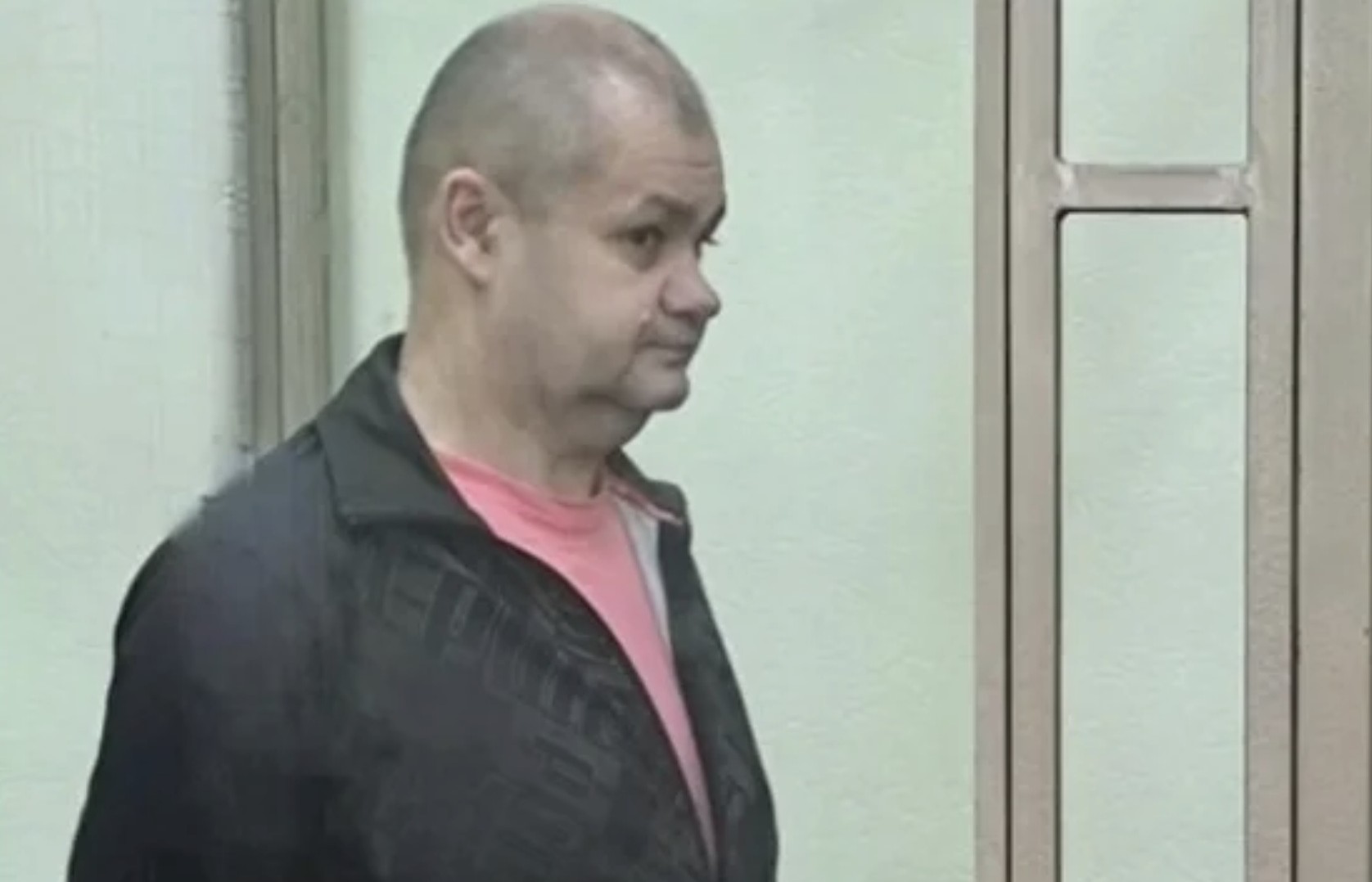
A Crimean occupation ‘court’ has sentenced 51-year-old Ruslan Chorny-Shvets to 18 years’ maximum-security imprisonment after a ‘trial’ with predetermined outcome held behind closed doors. This was Act II in Russia’s persecution of two former military servicemen – Chorny-Shvets and Serhiy Lykhomanov - from Poltava who were abducted from their homes in occupied Sevastopol over two years ago and held for long periods totally incommunicado.
The sentence was announced by the Russian occupation ‘Sevastopol prosecutor’ on 16 April 2026, with Ruslan Chorny-Shvets convicted of so-called ‘treason’ under Article 275 of Russia’s criminal code. He was sentenced to 18 years’ imprisonment in a maximum-security prison colony, and a 330 thousand rouble fine.
It was claimed that he had been “recruited” by his former fellow serviceman Serhiy Lykhomanov, with the latter alleged, in turn, to have been “recruited” by an unnamed officer of Ukraine’s Security Service [SBU]. In November 2023, “as part of their confidential cooperation with the SBU”, the men had, supposedly, gathered intelligence information about units and sites of Russia’s armed forces in occupied Sevastopol and passed this to the SBU officer.
Serhiy Lykhomanov had, purportedly, also planned to blow up a railway bridge in the city. Although the ‘prosecutor’ throws this detail in with no explanation, Crimean Process suggests that the claim is that Chorny-Shvets “helped him in this”. Whatever that means, it does not explain why Chorny-Shvets received a sentence considerably long than that against Lykhomanov; why both appear to have been sentenced twice, nor why on neither occasion were they put on trial together.
Ruslan Chorny-Shvets was born on 19 April 1974 in Lubny, Poltava oblast, and studied radio engineering at the Poltava Higher Military College of Communications. It was likely there that he met Serhiy Lykhomanov (b. 3 June 1973) who also graduated in radio engineering. Chorny-Shvets was sent to serve in Sevastopol, where he married and began raising three children, with the need to provide for them prompting him to leave the military in the 1990s. Lykhomanov also served in a radio engineering battalion, first on Ai-Petri, then in Feodosia and finally in Sevastopol, where he left military service in 2007. Both men had clearly become established in Crimea and remained after Russia’s invasion and occupation of the peninsula. Russia has made it essentially impossible, especially for people with children, to live on occupied territory without taking Russian citizenship. The use of this citizenship as pretext for ‘treason’ charges under Russian legislation seems especially cynical in the cases of both Chorny-Shvets and Lykhomanov given the Russian emphasis on the fact that both men earlier served in Ukraine’s Armed Forces.
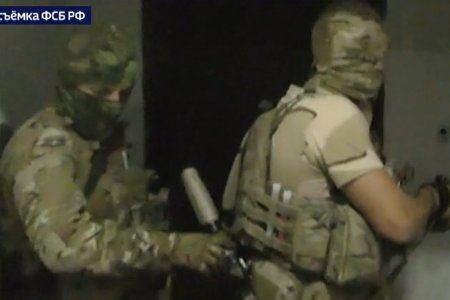
Armed Russian FSB officers burst into both men’s homes on 27 December 2023, carrying out searches and then taking the men away. Lykhomanov’s sister has since said that his family knew nothing of his whereabouts for two months, and it is likely that the same was true of Chorny-Shvets. It is now known that Chorny-Shvets was held in a SIZO [remand prison] in Sevastopol, while Lykhomanov was taken to SIZO No. 8 in Simferopol, where he was held in solitary confinement. In one of the few messages Lykhomanov was able to pass on, he made it clear that any ‘confessions’ had been extracted through threats against his family. It is, unfortunately, also very likely that both men were subjected to physical torture. In Chorny-Shvets’ case, his very imprisonment is akin to medical torture as he suffers from sugar diabetes and needs two doses of insulin each day. His state of health has deteriorated sharply in captivity. Russia’s own regulations mean that he should not be in detention, but it has long been clear that all such rules and regulations are openly flouted in cases involving Crimean Tatar and other Ukrainian political prisoners.
Chorny-Svets’ 70-year-old mother is in mainland Ukraine, and neither she, nor his brother and sister have had any contact with him since December 2023. More is known about Serhiy Lykhomanov however it is likely that both men were held incommunicado for almost 18 months.
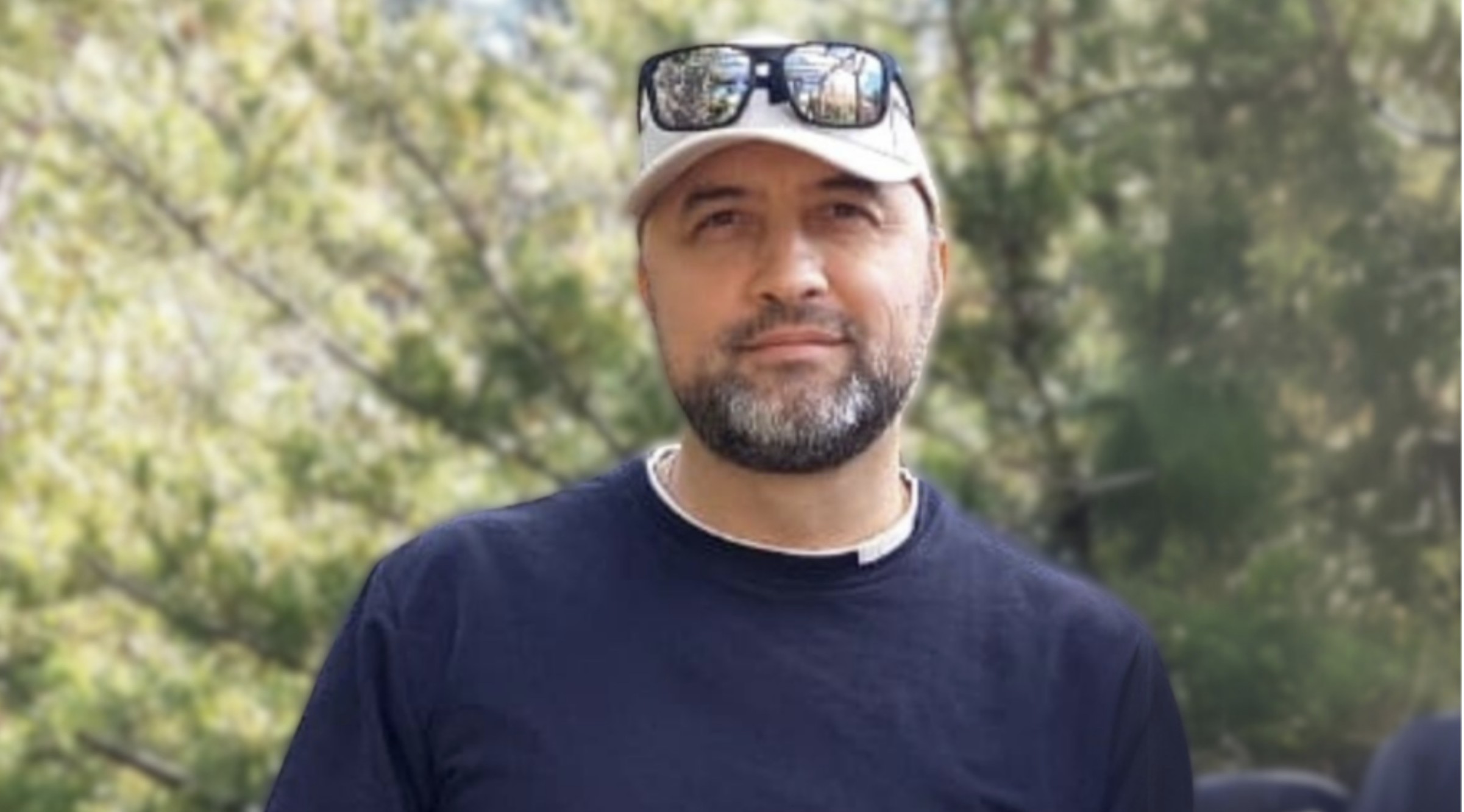
Lykhomanov was first sentenced in May 2024 to five years and a 50-thousand rouble fine, with the charge then only of transporting and keeping explosives. He was claimed to have held industrial level and/or foreign explosive material in the family’s one-room apartment. The ‘judge’ - Pavel Kryllo is a Russian who was transferred to the occupation ‘Gagarin district court’ in Sevastopol in 2016, and has previously taken part in other politically motivated ‘trials’, against Ukrainians Ihor Movenko and Volodymyr Prysich.
Nothing was reported of a similar ‘trial’ against Chorny-Shvets, however the sentence reported on 16 April 2026 says that the ‘court’ took into account his earlier sentence “for the illegal procurement, transportation and possession of explosive devices and substances”.
These earlier sentences over the same impugned actions, make the subsequent charges seem even more implausible.
It was at this first ‘trial’ that Lykhomanov, who had previously been held incommunicado and without legal counsel, ‘admitted the charges and rejected the services of an independent lawyer. He did, however, managed to pass on a message to his family making it clear that he had been placed under huge pressure, with his captors threatening to hurt his family. His sister, Tetiana, told Suspilne Crimea that her brother would have signed anything if they threatened to hurt his small child.
Lykhomanov was convicted and sentenced that first time in a day, with the second ‘trial’ also taking next to no time. Although the ‘case’ was passed to the Southern District Military Court back on 20 May 2025, there were almost no hearings before ‘judge’ Denis Aleksandrovich Galkin passed sentence on 8 October 2025. Lykhomanov was sentenced to 15 years’ maximum-security imprisonment, with the first five years in a prison, the harshest of Russian penal institutions. He was also fined another 50 thousand roubles. The charges were of ‘state treason’ (under Article 275) and ‘planning an act of terrorism which caused considerable damage to property, and other grave consequences’, under Article 205 § 2. Judging by the charges against Lykhomanov, who was said to have an unnamed accomplice, and the details published on 16 April 2026, it seems likely that the charges against both men were basically the same. Lykhomanov was claimed to have, from 1 to 21 November 2023, found an unnamed ‘accomplice’, presumably Ruslan Chorny-Shvets, with the ‘accomplice having, on 21 and 25 November 2023, passed Lykhomanov the information he had gathered, with the latter claimed to have passed this on to the SBU officer “during the period from 25 to 31 [sic] November 2023”
It was also claimed that there had been a plan to blow up a railway bridge across the Belbek river on 9 October 2023. Lykhomanov’s alleged role is linked with taking a photograph and sending this to the supposed ‘SBU officer’ and taking an explosive device and other components from a hiding place. Had there genuinely been evidence of such a plan, there would have been no reason to stage relatively minor ‘trials’ first.
Crimean Process notes that the ‘trial’ of Ruslan Chorny-Shvets was much longer than has become the norm. The same cannot, however, be said about the passing of the verdict, with illegal Russian ‘judge’ Igor Kozhevnikov, scarcely pretending to need time to consider his verdict. He is, it appears, notorious for the speed with which he churns out such sentences for supposed ‘treason’.
Although it was only Lykhmanov who was accused of ‘planning an act of terrorism’, the sentence against Chorny-Shvets was three years long. No explanation is given, however this would not be the first time that much harsher sentences have been passed against Ukrainians who refuse to provide the ‘confessions’ demanded of them (see the case of Volodymyr Dudka and Oleksiy Bessarabov.).
There are strong grounds for concern about the health of both Ruslan Chorny-Shvets and Serhiy Lykhomanov, and publicity is vitally needed to their plight. Please help in any way you can!