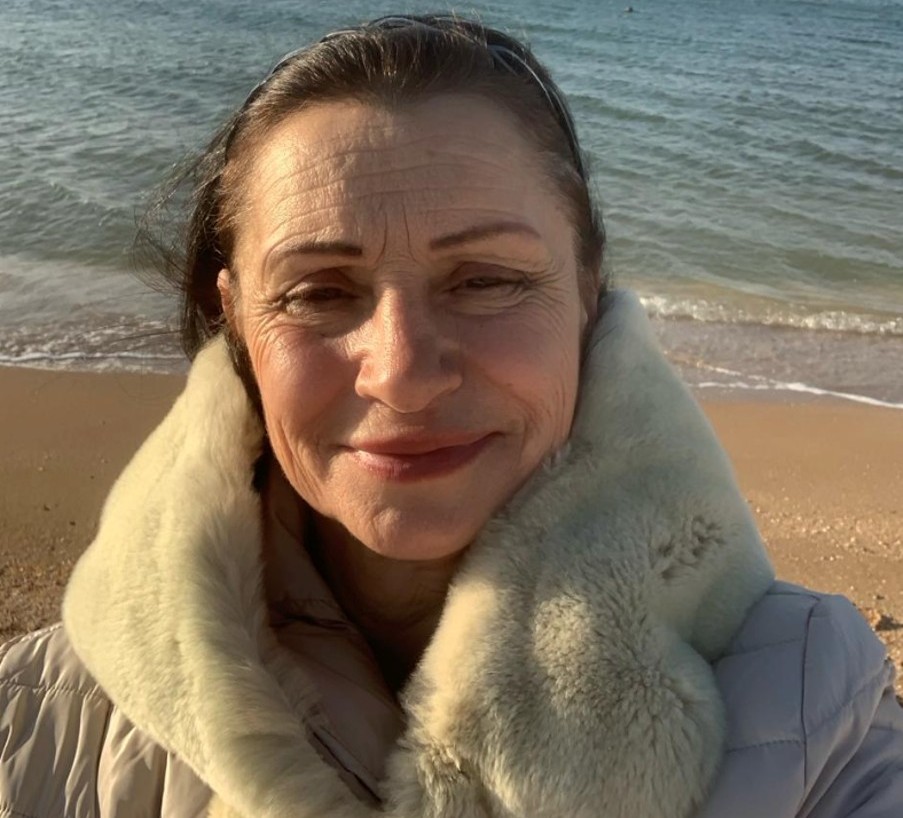
Almost two and a half years after Larysa Haidai (b. 5.03.1964) was abducted from her home in occupied Crimea and vanished, her whereabouts are, at least, known, but her health is giving grounds for concern. Larysa’s relatives have told the Crimean Human Rights Group that she has lost almost 15 kilograms and is a very weak state in the appalling conditions of SIZO, or remand prison, No. 1 in occupied Simferopol.
Larysa Haidai disappeared shortly after her 60th birthday, on 27 March 2024. For almost a year and a half, her family had no confirmation even that she was still alive, and it was only after almost two years that the Russians admitted that she was in custody.
In early August 2025, the Crimean Tatar Resource Centre [CTRC] reported that three Crimean women- Larysa Haidai; Elvira Abliazova (or Aboiazova) and Tetiana Pavlenko (Symonenko) - who had been abducted in March 2024 had been ‘found’ in SIZO No. 2. This is one of two new remand prisons opened in occupied Crimea soon after Russia’s full-scale invasion of Ukraine and is believed to be controlled by Russia’s FSB. It is used largely to hold political prisoners and civilian hostages. CTRC spoke recently of at least 55 people being held totally incommunicado at the SIZO, almost certainly without formal charges.
It was only on 18 March 2026 that Crimean Tribune learned from a contact within the Russian prison service that Larysa Haidai and her neighbour Elvira Abliazova (or Aboiazova) had been moved from total isolation in SIZO No. 2 to SIZO No. 1 and had both been officially charged. As in the vast majority of these cases which begin as enforced disappearances, both women are charged with ‘treason’ under Article 275 of Russia’s criminal code. There has been a massive increase in such ‘treason’ trials since Russia’s full-scale invasion with convictions and long sentences guaranteed. All such ‘treason’ or ‘spying’ cases are held behind closed doors, however it seems likely that many of the victims are targeted merely for their pro-Ukrainian and / or anti-war position.
Crimean Tribunal noted that the FSB even have their own jargon for their process of turning enforced disappearance, very often accompanied by torture, into purportedly legal detention and official charges. They call it ‘defrosting’. There would be no reason to hold people incommunicado, without any charges having been laid, for two years were they suspected of a real crime. The FSB use such methods to torture, coerce or terrorize people held in total isolation, without real lawyers, into signing ‘confessions’ and to fabricate ‘evidence’.
There is no further reliable information about Tetiana Pavlenko (Symonenko). Nor is there about a terrifyingly large number of other Crimean men and women abducted and held incommunicado for months or years. They include: Tetiana Shtrifanova; Tetiana Maliar (b. 1968) and her daughter, Olha Behei (b. 1992); Khatidzhe Buyukchan; Olena Voinarovska; Tetiana Diakunovska; Olha Kravchuk; Yevhenia Samoilova and Tamara Chernukha