Russia’s State Duma has passed in its first reading a draft law clearly aimed at speeding up the appropriation of huge amounts of private property in occupied parts of Donetsk, Luhansk; Kherson and Zaporizhzhia oblasts. Once in force, the bill will not only formalize the aggressor state’s already rampant seizure of property claimed to be ownerless but will also significantly reduce the amount of time Ukrainians have to establish their right to their own property.
Duma readings and votes are a mere formality, and there is every reason to assume that the bill adopted in its first reading on 19 November 2025 will shortly become law. News of Donbas explains why the new bill will have a catastrophic effect for Ukrainians hoping to establish their property rights. On 14 March 2025, Russian leader Vladimir Putin issued a decree ordering the creation of ‘special regional commissions’ to take applications from Ukrainians for ‘permission’ to register their own property. Once an owner, not living on occupied territory, receives such permission, they can formalize power of attorney at a Russian consulate for a person to go to occupied territory to register the property.
That did mean that Ukrainians could, at least, hope to establish their property rights without themselves trying to get to occupied territory, which is difficult and has, on many occasions, led to Ukrainians either disappearing or being arrested and sentenced to huge terms of imprisonment. It was, in fact, always a fairly limited option. There are no such consulates in government-controlled Ukraine, and it is by no means easy to find such a person to give power of attorney, especially since the person must be in, or travel to occupied territory (or Russia) and should, ideally have Russian citizenship. There was, however, also a law, signed by Putin in July 2025, which said that Ukrainians could apply through these ‘commissions’ for permission to register their own property until 1 January 2028.
That now looks set to change with the bill passed in its first reading on 19 November proposing to bring the deadline for such applications forward to 1 July 2026. This will all but eliminate any chance of Ukrainians establishing their property rights to land while it remains under Russian occupation.
Having thus massively increased the number of properties to be treated as ‘ownerless’, the Russian legislators then propose, through this same bill, to continue, while purporting to legalize, the already establishing practice by the occupation ‘authorities’ of ‘confiscating’ such property.
Legislators of an invading power, which mercilessly bombed and shelled Ukrainian cities propose that the purportedly ‘ownerless’ residential properties be handed to residents whose own homes were destroyed or made uninhabitable “as the result of military action or acts of aggression against the RF”. A practice, already widely seen in occupied Mariupol, would now be allowed in legislation, with the possibility also allowed of selling or renting it to “citizens of the RF”.
The bill’s objective, it is claimed, is to speed up “the integration” of these newly occupied territories into the RF. In fact, what Russia is very evidently trying to do is to eliminate Ukrainian identity on Ukrainian soil, with various methods used. While all Ukrainians are, to varying degrees, viewed with suspicion, the first task is to ensure that all residents of occupied territory have Russian citizenship. A decree issued by Putin on 20 March 2025 actually set a deadline of 10 September 2025 to receive such citizenship or risk being forcibly deported from their own homeland (see: Ukrainians in occupied Ukraine without Russian citizenship labelled ‘foreigners’ and face deportation).
As already seen in occupied Crimea, it seems clear that another plan for destroying Ukrainian identity is by settling large numbers of Russians on occupied territory. In April 2025, Petro Andriushchenko, Director of the Occupation Research Centre and former Adviser to the Mayor of Mariupol, reported the “total plundering of Mariupol residents”. He said that the number of apartments which were being confiscated as ‘ownerless’, despite having owners was increasing by the day. This was confirmed by the publication 0629.com, which scrutinized the latest list of supposedly ownerless apartments and found that the owners of many were living in them (or trying to) (see: Russia intensifies plunder in policy to bring in Russians and eliminate Ukrainian identity in occupied Ukraine)
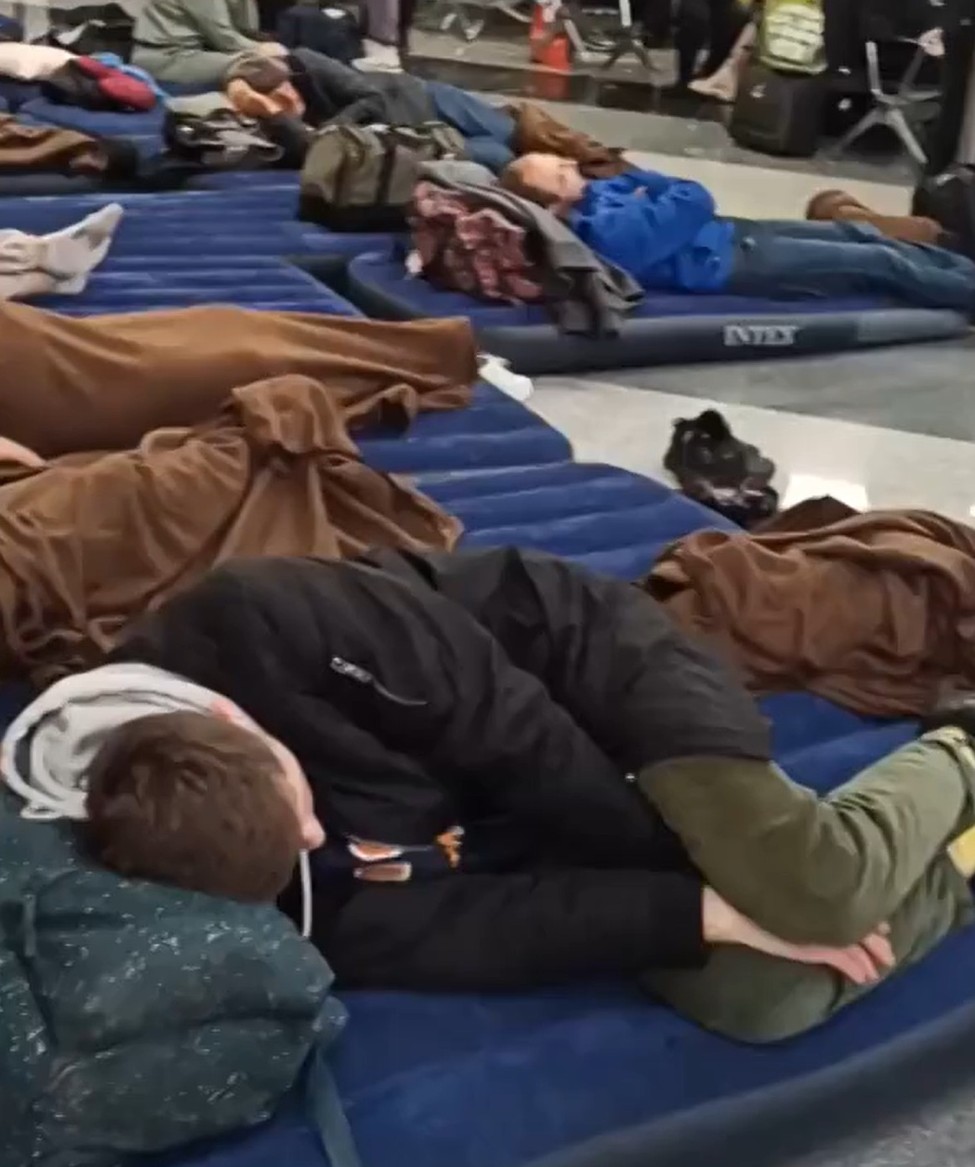
As is almost always the case, Moscow’s evident political aims in trying to eliminate Ukrainian identity by forcing its citizenship; imprisoning or deporting Ukrainians viewed as unreliable (unwilling to be ‘russified’) and bringing in Russians, are combined with corrupt motives. While always dangerous, since late 2024, it has also become increasingly difficult for Ukrainians to return to their own cities under Russian occupation, with the waiting time at Sheremetyevo Airport in Moscow huge and the ‘filtration’ measures often concentrating, not only on the person’s views about the war, about Ukraine’s territorial integrity, etc., but also on every scrap of property that the person possess. RIA-Melitopol wrote earlier in 2025 that there are grounds for assuming that the Russian FSB at the airport have lists of property which the invaders want confiscated.


