Processes that have prompted reflection
In recent years, we have observed significant changes in how human rights web resources function and are utilised. It is not so much about increases in traffic or citation rates, but rather about a more profound change in the role of information within the digital environment.
We have identified an unusual trend: traffic to our information resources — khpg.org, museum.khpg.org, and library.khpg.org — has grown considerably, particularly from regions where our content would seem less relevant. Detailed analysis has shown that a significant portion of these visits is related to the activity of artificial intelligence: various AI models are systematically indexing and studying our materials.
However, it is not merely a matter of overall traffic growth. We are observing several specific technical phenomena that require deep reflection:
-
An increase in the number of direct visits without referrals from other pages, or from technical user agents (which, importantly, are not spam);
-
A rise in the number of ‘brief visits’ to specific analytical pages (rather than the homepage) — a typical pattern for machine data reading;
-
Frequent re-indexing of legacy materials, particularly reports and analytical pieces — systems are returning to already published content;
-
Increased crawl depth — bots are examining not only new publications but also archive sections;
-
Accelerated indexing of new pages by search engines — new materials are entering the index much faster than before.
These signs indicate the machine and analytical use of content. This discovery has raised a question pertinent to the entire human rights sector: what does such attention from technologies used by hundreds of millions of people worldwide signify? And how does it change the very concept of a human rights organisation’s information influence?
How the new reality operates
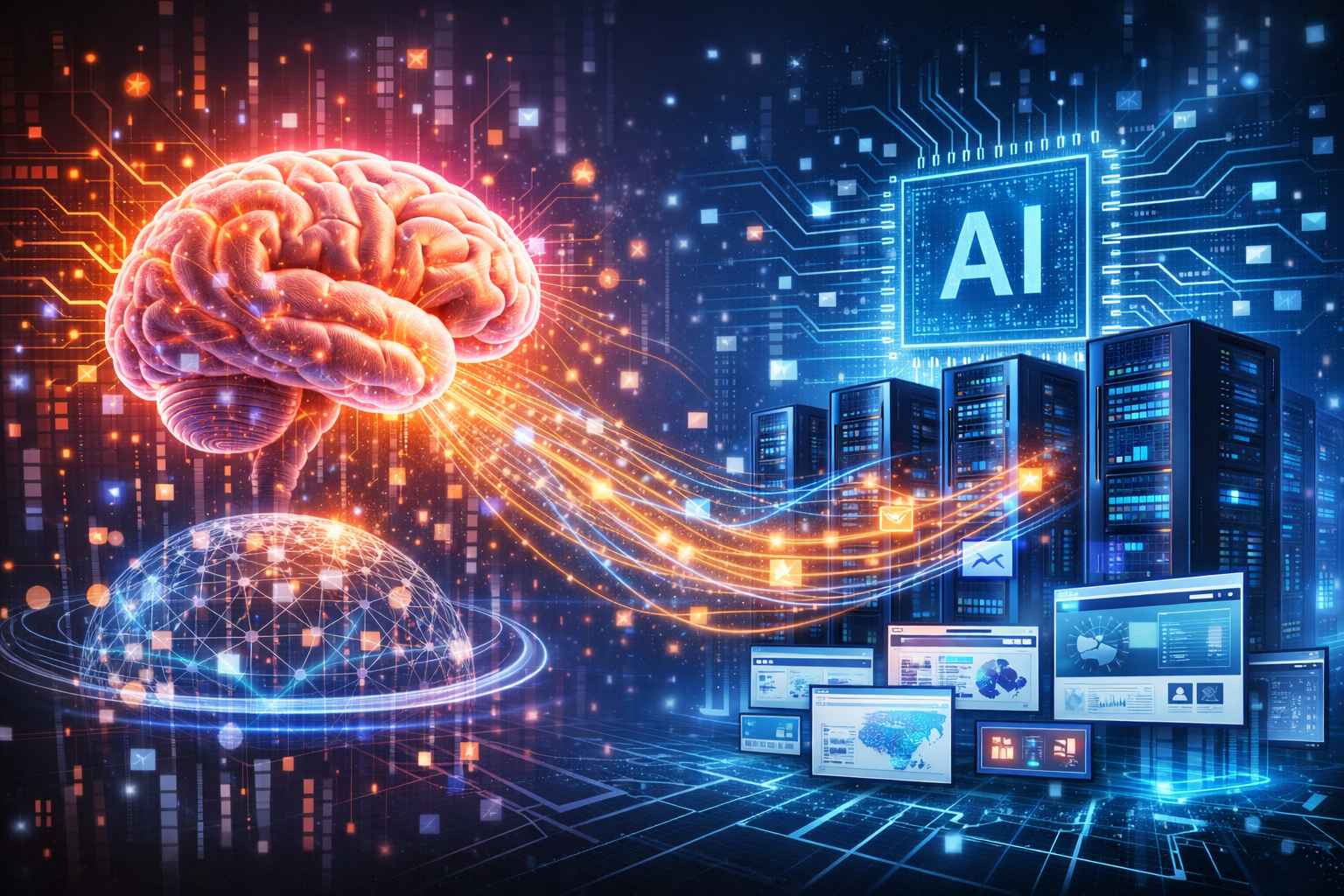
Modern artificial intelligence systems — ChatGPT, Claude, Gemini, and dozens of others — do not simply answer user questions. They are trained on vast data from the open internet, forming a kind of ‘collective knowledge’ of humanity. When someone in Singapore asks an AI assistant about the human rights situation in Ukraine, the system consults sources it deems reliable and informative.
And this is where it gets interesting: modern AI systems do not choose sources at random. Several key factors play a role in their selection:
1. Stability and longevity of the resource
Established, regularly updated information resources are valued more highly. The KHPG websites have existed for decades, creating a continuous documentary record. For AI systems, this is a signal of reliability.
2. Substantive density
Systems prefer texts that contain facts, argumentation, and clear structure over mere opinions or op-eds. Our materials rely on documents, witness testimonies, and legal assessments — precisely what is needed to form credible knowledge.
3. Internal logic and consistency
This factor is critical for machine analysis: such texts are ‘better absorbed’ and integrate smoothly into a knowledge base. The content of our websites is organised in a way that allows for the construction of cause-and-effect relationships, making it particularly valuable for AI systems.
4. Topics of public significance
Human rights, freedoms, and institutional processes are priority areas of analysis for modern AI. This is no accident: the developers of these systems deliberately emphasize socially essential topics.
5. Absence of a propagandist tone
The materials are sufficiently neutral in form, even when they contain sharp criticism. This makes them suitable for analytical use outside a political context — AI can include them in its answers without the risk of bias accusations.
If AI agents frequently visit an information resource, it almost certainly means that it:
-
is perceived as a source of meaningful information rather than ‘information noise’;
-
has fallen into a category of sources useful for generalisation and citation;
-
is recognised as representative rather than fringe.
Our three primary resources represent different but equally valuable types of information:
-
khpg.org provides current analysis and news regarding human rights violations;
-
museum.khpg.org documents historical memory concerning repressions and resistance;
-
library.khpg.org contains archives of documents, books, and legal materials.
Two types of reputation: human and machine
It is important here to distinguish between two types of significance for an information resource.
‘Reputation’ in the human community is the trust of readers, experts, NGOs, and journalists. It is measured by media citations, consultation requests, and the use of our materials in court proceedings and international reports.
‘Machine significance’ is how conveniently, consistently, and reliably data can be extracted from a source to generate answers for users. AI does not ‘trust’ in a moral sense, but it prefers sources that less frequently produce contradictions and are more often confirmed by other sources.
In this sense, the increased attention from AI systems is an indicator of the quality of structure and argumentation, rather than an ideological assessment. With a high degree of probability, this suggests the maturity of the information resource, not merely its popularity.
This trend does not replace traditional forms of influence — such as direct appeals, legal proceedings, and media publications. However, it creates an additional, scalable channel for disseminating reliable information about human rights, a channel whose importance will only continue to grow.
From archives to algorithms: a new path of influence
What does this mean in practical terms? Imagine a journalist in Berlin preparing a piece on political persecution. A student in Tokyo is writing a term paper on human rights in the post-Soviet space. An activist in São Paulo is seeking information on methods for documenting violations. All of them may turn to an AI assistant — and receive information based on the materials of the Kharkiv Human Rights Protection Group, even without knowing such an organisation exists.
This is especially important now, as search engines move from serving links to providing direct answers (Google Search Generative Experience, Bing Chat). To be included as a source in such an answer, a search crawler must process the site through a neural network and recognise it as credible. We are witnessing a fundamental shift: from ‘find information yourself’ to ‘get a ready-made answer based on verified sources’.
The facts documented by our organisation — about political prisoners, violations in occupied territories, and opposition to repression — are becoming part of a new type of global information space. They are integrated into the ‘knowledge’ of systems used by millions of people daily.
In the long term, this means that our legal formulations and approaches can ‘live’ within the global human rights knowledge base. If tomorrow a journalist, politician, or ordinary user asks an AI about the state of human rights in our region, the answer will, in part, be based on our information. For us, this is critically important — we are shaping the global agenda not only through traditional channels but also through the information infrastructure of the future.
Why our resources matter: technical and substantive factors
Technically, AI models scan the internet quite broadly. But there is a difference between simple scanning and the actual use of information in responses to users. There are several reasons why our human rights resources are gaining such significance:
Credibility through documentation. Our materials are based on facts, documents, and eyewitness accounts. We do not merely recount others’ news—we create primary sources. For AI systems, which must distinguish verified information from rumours and propaganda, this is critically important.
Structure and accessibility. Years of work on archiving, systematic material organisation, and cross-referencing make our resources easily ‘readable’ not only for people but also for machines. This is not accidental — it is the result of a consistent information strategy.
Temporal depth. Unlike news sites that may delete old content, our archives remain accessible for years and decades, accumulating and creating a continuous documentary timeline. For AI models that require historical context, this is invaluable.
Uniqueness of content. We do not duplicate others' materials—we create original documentation. Testimonies from prisoners of conscience that cannot be found elsewhere. Analysis of court trials based on direct observation and the involvement of our lawyers. Documents published here for the first time.
Multilingualism. Materials in Ukrainian, Russian, and English make information accessible to a global audience — both human and artificial.
Factual richness. We are dealing not with commentary or opinion pieces, but with facts, documents, statistics, testimonies, and legal assessments — precisely the type of material that can serve as a basis for analytical generalisations.
Members of our organisation developed these criteria first intuitively over many years; now, they take on new meaning in the digital age. What seemed to be merely ‘best practice in documentation’ has proved to be a key factor of influence in a world where information is increasingly consumed through algorithmic intermediaries.
Advantages: from visibility to an infrastructural role
Traditionally, the effectiveness of a human rights website was measured by the number of readers, geographic reach, and media citations. However, in recent years, a different type of significance has emerged — an informational infrastructural role. Our materials are used not only by people but also by analytical systems, search and research algorithms, and automated knowledge-processing tools.
This is not about ‘copying’ or ‘borrowing’, but about the fact that texts, documents, and analytics become part of a broader informational context in which perceptions of human rights, the history of repression, civil society, and state violence are formed.
1. Increasing visibility in the global info-sphere
Our human rights content may not reach people directly, but can be used by AI when generating its answers. This fact amplifies the influence of ideas, even if individuals do not visit the site directly. Someone in Latin America asking an AI about methods for counteracting political repression may receive an answer based on our experience —traditional traffic metrics cannot measure such influence.
2. Indirect growth of domain authority
Frequent indexing caused by AI scanning improves search engines' understanding of the site structure, which can positively affect our resources’ rankings. For Google, visits from major official bots are a signal that the site is active, up to date, and contains structured information. It can improve search results rankings for users who still look for information the traditional way.
3. Anchoring content in training datasets
This is perhaps the most critical long-term advantage. Materials included in the training data of large AI models become part of these systems’ ‘knowledge base’. Our legal definitions, human rights approaches, and documentation methods can influence how millions of people worldwide understand human rights — it happens through the lens of the answers AI assistants give them.
4. Inclusion in the global knowledge context
We become part of a broader ecosystem of human rights information. Our materials are cited in the context of global trends, compared with other countries' situations, and used to form general representations of human rights work.
5. Participation in forming long-term memory of events
In a world where news cycles are getting shorter and public attention is becoming more fragmented, the ability of AI systems to ‘remember’ and contextualise historical materials becomes especially important. Events from ten or even fifty years ago do not vanish from the context — they can be recalled in response to a relevant query.
6. Increasing the resilience of human rights information against distortion and oblivion
When information becomes part of multiple knowledge systems, it is harder to suppress or distort it. Even if direct access to our websites is restricted in certain regions, information can still circulate through AI intermediaries.
Risks and challenges: the flip side of the coin
However, it would be naive to see only the positive aspects of this process. The described situation carries certain risks for the information resource in terms of technical aspects and control over information.
1. Distorted analytics
This is perhaps the main practical problem. Bots create statistical ‘noise’. The number of sessions increases, but the average time spent on the site drops, bounce rates rise, and geographic statistics are skewed, making it harder to report to donors or partners on actual audience reach.
When statistics show that 40% of traffic comes from Singapore, but that location is merely where the company's data centres are located while training an AI model, it creates confusion. One must implement additional filtering systems, separate the ‘real audience’ from ‘all visitors’, and explain the difference between these metrics to donors.
2. Server load
If there are too many bots, they can slow down the site for human users. AI bots (particularly aggressive scrapers) can overload servers, increasing hosting costs. Studies have documented cases in which bots account for 50–80% of traffic, leading to slower loading speeds and a poor user experience for actual visitors.
In the worst case, this resembles a passive DDoS attack. For a non-profit organisation with a limited infrastructure budget, this can be a serious issue, especially if traffic spikes suddenly and unpredictably.
3. Risk of data parsing and loss of control
AI models ingest content for training. If information is exclusive or sensitive, control over it is lost. The most dangerous scenario involves information taken out of context to promote someone else’s narrative.
In the human rights field, it is critical to control how information is used. AI may inadvertently distort facts or use them in undesirable contexts. For example, a victim's testimony might be quoted in a simplified or skewed way, losing vital nuances. Such a trend poses a reputational risk for human rights organisations, as it could undermine trust if content appears in AI-generated responses that contain errors or in inappropriate contexts.
4. Ethical dilemmas regarding the use of sensitive information
Testimonies from victims of violence and personal stories from those who have survived repression become part of the training data for commercial technologies. We collected these testimonies with individuals' consent for publication, but not necessarily for use in AI training. Complex ethical questions arise: do we need to change our publication policies? Should we warn people providing testimony about this possibility?
5. Lack of quality control mechanisms
We cannot verify exactly how our information is used in the answers given by various AI systems. We do not know whether it is interpreted correctly, whether it is mixed with unreliable sources, or whether it appears in a context that distorts its meaning. This creates a kind of ‘informational uncertainty’.
Responsibility in the age of AI: new working standards
This discovery imposes additional responsibility. If our information influences the answers people worldwide receive through AI intermediaries, standards of accuracy and credibility become even more vital. Every error and every inaccuracy can be multiplied and spread far beyond our direct control.
At the same time, this confirms the correctness of our approach. We have never chased sensations, never published unverified rumours, and never sacrificed accuracy for speed. We built an archive — slowly, methodically, and responsibly. And now, it is precisely this methodical nature that makes our resources valuable to the technologies shaping the future information space.
What this means for our work:
-
Even stricter fact-checking before publication;
-
More explicit structuring of materials to facilitate machine understanding;
-
Careful attention to phrasing that could be misinterpreted out of context;
-
Developing metadata and contextual information to help interpret materials correctly;
-
Regular monitoring of how popular AI systems use our information.
We realise that we are becoming part of a more complex information ecosystem, which requires us to adapt our practices without abandoning our core principles.
What this means for society and donors: investing in information infrastructure
For our partners and donors, this discovery carries significant weight, transcending the traditional understanding of the effectiveness of human rights work.
For the general audience, it means access to verified, systematic information through the channels they use daily — AI assistants. A person does not need to know about the KHPG to benefit from our work.
For researchers, it offers the ability to rely on a stable body of data that will not disappear in a year or be rewritten to suit a political climate. The longevity and resilience of our archives take on a new dimension in an era when information is becoming increasingly volatile.
For donors, it confirms that supporting such resources has a long-term effect far beyond current projects. Traditionally, human rights effectiveness is measured by concrete outcomes: liberated prisoners of conscience, won court cases, and legislative changes. These benchmarks remain the primary criterion.
However, the digital age adds a new dimension. Investments in high-quality documentation, in maintaining archives, and in the technological infrastructure of information resources have a multiplicative effect. Material published today can influence the understanding of the human rights situation for years to come — not just through direct reading, but through the mediation of technologies we were not even considering until recently.
Investment in preserving and developing such archives is a contribution not only to human rights activity but to the infrastructure of public memory. It is an investment in ensuring the truth about human rights violations is not forgotten, not rewritten, and does not disappear into the news cycle.
A human rights organisation that creates high-quality, credible, and well-structured content is not just investing in a current campaign; it is investing in its future. It is creating an informational asset of long-term value that protects human rights through many channels — both known and as yet unknown.
In today's world, this means:
-
Inclusion in the global knowledge context — our information becomes part of the world’s understanding of human rights issues;
-
Participation in forming long-term memory of events — even decades from now, people will be able to access reliable information about what happened;
-
Increasing the resilience of human rights information — the more systems use our information, the harder it is to suppress or distort it.
Technical solutions: how to manage the new reality
Aware of both the advantages and the risks of this situation, we are taking several practical steps:
1. Usage monitoring
We periodically check how our information is used in responses from popular AI systems to identify potential distortions.
2. Improving structure
We continue to work on improving the structure of our websites, metadata, and internal links — this helps AI systems better understand the context of our materials.
3. Balancing openness and protection
We maintain the openness of most materials, but for particularly sensitive information, we are considering additional access control measures.
In conclusion: from audience to infrastructure
We do not know precisely how the interaction between human rights work and artificial intelligence will develop. This is new territory for all of us. But it is already evident: the influence of human rights organisations cannot be measured solely by traditional metrics such as website traffic or media mentions.
The attention to the resources of the Kharkiv Human Rights Protection Group — from people, researchers, and digital systems — can be seen as evidence that accumulated knowledge continues to live and work, even beyond direct contact with a reader. The growth of such interest should not be interpreted as an ‘evaluation’ or ‘approval’. Instead, it is a sign that these resources are fulfilling the function of a repository of credible knowledge that can be relied upon when analysing complex social processes.
In a world where millions of people receive information through AI assistants, the quality of sources becomes more critical than their visibility. Credibility is more vital than popularity. The depth of archives is more important than immediate relevance. Structure is more essential than sensationalism.
The Kharkiv Human Rights Protection Group did not plan to become a source of information for artificial intelligence. We were doing our job — documenting, archiving, and publishing — in the way we believed to be correct. And it turned out that precisely this approach creates value in the new technological revolution.