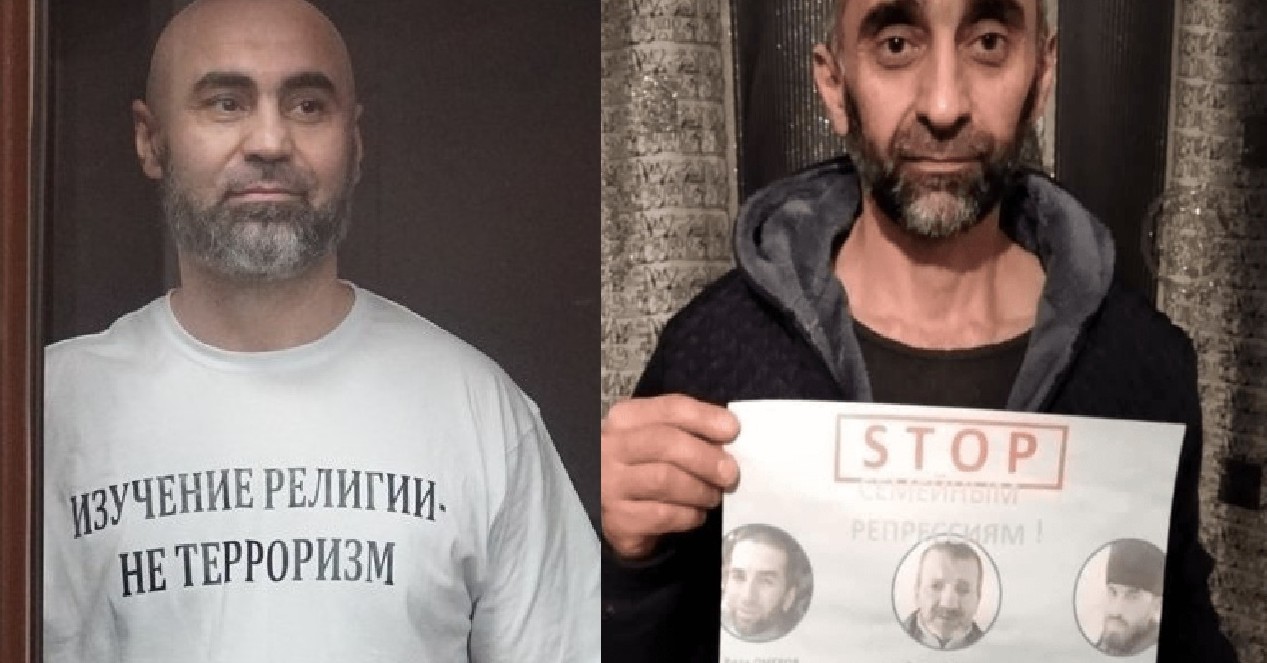
Russia has stripped two more Crimean Tatar political prisoners of the Russian citizenship it first forced them to take. While neither Rustem Taiirov nor Eldar Kantimirov took Russian citizenship as a matter of choice, removal of it now almost certainly means that both men will be unable to return to their Crimean homeland while it remains under Russian occupation. Several other political prisoners have already been stripped of this citizenship over the past year, with the number, unfortunately, likely to rise.
Zarema Barieva from the Crimean Tatar Resource Centre reported that Rustem Taiirov had been stripped of his Russian citizenship on 22 January 2026. Since this had only just been learned, although the formal decision dated back to May 2025, the earlier information about Eldar Kantimirov may well have also been received belatedly. With at least seven such cases over the last nine months, it is likely that this number will rise, as Russia increasingly weaponizes citizenship to drive out Crimean Tatars and other Ukrainians with a pronounced civic position whom it was otherwise unable to silence.
In 2020, as Russia’s ‘trial’ of eight Crimean Tatar imprisoned civic journalists and activists was ending, civic journalist Marlen (Suleiman) Asanov explained to the court that he had been told by a Russian FSB investigator that it was his own fault that he was imprisoned. They had given him warnings to leave Crimea, and he hadn’t listened. He is now serving a 19-year sentence on totally fabricated and illegal charges. There are no grounds for seeing the FSB ‘investigator’s’ words as an exaggeration or as an isolated case. Very many of the Crimean Solidarity civic activists and journalists now imprisoned had earlier faced administrative prosecutions, armed searches, etc. The same was true of other Crimean activists, with some of them deciding to leave occupied Crimea. It is never easy to take such a decision to leave ones home, but it is particularly difficult for Crimean Tatars, many of whom were born in exile after the 1944 Deportation and whose families had lived with the hope of returning to Crimea.
Although Russia’s weaponization of citizenship began in Crimea back in 2014, all restraint was dropped after it launched its full-scale invasion of Ukraine in 2022. On 20 March 2025, Russian leader Vladimir Putin issued a cynical decree, according to which Ukrainians in occupied Ukraine without Russian citizenship can, from 10 September 2025 be labelled ‘foreigners’ and deported.
One of the tragic consequences of this extraordinarily illegal ‘decree’ is that Russia is now using fabricated criminal charges as a weapon to drive out civic journalists and activists, as well as others who have refused to conceal their pro-Ukrainian position. Those Crimean Tatars, like Marlen Asanov, who refused to be silenced or terrorized into leaving occupied Crimea, and who have been sentenced to sentences of up to 20 years’ imprisonment, may now also be stripped of the citizenship which would at least enable them to return to Crimea, if it is still occupied. The moves are also a threat to others, that they will face, not only imprisonment, but deportation for their refusal to remain silent. Russia has used most fake ‘terrorism’ changes against Crimean Tatars, in particular activists and journalists of the crucial Crimean Solidarity human rights movement.
Rustem Taiirov (b. 31.01.1970) has been imprisoned since 17 August 2021 when he was arrested, together with four other Crimean Tatars, all of whom had actively visited political trials, taken part in peaceful flashmob actions in support of political prisoners, etc. He was sentenced on 31 May 2023 to 12 years’ maximum-securiy imprisonment, with the first four years in a prison, the worst of Russian penal institutions. It was while he was held in the notorious Vladimir Central prison that he was formally notified that he had been stripped of his citizenship.
Eldar Kantimirov (b. 10.07.1980) was also active in supporting political prisoners and had already faced various forms of administrative prosecution and other harassment. He was arrested with three other Crimean Tatars on 10 June 2019, on essentially identical charges as those against Rustem Taiirov. He was also sentenced to 12 years’ maximum-security imprisonment and is currently imprisoned in Buryatia, thousands of kilometres from his family and home in Crimea – a home that Russia is now denying him.
The charges against Taiirov, Kantimirov and around 150 other Crimean Muslims, most of them Crimean Tatars, differ little from ‘trial’ to ‘trial’. Since the decision to deprive the men of their citizenship is based on the supposed ‘severity’ of the charges against them, it is worth stressing that the ‘terrorism’ indictment is based solely on a flawed and secretive supreme court ruling from 2003 which declared Hizb ut-Tahrir, a Muslim organization which is legal in Ukraine ‘terrorist’ and on entirely unproven allegations that the Crimean Tatars are ‘involved’ in Hizb ut-Tahrir.
All of these ‘trials’ and convictions are in flagrant violation of international law and the men’s right to a fair trial, and all of the men are recognized by the Memorial Support for Political Prisoners Project as political prisoners.
It is likely that all or almost all Crimean Tatar and other Ukrainian political prisoners are now at risk of what Zarema Barieva called “hybrid deportation at minimal cost”. In essentially all cases, Russia fabricates charges of ‘treason’; ‘sabotage’ or ‘terrorism’, with the supposed severity of the indictment then used as excuse for effective deportation from their own homeland.
In November 2025, it was learned that Vladyslav Afanasiev (b. 17.12.1990), a political prisoner from Feodosia in occupied Crimea, had been stripped of his Russian citizenship. Afanasiev, a history graduate, has been imprisoned since the summer of 2024, with the ‘treason’ charges against him (under Article 275 of Russia’s criminal code) used to sentence him to 15 years’ maximum-security imprisonment. It was claimed that, in March 2023, he had gathered, and passed on, via chat-bots controlled by Ukraine’s Defence Ministry, photographs and the geolocation of places where paratrooper and military boats are deployed in Feodosia. The Ukrainian citizen, who was forced by an invading power to take Russian citizenship, was also accused of ‘treason’ against Russia because he had, allegedly, sent money to a fund in support of Ukraine’s Armed Forces.
At least four other political prisoners - Ekrem Mamedov; Nasrulla Seidaliev; Lenur Seidametov and Marlen Mustafayev were earlier stripped of their citizenship. The figure may already be higher, and will almost certainly increase considerably.