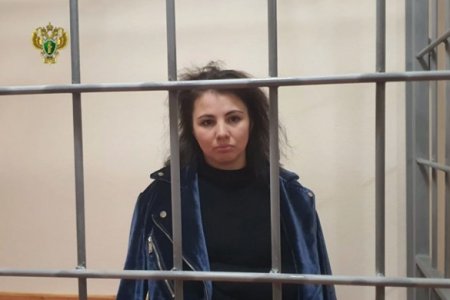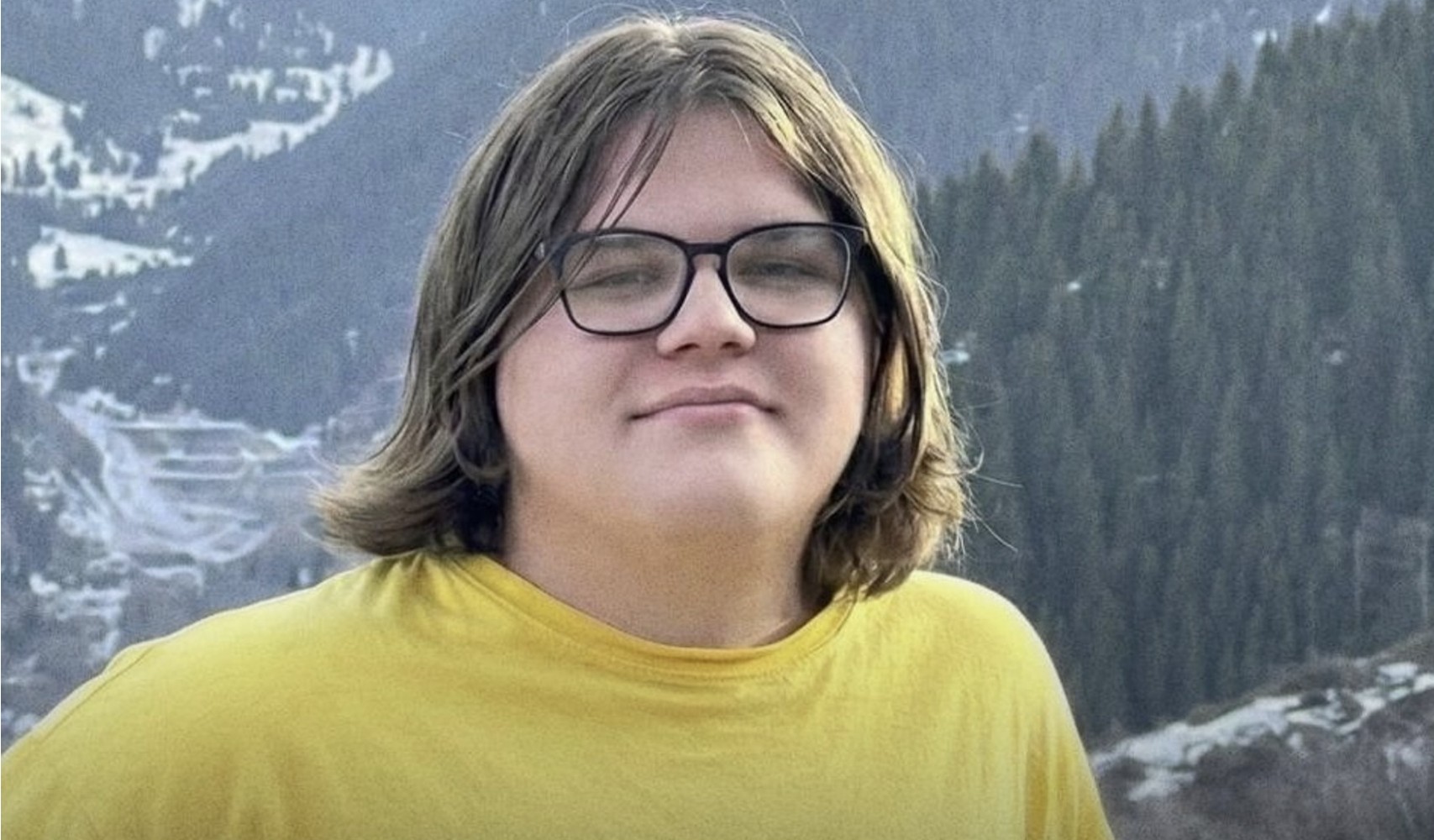
Oleksandr Kachkurkin, a 25-year-old IT programmer from Crimea, was remanded in custody on 31 January in Moscow and is facing a sentence of 12-20 years on supposed ‘treason’ charges for several money transfers sent to Ukraine. Russia has been churning out horrific sentences for donations to Ukraine’s defenders for some time however this case is especially disturbing because of Kazakhstan’s complicity in Kachhkurin’s persecution.
The Russian human rights group Perviy Otdel [First Department] reported on 1 February that Kachkurin is a Ukrainian citizen from occupied Crimea who had, for several years, been living in Almaty, the capital of Kazakhstan. It was, they understand, for political reasons that he moved to Kazakhstan where he worked as a DevOps engineer, as well as for the American OpenAI company and as a programmer of GPT language models.
Russia is using the fact that, under its occupation, Kachkurkin would have been forced to take Russian citizenship as excuse for accusing him of ‘treason’ for donations to help Ukraine. The charge is evidently political, making the collaboration between Kazakhstani enforcement officers and the Russian authorities so profoundly shocking.
The human rights group has seen a report from Didar Akhanov, head of an Almaty district police department. According to this document from 28 January 2026, Kachkurkin was prosecuted on two separate administrative charges – one for jaywalking; the other for supposedly smoking a hookah in closed premises. Perviy Otdel says it has evidence that both these administrative protocols were fabricated.
They were also absurdly trivial yet were used as pretext for the police asking a court to expel Kachkurkin from the country, with his alleged behaviour having purportedly demonstrated “disrespect for the laws and sovereignty of the Republic of Kazakhstan”. The decision to collaborate with Russia must have come from higher up, as the relevant protocol, court hearing seeking expulsion and the expulsion itself were all carried out within a few hours, with such procedure normally taking weeks, or even months. Yevgeny Smirnov, Perviy Otdel lawyer, notes that such evident use of the Kazakhstan enforcement bodies and its laws for Russia’s political persecution is a clear sign that “Kazakhstan is ceasing to be a safe and law-based country even for Ukrainian citizens.”
There was effectively, no effort to conceal the close coordination with the Russian enforcement bodies. Kachkurkin was arrested while still in the plane and taken to the court which immediately remanded him in custody.
Russia’s state TASS agency said nothing about the manner in which Kachkurkin had been forcibly brought to Moscow, nor about the specific charges behind the so-called ‘treason’ charge under Article 275 of Russia’s criminal code. It also, typically, referred to the young Ukrainian from occupied Crimea accused of ‘treason’ for donations to help Ukraine as “a citizen of the RF”. Russia’s article on ‘state treason’ does, indeed, carry the possibility of a life sentence, with the minimum sentence 12 years. What TASS does not mention, is that these are trials in name alone, with any hearings held behind closed doors and guilty verdicts guaranteed.
There has, in general, been a massive surge in ‘treason’ trials and sentences since Russian launched its full-scale invasion of Ukraine, with very many Ukrainians from occupied territory among those targeted.
Perviy Otdel reports that 10% of all charges of ‘state treason’; ‘spying’ or ‘confidential cooperation with a foreign state’ in 2025 were linked with money transfers to Ukraine. It explains that Russia’s FSB receives information about such transfers carried out from Russian bank cards via Rosfinmonitoring, which has access to all bank information. It is assumed, they say, that information about donations from foreign cards is obtained when people’s telephones are checked as they are crossing a state border or, of course, border from occupied Ukraine.
This does not, in fact, fully explain the huge number of such ‘trials’ of Ukrainians seized on occupied territory. Perhaps the donations are discovered when people are stopped on the street, or seized because of their known pro-Ukrainian position, but the suspicion does arise that some of the Telegram messenger channels which are often mentioned in reports of such sentences are setups by the FSB.
The following are just some of the cases where Ukrainians have been abducted on Ukrainian territory and sentenced to huge terms of imprisonment for supporting their own country
Olha Hulchak; Olena Penza and Yulia Stanika
Russia sentences three Ukrainian women to 12 years for supporting Ukraine’s defenders
Iryna Sukhodei
Maryna Bilousova
Russia sentences 61-year-old Ukrainian to 12. 5 years for donation to Ukraine’s defenders
Yulia Stanika
Russian invaders’ ‘court’ sentences Ukrainian to 12. 5 years for patriotism
Lilia Kachkariova and Svitlana Dovhopola
Huge sentences and videoed ‘repentance’ in Russia’s mounting terror in occupied Zaporizhzhia oblast
Serhiy Shtyrov
60-year-old from Russian-occupied Donbas sentenced to 13 years for donations to Ukraine’s defenders
Tetiana Omelchenko
Kateryna Korovina
Ivan Semykoz
Russia sentences Ukrainian to 8.5 years for donation as a teenager to Ukraine’s Azov Regiment
Stanislav Rudenko
Roman Hryhorian
Ukrainian seized in Crimea and sentenced to 12 years for donations to Ukraine' s defenders
Liudmyla Kolesnikova
Three unnamed victims
Russia stages terror arrests in occupied Zaporizhzhia oblast for donations to Ukraine’s Armed Forces