A prosecution witness who admitted to having never before set eyes on Volodymyr Ananiev has claimed to have “not understood the question” and withdrawn testimony which clashed with the prosecution’s case. This is not the first time that supposed ‘witnesses’ have radically altered their story, including to fit an altered indictment, with judges at the Southern District Military Court in Rostov invariably blocking attempts by the defence to question such discrepancies. This is despite their evident importance given legitimate grounds for doubting that the impugned plan to kill Russian-installed Crimean leader Sergei Aksyonov ever existed.
The Crimean Human Rights Group [CHRG] explains that the witness had, at the previous hearing, stated that he was seeing Volodymyr Ananiev for the first time and was not acquainted with him. That hearing was back on 25 November 2025. On 10 February 2026, after claiming to have “not understood the question”, the alleged witness fully repeated the testimony given to the investigators. CHRG is convinced that he had been placed under pressure to provide the testimony which the prosecution needed.
There is every reason to suspect that such pressure was brought to bear, and none for believing the claims made two years ago about an FSB-thwarted plot to kill Aksyonov. As reported, on 5 February 2024, the FSB claimed that they had thwarted such a ‘saboteur plot’ in occupied Crimea and had arrested two men and a woman.
Russia’s FSB have been announcing ‘thwarted saboteur plots’ since 2016, with the only evidence to back such claims provided by ‘videoed confessions’ from people clearly in captivity or likely staged ‘investigative measures’, such as examining an alleged stash of weapons. In all cases where a person has since been released or gained access to an independent lawyer, they have said that such ‘confessions’ were extracted through torture and threats, including against members of their family.
Here the FSB asserted that they had prevented what they termed a “terrorist attack” by Ukraine’s Security Service [SBU] with the three people, described as “Russian citizens”, supposedly planning to blow up a car from “a Crimean leader’s” cortege. Although the three people, named as Volodymyr Bodnar (b. 1974); his wife Oksana Shevchenko, both from occupied Melitopol, and V.V. Ananiev were all claimed to have admitted to the charges, only Bodnar was shown ‘confessing’. Most of this ‘confession’ seemed suspicious smooth, as though learned off by heart, while in one place he seemed to become flustered, as though he had forgotten his lines.
It is now known that Ananiev was seized on 2 February 2024, although he was only officially remanded in custody on 5 February. It is not clear how long Bodnar and Shevchenko were held prisoner before being officially charged, with such periods where a person has no official status typically used to force out ‘confessions’.
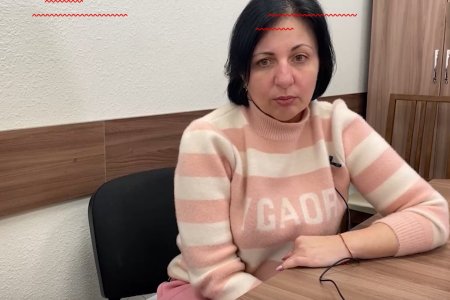
Despite the claim that the three people were ‘plotting’ together, each was ‘tried’ separately, with both Oksana Shevchenko and Volodymyr Bodnar agreeing to ‘cooperate’ with the prosecution.
Oksana Shevchenko was sentenced on 14 May 2025 to 10 years’ medium-security imprisonment and to a very steep 500 thousand rouble fine. The sentence was passed by ‘judge’ Denis Vasilievich Stepanov from the Southern District Military Court.
Just over a month later, on 23 June 2025, Volodymyr Bodnar was sentenced to 13 years’ maximum-security [‘harsh-regime’] imprisonment. ‘Judge’ Konstantin Igorevich Prostov ordered that Bodnar serve the first three years in a prison, the harshest and most restrictive, of Russian penal institutions, with the remainder in a prison colony. He also imposed a steep 500 thousand rouble fine.
The ‘case’ against Volodymyr Ananiev was passed to the same Southern District Military Court in Rostov, under presiding ‘judge’ Denis Aleksandrovich Galkin in January 2025, He had initially only been charged with the illegal procurement, possession, etc. of explosive substances (under Article 222.1 § 3a of Russia’s criminal code), however in November 2024 the prosecution also accused him of Article 205.1 (planning to commit a terrorist act).
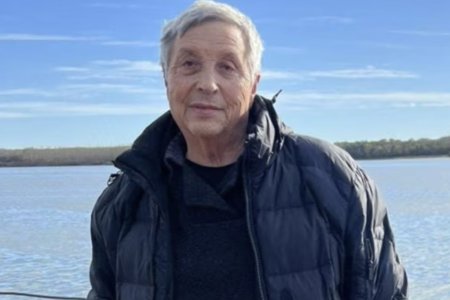
Volodymyr Ananiev has rejected all of the charges. Although Ananiev and his wife had been living in Kyiv for some time, Ananiev is from Crimea, and was staying with a friend, sorting out some matters, when seized by the FSB. He was well-known in Crimea for his civic activism, particularly in helping people protect their right to their land. Refat Chubarov, Head of the Mejlis, or representative assembly of the Crimean Tatar people, has spoken of Ananiev as a person for whom justice is paramount. He was concerned to ensure just and honest privatization of land in Crimea, including for Crimean Tatars. He searched for solutions for Crimean Tatars who returned to their homeland after decades of forced exile (following the 1944 Deportation) and who had been left without land of their own.
It seems extremely likely that Ananiev was targeted because of his civic activism, as well as his pro-Ukrainian position. It seems less probable that he had ever met Bodnar and Shevchenko before they were all seized and accused of a ‘plot’ together.
It is, unfortunately, possible that the supposed ‘witness’ was Bodnar who, as a prisoner, would be extremely easy to place under heavy pressure.
As reported, Volodymyr Ananiev already had serious health issues when seized by the FSB two years ago. He had problems walking and needed a stick, due to problems with his knee joint. He also suffers from high blood pressure, has spinal issues and problems with his eyes (a glaucoma developing in one eye). Even if Ananiev’s age has meant that the FSB were wary of using the savage torture methods they typically apply (for fear of killing him before a sentence, not for any other reason), he is being subjected to medical torture through the conditions he is held in and the failure to provide proper medical treatment.