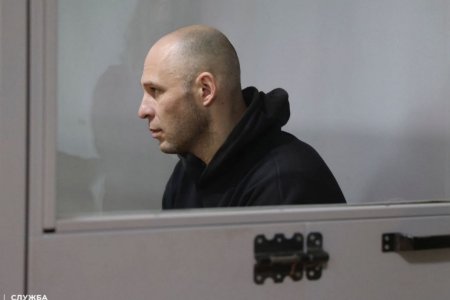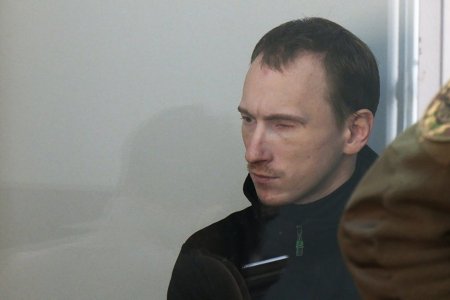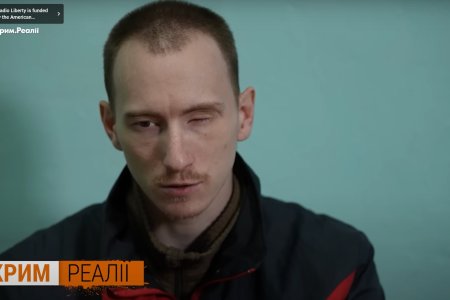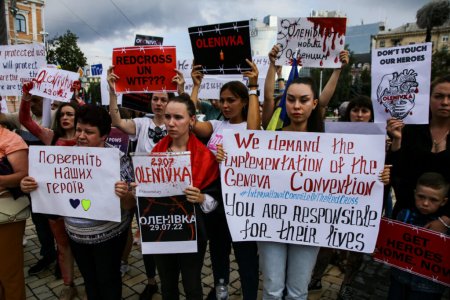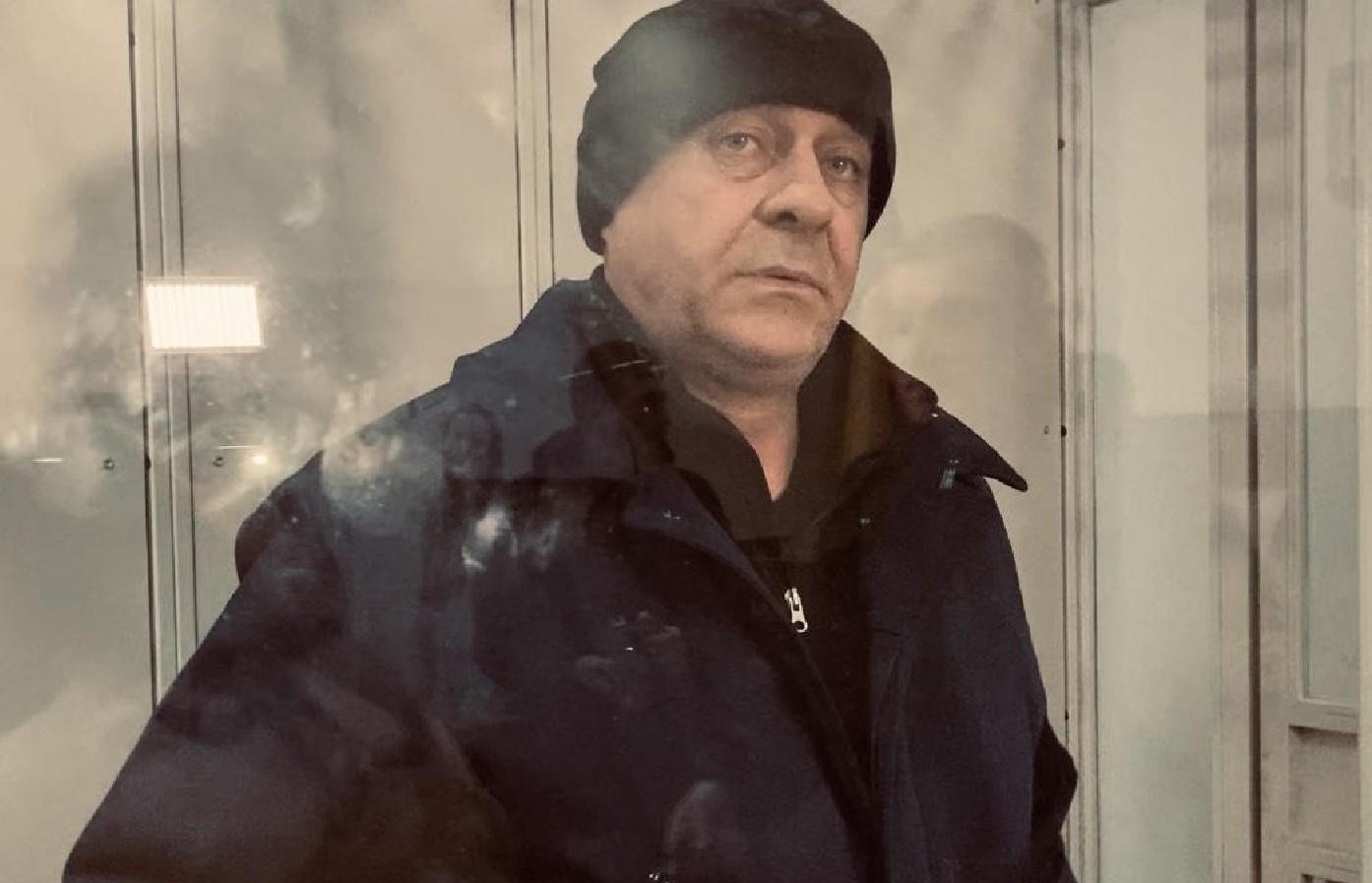
A Ukrainian court has sentenced Vladimir Ivanov to life imprisonment for shooting and killing two Ukrainian soldiers who had laid down their weapons and surrendered. This was one of very few cases where Russians have been tried in person on war crimes charges, and the first where the impugned crime – the killing of prisoners of war - took place in Kursk oblast (Russia).
Although 53-year-old Vladimir Ivanov [call-name ‘Yary’] was born in Sevastopol, he appears to have lived in Russia’s Chelyabinsk oblast from where he was mobilized into the Russian army in December 2025. After just two weeks training, he was sent as part of a unit of Russia’s 40th Separate Marine Brigade to Kursk oblast where, at the beginning of January 2026, they were ordered to set up position near the village of Guyevo.
On 9 January 2025, two Ukrainian soldiers, Ivan Kondratiuk and Victor Liapota from the 241st Separate Brigade of Ukraine’s Territorial Defence Forces had come under siege and had laid down their weapons and surrendered. According to the prosecution, four Russians from the unit were involved in the killing of the two Ukrainians. This seemingly followed an order from their commander [call-name ‘Ryazan’], to kill the two Ukrainians, although Ivanov did not actually hear this order (which would, in any case, have been criminal, and should not have been obeyed). The other three Russians are identified only by their call-names and are not in custody.
Ivanov was taken prisoner shortly afterwards. International law clearly prohibits a country from prosecuting prisoners of war [POW] for carrying out their military duties. Such duties, however, do not include the execution in cold blood of men who have surrendered, and this was the war crimes charge, under Article 438 § 2 of Ukraine’s Criminal Code, against Ivanov, passed to the Shevchenkivsk District Court in Kyiv just over six months ago.
The Media Initiative for Human Rights, which followed the trial, reports that, during the investigation, Ivanov had denied guilt. He changed his plea, admitting the charges, during the first hearing. At the beginning of the court debate (the final stage) presiding judge Pavlo Slobodaniuk asked the defendant if he admitted the charges and checked that he was doing so voluntarily and not under duress. Ivanov stated, when asked by his lawyer, that he regretted his actions, but seems to have said very little, asking only not to be punished too severely. He did, however, tell journalists that he was ready for a life sentence.
This had been demanded by prosecutor Mykhailo Nechytaliuk who pointed out that the charges against Ivanov had been backed by two Russian soldiers (Kondratyev and Lantsov) who had witnessed the killing. There had also been testimony from the slain men’s comrades who gave testimony about finding their bodies. All of this testimony was supplemented by video footage, including from a drone which made it possible to fix the place of the killings, as well as by investigative experiments with the two Russian witnesses.
The life sentence was passed on 20 February 2025. The court also partially allowed a civil suit by the former wife of Victor Liapota, and mother of his child, and ordered that the Russian government and Ivanov pay 50 million UAH in compensation.
This is the third life sentence against Russian soldiers, with all of them linked with the same killing, supposedly under orders from their commanders, of Ukrainian soldiers who had laid down their weapons and surrendered. Dmitry Kurashov was sentenced on 5 November 2025, with the key testimony there also coming from other members of Kurashov’s own assault unit. They included the commander of his unit who stated, in addition, that they had been instructed, during training, to not take Ukrainian soldiers prisoner. On 13 January 2026, 36-year-old Sergei Tuzhilov was also sentenced to life on war crimes charges linked with the direct killing in cold blood of one captured Ukrainian soldier and Tuzhilov’s role in the killing of other prisoners of war.
According to the UN Office of the High Commissioner for Human Rights, as of February 2026, at least 109 captured Ukrainian military personnel (all men) have been executed. The number of such crimes increased radically in 2024, with 70 of the victims killed in 2024 and 2025.