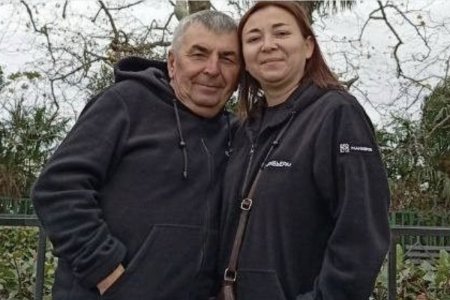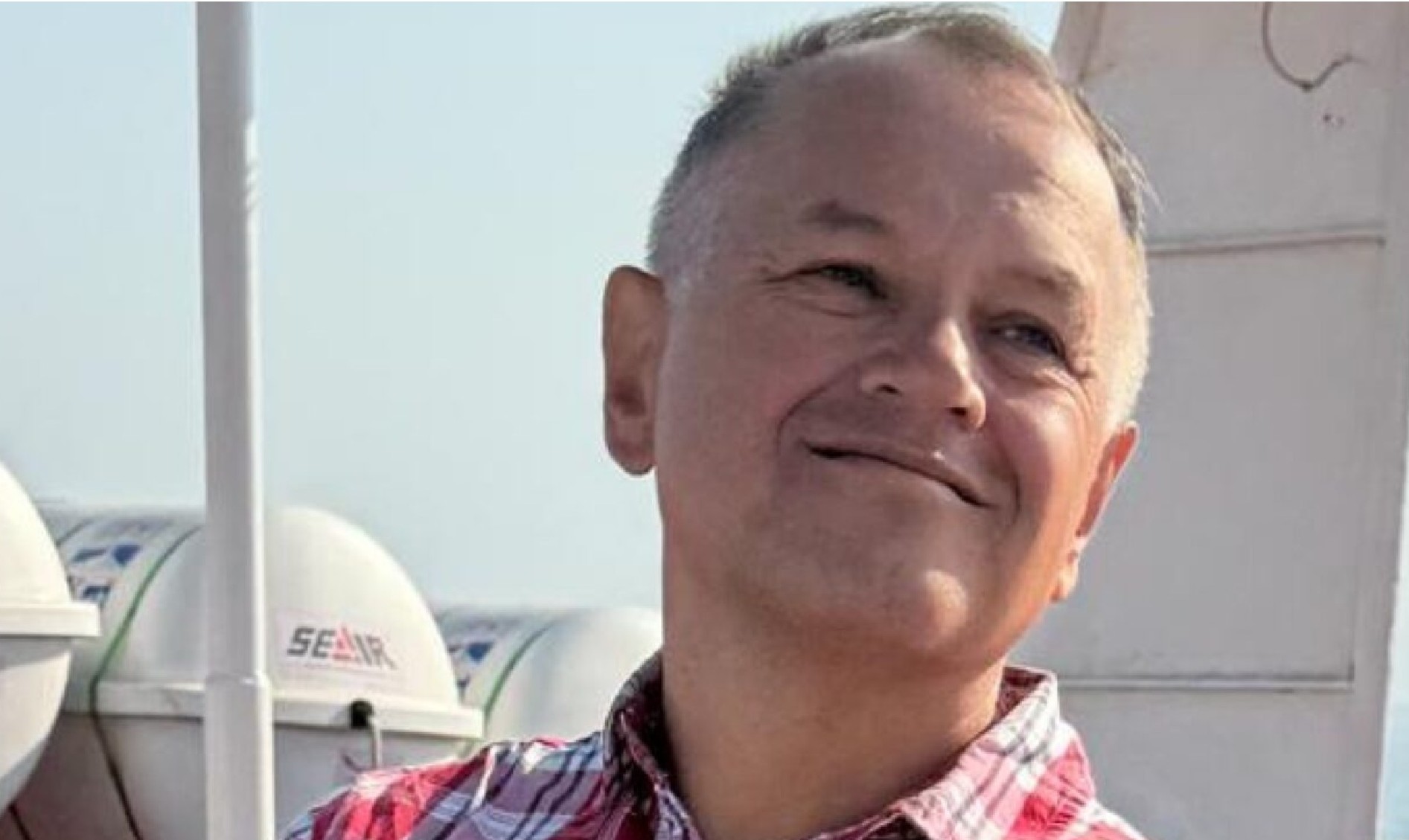
A Crimean occupation ‘court’ has refused to demand that Russia’s FSB and military prosecutor either say where they are holding Serhiy Hrishchenkov or initiate an investigation into the 58-year-old Ukrainian IT specialist’s abduction. The refusal is all the more telling given that there is video footage of the abduction, the existence of which reportedly sent ‘judge’ Natalia Gamimullinaya from the occupation ‘Gagarin court’ in Sevastopol into panic.
The FSB burst into Hrishchenkov’s apartment in occupied Sevastopol on 6 May 2025. Since neither Serhiy, nor his wife were registered at the address, the FSB clearly knew where to come to find them, and initially took both of them away, although Serhiy’s wife was later released.
The sheer undeniability of these events makes it especially disturbing that, almost ten months later, the family have been unable to find out where Hrishchenkov is being held and what, if any, procedural status he has. Hrishchenkov’s daughter, Daria told Suspilne Crimea that the family learned in late autumn that there is also a protocol which said that the enforcement bodies had turned up at Hrishchenkov’s work and taken away his laptop and other items. This was supposed to have been in August 2025, four months after he himself was seized.
Despite all of this, the FSB have consistently denied any involvement in his disappearance or knowledge of his whereabouts. The ‘Black fleet military prosecutor’s office’ have refused to carry out any check, with complaints to the occupation ‘central prosecutor’s office’ about such inaction sent back to those against whom the complaint was lodged.
The ‘court ruling’, rejecting all applications and closing the proceedings, took place on 24 February 2026. It was the second attempt, with the first adjourned because the FSB representatives mentioned in the application failed to appear. They did not appear at the second hearing either, with the ruling based on written objections which failed to address the substance of the complaint and simply reeled off the requirements of Russia’s law on citizens’ applications.
It was evident from the ‘judge’s’ behaviour, Daria says, that she was under pressure and that she was handing down a ready ruling that she did not write. This was clear from the way she rejected all applications and refused to even view the video although this is in the possession of Ukraine’s Security Service, Coordination Headquarters, others.
As reported earlier, Daria first learned of her father’s abduction when she received a text message late into the night from her late grandfather’s telephone, asking her to ring immediately. The message turned out to be from her mother, whose own phone the FSB had taken. She explained that Hrishchenkov was accused by the FSB of ‘state treason’, but couldn’t say any more as the FSB men had forced her to sign a non-disclosure undertaking. It seems that, during the search, the men first looked everywhere for Darya’s 18-year-old brother and then, very aggressively, demanded to know where he is. The young man was, thankfully, safe, having first left occupied Crimea for Kyiv and then begun studying abroad.
More details later emerged, with Hrishchenkov’s wife having initially also been taken away and interrogated by men in plain clothes who identified themselves as from the FSB. The charge mentioned was of ‘state treason’, under Article 275 of Russia’s criminal code, with Hrishchenkov accused of having worked for Ukraine’s Security Service for two years. The accusation appeared to be based on the supposed ‘testimony’ of some third person, with it claimed that something had been handed over in Bakhchysarai.
All such prosecutions under Russian legislation are illegal, but so too are enforced disappearances where a person is held incommunicado, without any procedural status, and in grave danger of torture or other illegal forms of duress. Under such circumstances, it seems very likely that Serhiy Hrishchenkov was, as his family suspect, targeted because of his pro-Ukrainian position, with the FSB then using duress, as well as compliant ‘courts’ and ‘trials’ behind closed doors for fabricated charges and long sentences.
See also:
Niyara Ersmambetova
Abducted Crimean Tatar mother of two sentenced to 15 years on Russia's cynical ‘treason’ charges
Lera Dzhemilova
Anatoliy Kobzar
From enforced disappearance to imprisonment: Anatoliy Kobzar found after 19 months of Russian lies
Ismail Shemshedinov
Oleh Platonov and Natalia Poliukh
Russian FSB abduct Crimean couple, place their child in care
Tamara Chernukha
Ruslan Mambetov Crimean Tatar sentenced to 18 years in Russian secret ‘trial’ where only torture is near certain
Roman Hryhorian Ukrainian seized in Crimea and sentenced to 12 years for donations to Ukraine's defenders
Victoria Strilets and her daughter Oleksandr Strilets
Oksana Senedzhuk Russia rubberstamps 15-year ‘treason’ sentence against 58-year-old Crimean activist Oksana Senedzhuk
Liudmyla Kolesnikova Russian FSB abduct Ukrainian from her mother’s funeral in occupied Crimea
Nina Tymoshenko Russia’s most savage sentence yet against 66-year-old Ukrainian woman from occupied Crimea
Serhiy Lykhomanov
Russia sentences abducted Crimean to 15 years in second secret ‘trial’ on same absurd charges