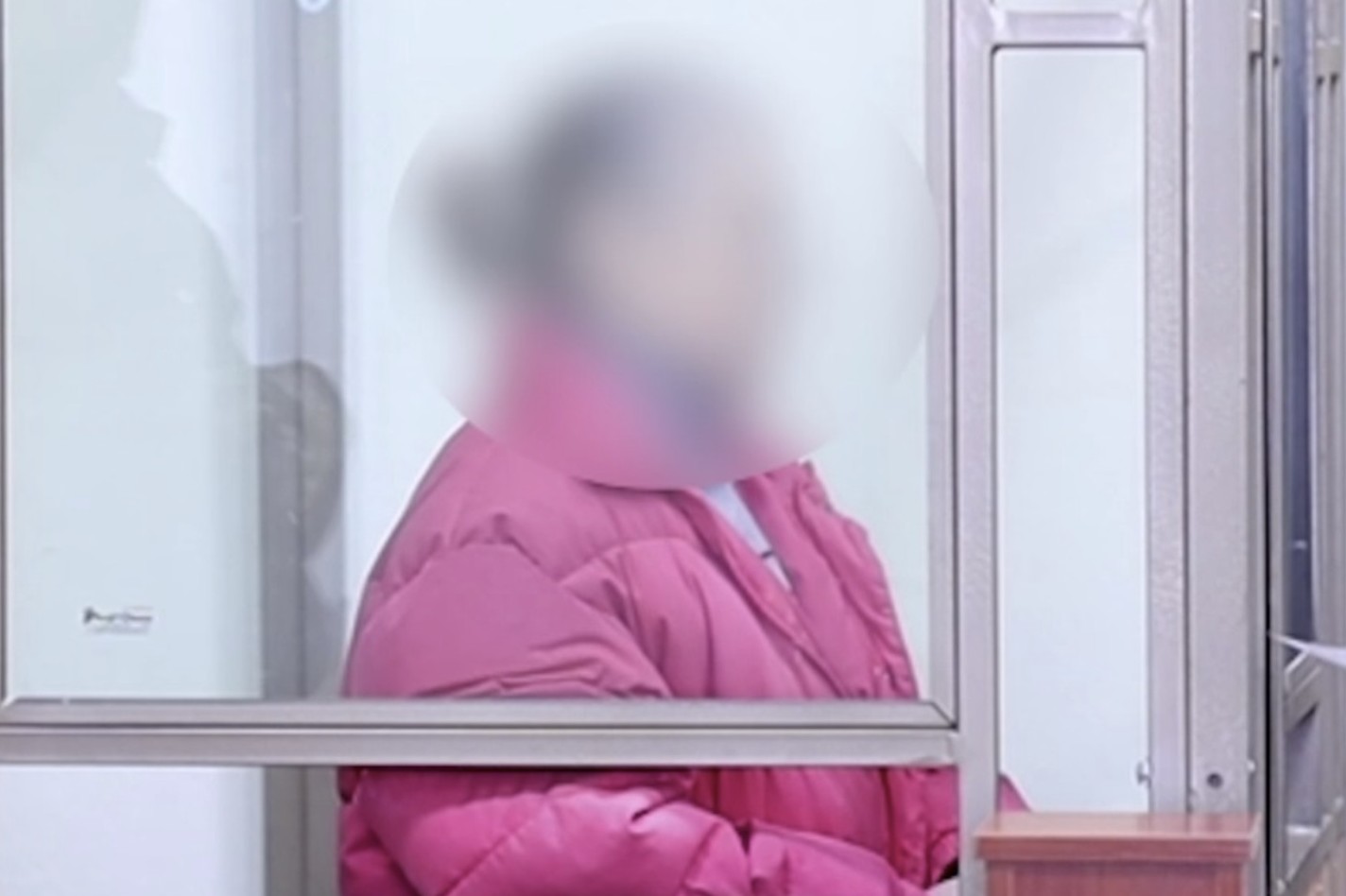
A cassation chamber of Russia’s supreme court has refused to revoke a 16-year sentence against 67-year-old Nina Tymoshenko on grotesque ‘treason’ charges. The panel of ‘judges’ ignored the undoubted fact that the ‘trial’ was in breach of international law, as well as in evident violation of the elderly pensioner’s right to a fair trial. There was, in all likelihood, never a trial, merely an occasion for anti-Ukrainian media reports, aimed at instilling fear in the local population.
As reported, Nina Tymoshenko (b. 13.04.1958) was sentenced by the occupation ‘Sevastopol city court’ on 21 March 2025 to 16 years’ imprisonment. Although Russia has made it impossible to live under occupation without taking Russian citizenship and then claims Ukrainians are ‘Russians’, and accuses them of ‘treason against Russia’, huge stress was given in this case to the fact that Tymoshenko is originally from Zakarpattia in Western Ukraine.
Although all these ‘trials’ are held behind closed doors, Crimean Process reports that even the announcement of sentence, in this case, was closed to the public. Such secrecy violates the right to an open trial and also makes it very easy to control what information (or disinformation) is circulated. Crimean Process notes that they found at least 20 reports in major media, with this likely suggesting a planned information campaign aimed at intimidating the population on occupied territory. The headlines in such reports often focused on Tymoshenko being originally from Zakarpattia.
The original sentence was passed by Igor Kozhevnikov, a Russian ‘judge’ illegally working on occupied territory, and one who has presided over at least three supposed ‘treason trials’ which lasted all of three hours.
The indictments in all these cases are suspiciously similar, with all of them claiming that the person handed information to Ukraine’s Security Service [SBU] or Military Intelligence. The information often seems like something the defendant would be unlikely to be in possession of and / or unlikely to be information the SBU actually needed and did not have.
It was claimed that Tymoshenko had, in September 2022, contacted the ‘hotline’ of Ukraine’s Military Intelligence and “offered assistance aimed against the security of the Russian Federation”. Then in October and November 2023, she allegedly gathered information about military sites of the Russian defence ministry and passed these to an SBU officer. She supposedly also passed on photos and videos with information about the location of boats of the Black Fleet.
All of these implausible activities were claimed to constitute treason under Article 275 of Russia’s criminal code. Kozhevnikov sentenced Nina Tymoshenko to 16 years in a medium-security prison colony (the harshest for women), and also imposed a steep 200 thousand rouble fine.
The sentence was upheld on 13 May 2025 by Yelena Udod from the Third court of appeal in Sochi (RF).
Russia very often abducts men or women months, sometimes, years before formal charges are laid, with such periods where a person is held incommunicado typically used to torture or threaten the person into admitting to whatever charges are proposed. It is unclear in this case when Nina Tymoshenko was ‘arrested’ and when the FSB admitted to holding her in custody, with the latter probably the date from which the sentence would be counted.
The information that Tymoshenko is claimed to have passed on is very similar to that named in the ‘trial’ of another pensioner, Halyna Dovhopola, who will shortly turn 71, having spent the last seven years in Russian captivity. Halyna was almost certainly targeted for her love of Ukraine, and it is more than likely that the same applies to Nina Tymoshenko. The latter will be turning 68 in a month and would be most unlikely to survive this shockingly savage sentence.