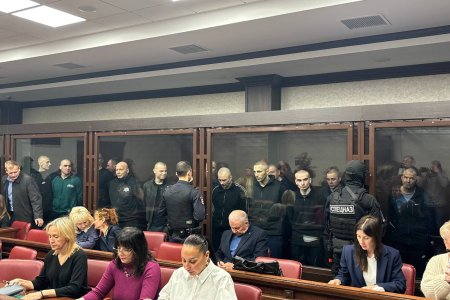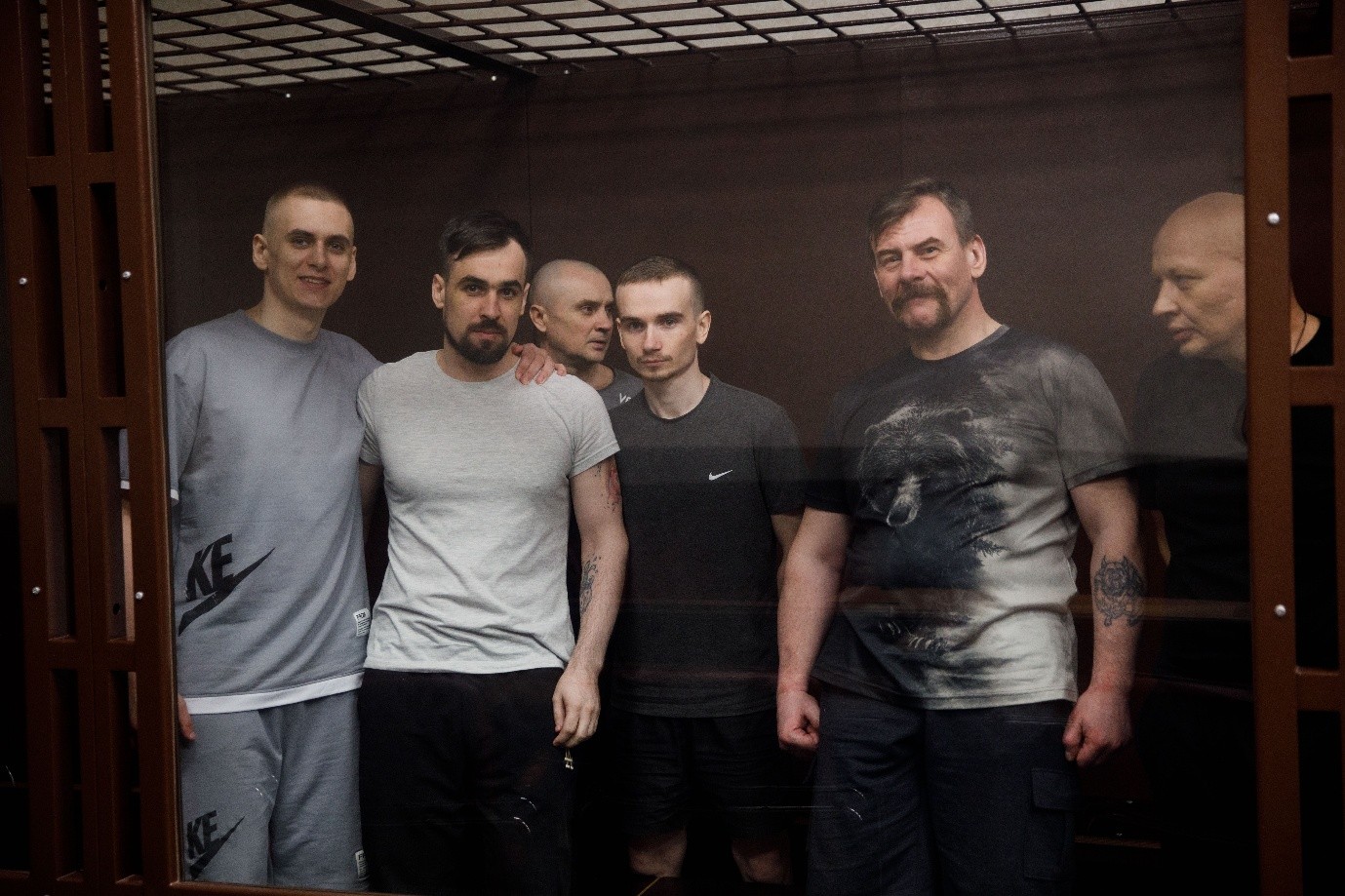
Russia’s Vlasikha military court of appeal has upheld massive sentences against fifteen Ukrainian prisoners of war prosecuted for having defended Ukraine as part of the Aidar Battalion, a unit of Ukraine’s Armed Forces. The ruling, handed down on 2 June 2026 by ‘judge’ Mikhail Mikhailovich Putilovsky could not be called unexpected, but that is only because Russia’s violation of international law and its mockery of fundamental principles of law have become standard, as has the torture to which virtually all Ukrainian prisoners of war are subjected.
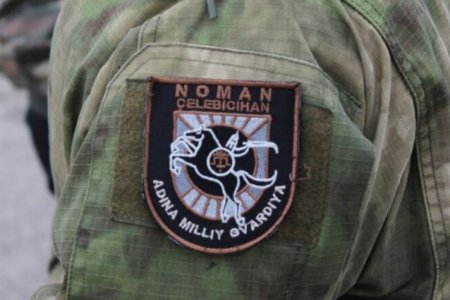
The appeals were against 15-21-year sentences handed down by the Southern District Military Court in Rostov on 17 October 2025. The men, who include a military medic and several drivers, all served in the Ukrainian Armed Forces’ Aidar Battalion (officially, the 24th Separate Assault Battalion). There were originally 18 defendants, with two women medics Lilia Prutian and Maryna Mishchenko freed in a prisoner exchange (but not the third medic, Andriy Sholik). Neither the whereabouts nor the status of Aidar driver Yevhen Piatyhorets are known, with his ‘case’ also separated from the others. The hearings were held behind closed doors from October 2024, with Russia probably understanding that the publicity which the ‘trial’ aroused only highlighted its fundamental lawlessness.
The fifteen POWs whose appeal was rejected have been in Russian captivity since March – April 2022. This is of particular significance given that the ruling, declaring Aidar ‘a terrorist organization’ was only passed by the same Southern District Military Court on 25 September 2023, and came into force two months later, on 22 November 2026. This was clearly viewed as some kind of mere formality since the indictment against the men had been passed to the court, under presiding judge Kirill Nikolaevich Krivtsov back on 20 June 2023.
This, and analogous rulings against the Azov Regiment and other units within Ukraine’s Armed Forces, are then used to bring charges of ‘involvement in a terrorist organization’, under Article 205.2 of Russia’s criminal code, and, sometimes, of ‘training in terrorist activities’, under Article 205.3.
A further charge, of ‘trying to overthrow the constitutional order’ (Article 278) was also added in this case. It was claimed that the defendants had at different times carried out actions aimed at violent change to the constitutional order of the so-called ‘DPR’, or ‘Donetsk people’s republic’ and at overthrowing the current regime.
Here too, Russia is effectively using courts to impose a heavily distorted version of historical facts, and not only because Russia is an invading state which has no right to impose its ‘constitutional order’ on any Ukrainian territory that it is illegally occupying. The claim that it was the supposed ‘DPR constitutional order’ which the men were seeking to overthrow is also fundamentally anachronistic. Although created and controlled by Russia in April 2014, this illegal proxy ‘republic’ was not even recognized by Russia until the eve of its full-scale invasion of Ukraine. This was just weeks before the POWs were taken captive, almost certainly on territory not then under ‘DPR control’.
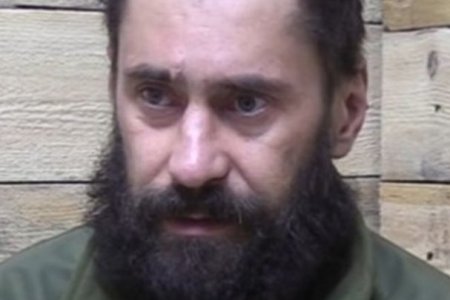
Despite all of the above issues around this ‘trial’ and the huge sentences, there was a single hearing on 2 June 2026 at the Vlasikha military court of appeal which the defendants were forced to take part in by video link from their SIZO [remand prisons]. Unlike the original trial, it was, however, open to the public, and Ukraine’s Media Initiative for Human Rights [MIHR] has been able to obtain and publish the powerful final address to the court given by Vitaliy Hruzinov. This included the following words:
“I am addressing the appeal court without any hope of [adherence to the] law and justice, and merely in order to once again record my attitude to the charges against me. I would like to note the incompatibility between what is stated in the verdict, and what I in fact did and for what motives.
The court considers that I encroached upon the constitutional order of the RF and RF considers that I encroached upon its constitution and territorial integrity. I do not care about, and have never had any concern for the constitution of the RF.
I have my own Ukrainian Constitution. And of all constitutions in the world, this is the only one that interests me.
I’ll be told that it is an issue of territorial integrity. I also recognize this – in its internationally recognized borders.
It is insulting to the point of tears. Not those tears when they beat my limbs, punched out my teeth, exerting emotional and psychological pressure and starved me (during the torture at the Donetsk holding unit). To the point of tears over the comic absurdity of the charges.
The court considers me a terrorist, a nationalist, the hater of everything Russian. I am not a masochist; I do not feel hatred for myself. I am a Russian, but not a citizen of Russia. I am a citizen of multicultural Ukraine and, judging by all of this, am suffering for the fact that I consider myself an equal representative of all other nationalists. Of those who have the rights, not as a younger brother, but as an equal, as a person, and as the bearer of the faith of my people in the political identity of the Ukrainian State.
Terrorist, the court claims? Who did I take hostage, where did I plant a bomb, when and who did I blackmail with the threat of arson, intimidate or put any demands? I am not accused of any of these things. I understand that I am in captivity. For inexplicable reasons, I have been declared a terrorist and as encroaching on Russian ‘fundamental values’. Well at least explain properly – logically and consistently.”
Hruzinov spoke of having shown the text of his previous final address, to the Southern District Military Court to his lawyer She warned him that the court could give even more than the 20 years maximum-security imprisonment demanded by the prosecutor. He simply laughed,
“Surely nobody seriously thinks that a Ukraine can survive for 20 years in a Russian prison colony!
It is possible that these public court hearings are for us the last chance to relatively freely express our truth. True strength is specifically in the truth and in our being true. Before the main court which awaits each of us, I am calm and honest.”
It is unclear whether ‘judges’ like Mikhail Mikhailovich Putilovsky on 2 June 2026, or Kirill Nikolaevich Krivtsov from the Southern District Military Court do, as Hruzinov hoped, feel guilty about their role. Krivtsov has for several years now been handing down huge sentences against Crimean Tatar and other Ukrainian political prisoners, as well as against prisoners of war. All such ‘judges’ should, at a minimum, be placed under international sanctions for their part in imprisoning prisoners of war on cynical ‘terrorism’ charges for defending their country.
The sentences which Putilovsky effectively rubberstamped on 2 June 2026 were as follows.
Four men (and the two women medics now in Ukraine and Yevhen Piatyhorets, whose whereabouts are unknown) were accused of ‘involvement in a supposed terrorist organization under Article 205.5 § 2 and of planning to violently seize power / overturn the constitutional order’, under Article 278
Dmytro Fedchenko 15 years
Viacheslav Baidiuk 16 years)
Vitaliy Krokhalev 16 years
Andriy Shcholykh 16 years
All of the other men were charged under Articles 205.5 § 2 and 278; but were additionally accused of ‘training in carrying out terrorist activities’ (Article 205.3)
Ihor Haiokha 18 years;
Volodymyr Makarenko 18 years;
Mykola Chupryna 20 years;
Serhiy Nykytiuk 20 years;
Taras Radchenko 20 years;
Oleksandr Taranets 20 years;
Vladyslav Yermolinski 20 years;
Semen Zabairachny 20 years
Vitaliy Hruzinov 21 years;
Serhiy Kalinchenko 21 years;
Roman Nedostupa 21 years.
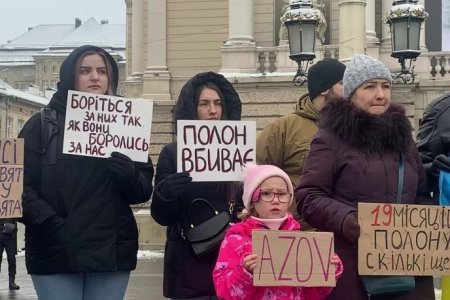
The men, all of whom are recognized by the Memorial Support for Political Prisoners Project as political prisoners, are now likely to be moved to other Russian penal institutions. Addresses for letters will be provided on the site when they become available. In the meantime, please help by asking your elected representatives and others to raise the issue of Russia’s egregious persecution of Ukrainian prisoners of war.