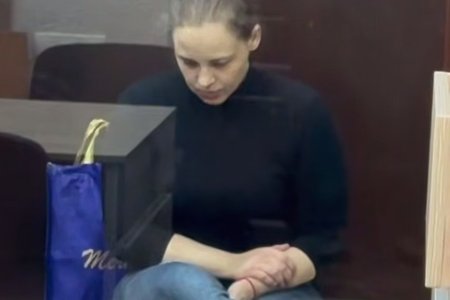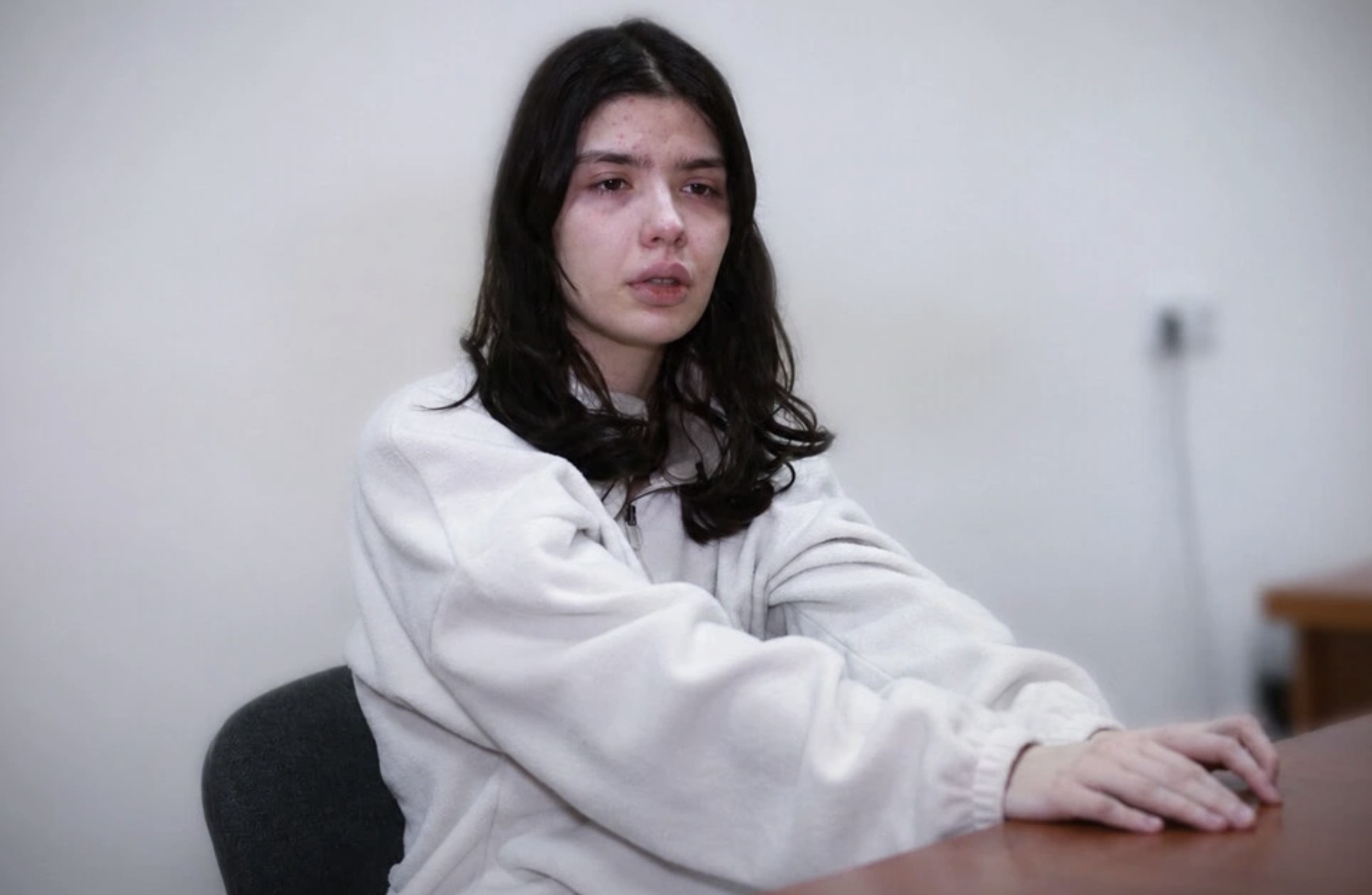
Victoria Maksymenko was a child when the Russians first tried to seize her native Mariupol and was not yet 17 when, in 2022, through missiles, tanks and terror, they succeeded. Four years later, the Russian occupiers have sentenced her to 13 years’ imprisonment, claiming that the 20-year-old Ukrainian committed ‘treason’ by passing on information to Ukraine that could “be used against the security of the Russian Federation.” It is distressingly clear from the videoed ‘confession’ that she was, undoubtedly, forced to give that she is repeating the words that her captors have told her to say.
The Memorial Support for Political Prisoners Project was clearly aware earlier that Victoria had been seized on 20 November 2025 and even writes of the young woman’s interests. She was placed on their list of people whose persecution is probably politically motivated, however they believed that the Russians were accusing her of ‘spying’ under Article 276 of Russia’s criminal code. The charge, in fact, proved to be ‘treason’ (Article 275), with the difference essentially only whether the young Ukrainian had been forced to take Russian citizenship. Russia has made it all but impossible to not do so and Victoria would have still been a schoolgirl when Mariupol came under Russian occupation.
The so-called ‘Donetsk people’s republic high court’ reported on 7 July 2026 that Victoria Maksymenko (b. 11 October 2005) had been convicted of ‘treason under Article 275. It was claimed that the young woman had “collected, stored and passed on information which can be used against the security of the Russian Federation to a person acting in the interests of the Central Intelligence Department of Ukraine’s Ministry of Defence”. Although the report gives no details, the (real) Mariupol City Council understands that she was alleged to have passed on information about the places of deployment of Russia’s Rosgvardia forces in occupied Mariupol.
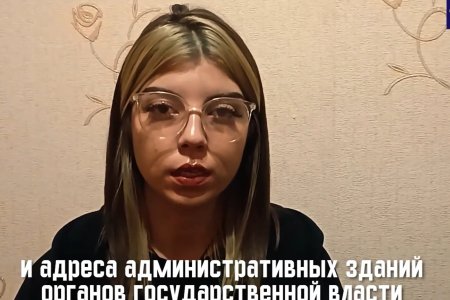
On the video clearly circulated on Russian occupation channels, Victoria can be seen being accosted and ‘detained’ by two men and is then shown giving a ‘confession’. She says that she subscribed to a Ukrainian Telegram channel and a person wrote to her asking “Do you like the Russian regime?” She says that he identified himself only as an officer of Ukraine’s Military Intelligence and then goes on to repeat words which she was evidently told to say. She says that he “began to flirt, call me beautiful words, and in that way endeared himself to me, and I therefore trusted him.” She says that about two weeks passed and then he began to ask her if she knew where there were military bases, instructed her how to draw on a map where these were and their coordinates. This supposed confession, recited by a young woman looking terrorised and very upset, ends with her saying that she told him the military bases that she knew.
It is, unfortunately, possible that this was all an FSB ‘provokatsia’, or set-up. in which the Russians deliberately sought out their victim from among people interested in Ukrainian Telegram channels.
If the ‘sentence’ was indeed passed on 7 July 2026, then either details have been withheld from the ‘court’ website, or this was a non-trial, with the only ‘hearing’ being the announcement of the sentence passed by Anastasia Borysivna Batrakova.
This is a horrific sentence, passed against a very young woman who was almost certainly held incommunicado and very likely placed under physical and / or psychological duress to force out the ‘confession’ demanded of her.