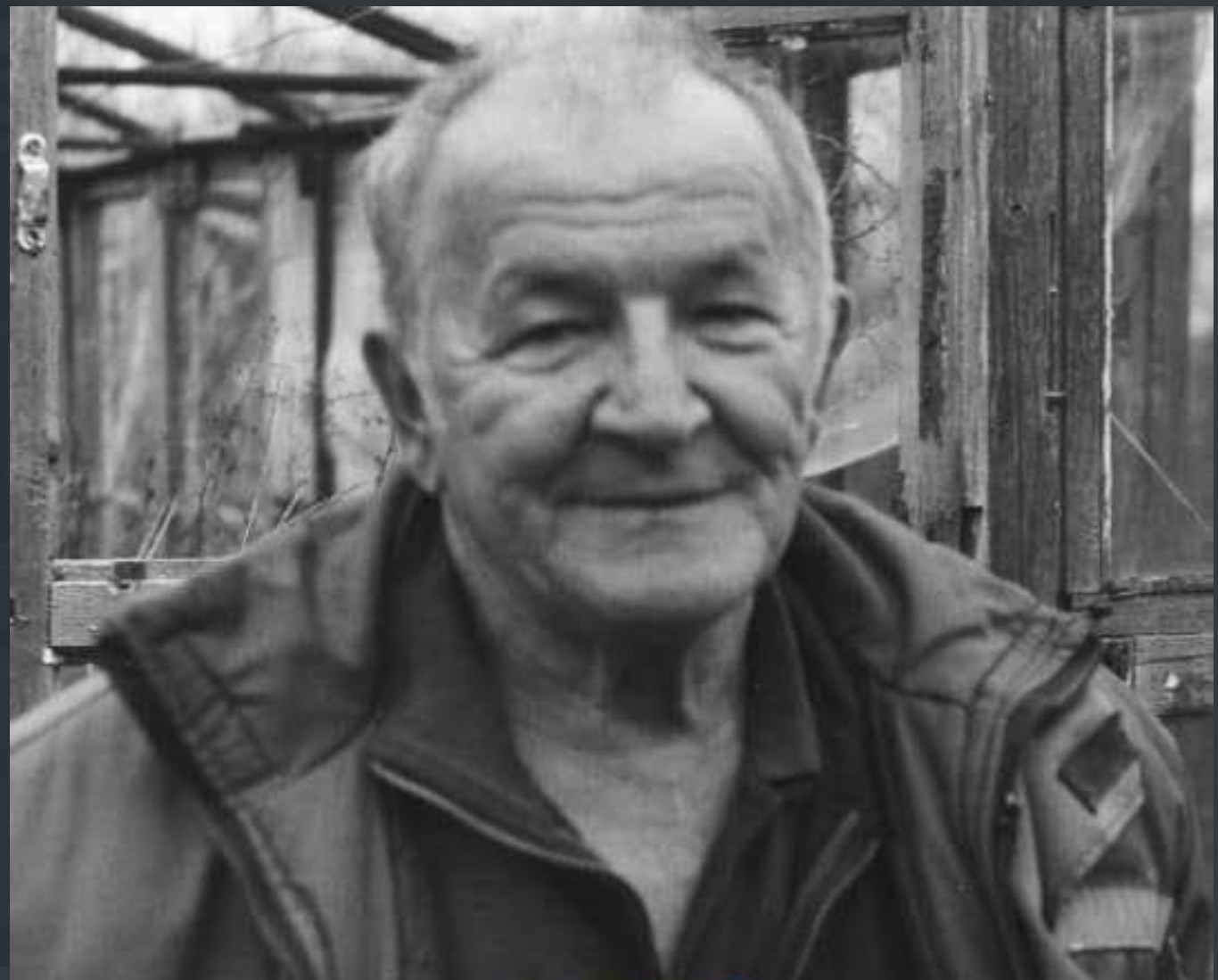
Serhiy Yeriomenko was 67 when Russia launched its full-scale invasion of Ukraine and will be over 80 if Russia’s wholesale persecution of Ukrainian pensioners is not stopped. And if he can survive the appalling conditions and lack of medical care in Russian captivity. Since his ‘trial’ was held behind closed doors, there is virtually no information about the indictment, except that the Russians seemingly claimed that Yeriomenko, living in his own country, helped Ukrainian defenders with the coordinates of the invading Russian forces. This the aggressor state treated as ‘spying’. Yeriomenko’s abduction, disappearance and then ‘trial’ followed months during which the Russian invaders very clearly targeted him as a former military man and veteran.
According to Serhiy’s daughter, Polina, they were living in Siverskodonetsk (formerly Sievierodonetsk) in Luhansk oblast in February 2022. As a former military serviceman who had worked for Ukraine’s Emergency Services after he retired from the military, he was in one of the groups most immediately ‘at risk’ from the Russian invaders. While Polina says only that her father had been involved in military action, if he took part in defending Donbas, this would have placed him in even greater danger. Polina left in late March 2022, but her father remained in the village of iNovooleksandrivka to care for his mother, who was bedridden.
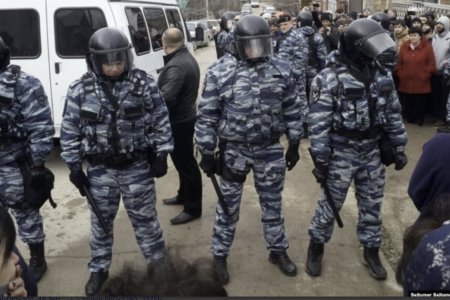
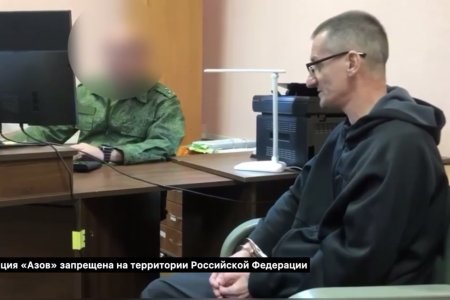
Yeriomenko was, almost immediately subjected to visitations, with these, and searches, intensifying after the Russians saw photos of him in military uniform. He was seized by the Russians on 24 November 2022, with his family knowing nothing about his whereabouts for seven and a half months. It was from a video circulated by the Russians that Polina first understood what had happened to her father. This was clearly in the standard FSB genre, when men or women, who are entirely under FSB control and have likely not even been formally ‘arrested’, are forced, most often through torture, to give the videoed ‘confessions’ demanded of them. Polina recalls how painful it was to see that video, Her father was limping, and scarcely able to move. When they forced him to the ground, as they invariably do, regardless of age or the supposed charges, he groaned in pain.
The first direct news came only in July 2023 when Polina received a phone call from a Russian number. The person calling introduced himself as Yeriomenko’s lawyer. She was given literally three minutes to talk to her father. After so many months of agonizing uncertainty, just hearing his voice was important. He was, however, also able to tell her that he was held at the Lefortovo Prison in Moscow.
This is a remand prison under the control of Russia’s FSB. If, however, the Russians were initially planning some kind of show trial, they clearly gave up on the idea and sent Yeriomenko back to occupied Luhansk for a quick sentence from an illegitimate occupation ‘court’.
Serhiy Yeriomenko was sentenced, after a closed ‘trial’, in all likelihood, just the one hearing, to 13 years’ imprisonment on ‘spying’ charges under Article 276 of Russia’s criminal code. It is not clear when the Russians admitted to ‘detaining’ him and, therefore, when the sentence will be counted from. Under any circumstances, given his age, it is incredible that the court of appeal later added a further six months to this sentence.
He was moved from one prison to another but may still be at a prison colony in Branka, Luhansk oblast, where he was taken at the end of 2024.
To this day, her only contact with her father is through letters, and via lawyers. He is bearing up and is, Polina says, a person who can find light even in the darkest of moments. It seems clear from the pressure he is under that he was targeted for his pro-Ukrainian position and writes that he has not changed his stand and continues to reject attempts by the Russians to foist Russian citizenship and a Russian pension on him.
Serhiy Yeriomenko is, nonetheless, 71 and has serious problems with mobility and with his eyesight. He can’t see through one eye at all and urgently needs a cataract operation to ensure that he doesn’t lose his sight altogether. Polina says that he received the medication they sent for a stomach ulcer, and that it had helped. This is, unfortunately, the situation in any Russian or occupation penal institution where the conditions are almost certainly terrible and healthcare, at best, confined to painkillers.