Search in: Everywhere Authors Headings
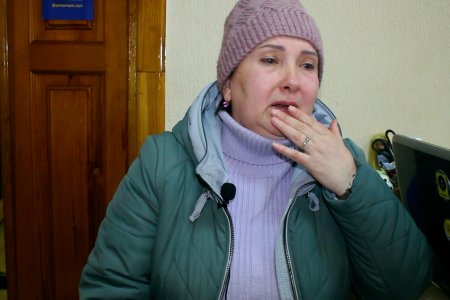
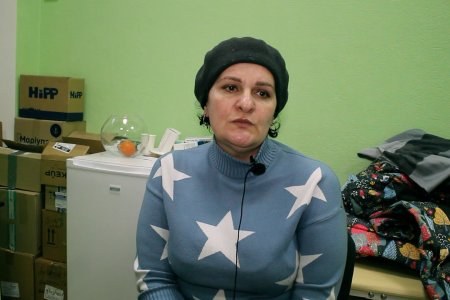
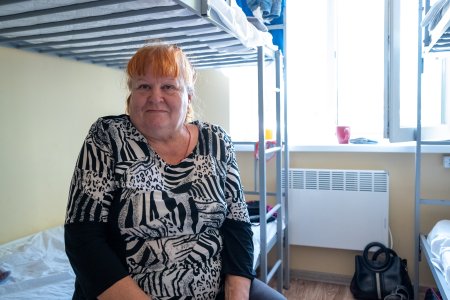
A resident of the devastated town describes the first weeks of the war.
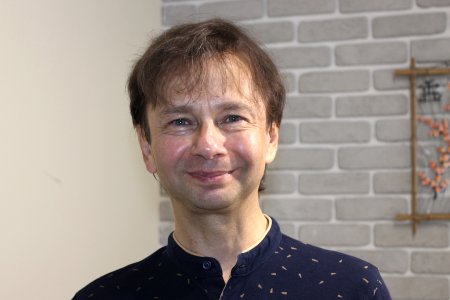
The son of Viktor Petrovych voluntarily joined the National Guard and was wounded near Bakhmut. Vyktor also wanted to defend his homeland, but he was not accepted due to his age. Then the man decided to help to the best of his ability: he prepared Molotov cocktails and knitted camouflage nets.
Bucha resident Iryna Solova, along with her husband and grandchildren, hid in a bathhouse from Russian bombings. Her husband saw something burning on the street and decided to go out to help people. Like many civilians in the city, the unarmed pensioner was killed by Russian soldiers for no reason.
When the Russians shot him, Viktor Nesterchuk was riding his bicycle to the Vorzel maternity hospital to buy formula for his six-month-old baby. He lay with no other help but a tourniquet for three days because the Russians did not allow the wounded to be taken to the Bucha hospital. Despite having his leg amputated, Viktor considers himself lucky compared to other victims of Russia’s ruthless aggression against civilians.
Yurii Hryhorovych from Vyshhorod witnessed a rocket hit his house. His wife was seriously injured, underwent several operations, and almost lost sight. If she couldn’t care for herself, he would have to terminate the employment contract with the plant. But despite everything, Yuri does not lose hope.
Iryna Sokolova and her daughter were evacuated from Mariupol via Berdiansk. They had to walk to the outskirts because the Russians stopped buses from entering the city. Everyone was carefully checked at Russian checkpoints: they stripped them and examined their necks, shoulders, and tattoos.
She witnessed the destruction of Mariupol, saw neighbors killed by a sniper, and heard the screams of people burned in their houses. After being wounded, Halyna Yevhenivna, on principle, did not want to receive help from the occupiers. Her wound has healed, but homesickness haunts the woman who left her hometown.
Valentyna Mykhailivna lived with her husband, daughter, and three grandchildren not far from the famous Chornobaivka. Together, they survived the occupation, the Kakhovka dam’s explosion, and celebrated Kherson’s liberation.
Viktoriia was born and lived all her life in Kharkiv. A full-scale war found her and her small child on the city's eastern outskirts, coming under attack in the first hours of the invasion. Viktoriia's father believed that the fighting would not affect the civilian population. After two weeks of living in a basement, they drove to the station through deserted Kharkiv to evacuate to Lviv.
After the invasion began, Viktor Marynchak continued to serve in the Church of St. John the Evangelist, although he blessed everyone who decided to leave Kharkiv to evacuate. Military funerals are often held in the church now, forcing Father Viktor to ask himself difficult questions.
Every day since the beginning of the war, a Ukrainian accordionist plays songs and publishes them on his channel to keep the spirits up. His work during the war became the basis of a new record-breaking album.
Viktoriia Nesterenko is a co-founder of the Wings of Victory Foundation, which helps civilians and military personnel. In particular, to Ukrainian Muslims who left to defend their homeland. Can religious rituals become a hindrance in war? How do people of different faiths get along at the front lines? Our interview is about the work and future of the fund.