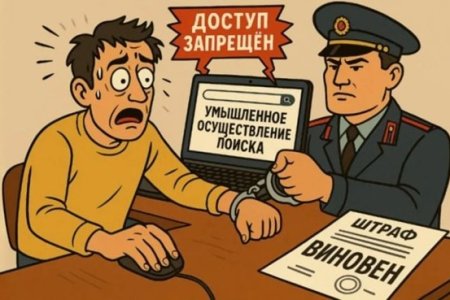
Ukrainians on occupied territory are now facing a new danger. Not only are you at risk if the Russian occupiers check your phone and find Ukrainian apps or content installed. Now, it seems, you are likely to arouse suspicion if you have not installed the new messenger app, MAX. Russia’s supposed alternative to WhatsApp and other ‘foreign’ messenger apps is not just about imposing what Reporters without Borders call ‘a digital Iron Curtain. The app also imposes a level of surveillance more comprehensive than anything the Soviet KGB could achieve. Any Ukrainian stubborn or independent enough to not install this ‘spy in their pocket’ must have something to hide, will presumably be the attitude.
If MAX does, indeed, have as many as 50 million users, as Russia has boasted, this has nothing to do with popularity. MAX has had to be pre-installed on all phones sold in occupied Ukraine or in Russia since 1 September 2025, and other methods of coercion were reported months ago in occupied Zaporizhzhia oblast. The coercion coincided with Russia’s systematic blocking of those messenger apps, like WhatsApp and Telegram, whose encryption systems made it impossible for Russia’s FSB to intercept calls.
Artem Hyreiev, writing for the ZMINA Human Rights Group, reports that in occupied Crimea, even the blocking of other messengers could not overcome resistance to MAX with its reputation for near total surveillance.
The response from the occupation regime was to pull out methods of coercion. All employees of occupation executive bodies were forced to switch to MAX, losing a huge amount of information and contacts in the process. Then the occupiers turned to schools, and parents, with all communication with teachers, etc. exclusively via MAX. The next plans, it is feared, are to make online banking possible only via MAX, as well as access to any public services. The only hope at present is that the system will simply not cope. Hyreiev reports also that recent leaks of users’ personal data by hackers have made those in power in Russia consider whether it really is such a good idea to amass all data on one platform, with its breach likely to lead to a collapse in all spheres of administration.
One Crimean human rights activist, speaking on condition of anonymity, did say, however, that the new app on occupied territory would continue to be used as “an indicator of loyalty”. At checkpoints, for example, the absence on a person’s smartphone of MAX is likely to raise suspicion and lead to further ‘checks’. All of this is in conditions of total lawlessness where the FSB can claim to have ‘found’ something suspicious or ‘prohibited’, with this invariably leading to a conviction and sentence, even where the supposed ‘evidence’ has clearly been fabricated. Analysts from the Irade Human Rights Initiative point to similar types of threats that people will not be allowed to cross borders. It is far easier, they note, for the FSB to check whether a person has the app installed which gives them access to all the person’s data than to check all the data themselves. Advice is currently being prepared on how to minimize the degree to which such apps can spy on the telephone’s user.
In its statement, Reporters without Borders noted that “only accessible via a Russian or Belarusian phone number, the app blocks communication with free Ukraine and harvests 100 per cent of user data, all while serving as a major vehicle for propaganda. RSF condemns this tool for digital control that isolates citizens in the occupied territories from reliable information.”
As mentioned, this is happening at a time when Russia is increasingly blocking the only safe and accessible way in which Ukrainians on occupied territory were able to speak with people in government-controlled Ukraine or other countries.
A further restriction was announced on 1 December 2025, with operators soon to be prohibited from selling any sim-cards but those produced in Russia. The overall aim is doubtless the same – to remove all access to forms of communication which the aggressor state cannot keep under surveillance.