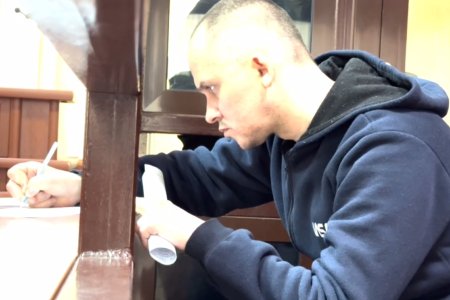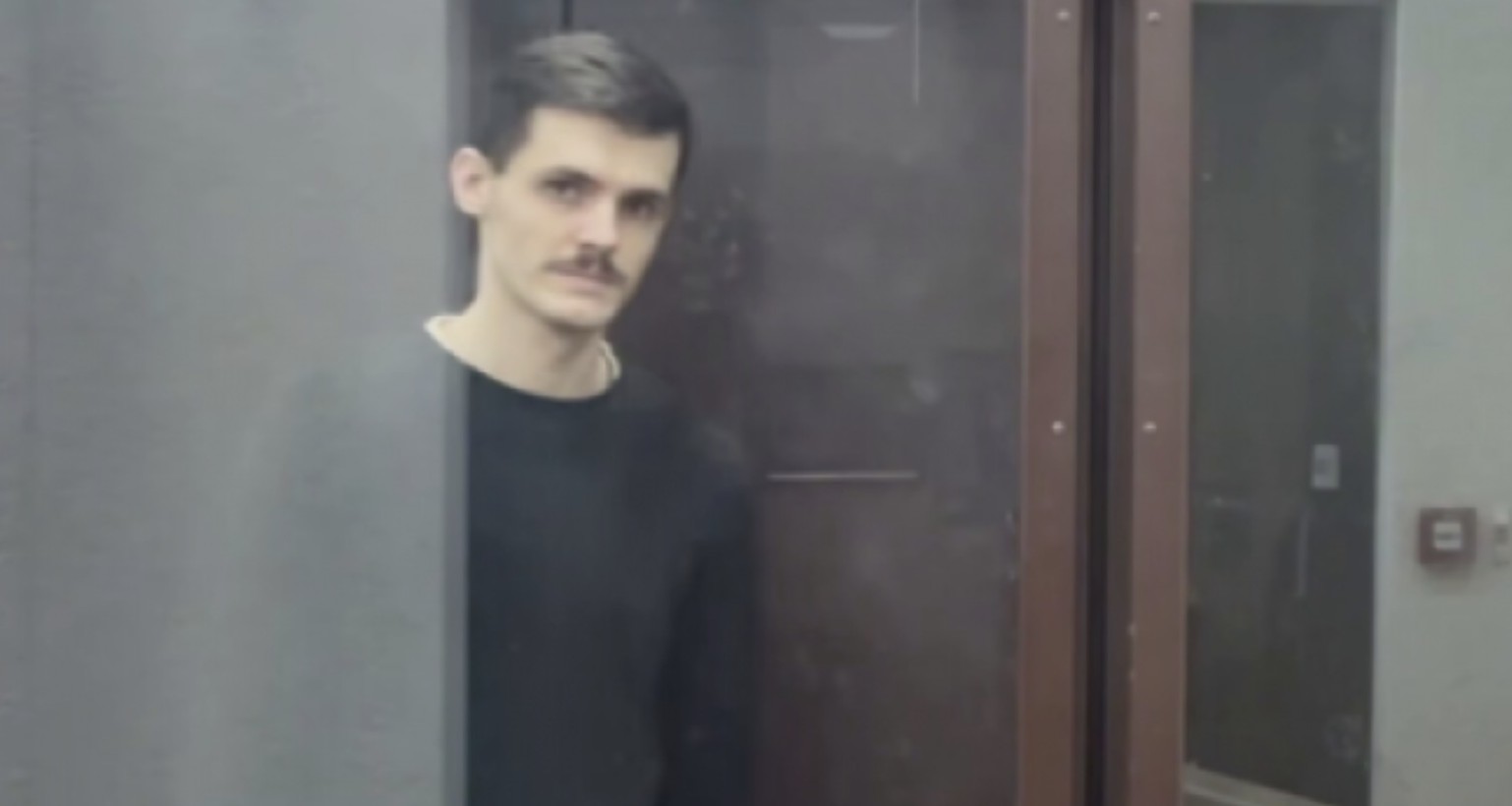
Russia’s occupation ‘Luhansk people’s republic high court’ has sentenced 29-year-old Yehor Kuch from occupied Luhansk to 20 years’ in the harshest of Russia’s penal institutions. The young Ukrainian, who worked in mobile communications, was accused of having ‘spied’ for his own country by passing on the telephone numbers of enforcement officers working for the so-called ‘Luhansk people’s republic’ [‘LPR], i.e. occupied parts of Luhansk oblast.
As is almost always the case, virtually nothing is known about Kuch, nor about his supposed ‘trial’. The first mention dates back to August 2025, with the LPR prosecutor’ virtually acknowledging that the prosecution was part of the spy-mania that Russia has brought to all occupied territory. On 21 August, it was claimed with “the latest spy is to go on trial”, with Kuch accused of having passed on the details of Russian FSB officers to Ukraine’s Security Service via an Internet messenger or emails. The indictment was said to have been passed to the ‘LPR high court’ for “examination on its merits”. The brief report was accompanied by the standard video in which a person, presumably Kuch, but with his face blurred, ‘confesses’ to the impugned actions. There is nothing to suggest that he has an independent lawyer, and there is every reason to assume that he gave the alleged ‘confession’ under duress. In virtually all cases where the person has later been freed in a prisoner exchange, or has received access to an independent lawyer, they have described methods of torture and threats used to force them to ‘cooperate’. Since the charges against Kuch accuse him of ‘spying’ until January 2024, it is quite likely that he has been in Russian captivity since early 2024, with the video of his ‘confession’ made close on two years after being seized and held incommunicado, without contact with his family or access to a lawyer.
It would, under any circumstances, be difficult to believe in a full ‘court examination’ when the next mention on 8 December 2025, not much more than three months later, was of Kuch’s 20-year sentence. Any such ‘trials’ under Russian legislation on occupied territory are in violation of international law. They also trample on all mechanisms in place to ensure a fair trial, as any hearings are behind closed doors, and a guilty verdict and long sentence are effectively guaranteed before the case even hits ‘the court’. These are, doubtless, among the reasons why the authoritative Memorial Support for Political Prisoners Project has added Yehor Kuch (b. 25.10.1996) to its list of ‘other victims of political repression’.
So, after an unspecified number of ‘hearings’, an anonymous ‘judge’ (or ‘judges’) from the occupation ‘LPR high court’, sentenced Kuch to 20 years maximum-security imprisonment, with the first three years in a prison, where the conditions are even harsher. After a sentence significantly higher than those which Russian ‘courts’ would pass against murderers, the ‘court’ also imposed a one-year term of restricted liberty and a 3-year ban on “activities linked with access to the Russian Federation’s [sic!] critical infrastructure”.
Kuch had been charged with both ‘state treason’, under Article 275 of Russia’s criminal code’ and ‘spying’ (Article 276). A further charge was laid under Article 274.1 § 5 of “unlawful impact on the critical information infrastructure of the RF if this led to grave consequences”. He was also accused of “more than 1900 cases of unlawful access to the system in search of significant information for this to be subsequently passed on to the SBU [Ukraine’s Security Service].
The only other person whose identity is mentioned is Russia’s so-called ‘LPR prosecutor’, Gleb Mykhailov, who is said to have personally supported the prosecution.
Such ‘spying’ charges against Ukrainians and massive sentences have become extremely common since Russia first launched its full-scale invasion of Ukraine. The sentence against Yehor Kuch is, however, particularly savage.
See also:
Russia churns out mass sentences for ‘spying’, with only the part of occupied Ukraine varying
16-17-year sentences for telling Ukraine’s defenders about Russian invaders in Luhansk oblast