Russian leader Vladimir Putin has signed a Russian law formalizing Russia’s appropriation of Ukrainian citizens’ private property on occupied parts of Donetsk, Luhansk; Kherson and Zaporizhzhia oblasts. Since the appropriation began soon after Russia’s full-scale invasion of Ukraine, this new ‘law’ only really attempts to give a legal gloss to such plunder. As News of Donbas points out, it does, however, demonstrate how sadly pointless were all those videoed ‘appeals to Putin’ by local residents, hoping that the appropriation of their homes was some kind of a ‘mistake’ which Putin would rectify.
The bill, passed in its final reading on 9 December 2025, was swiftly signed by Putin on 15 December 2025. It allows residential properties to be handed over to the occupation ‘regional or municipal authorities’ if, according to the latter, the property bears ‘the hallmarks’ of being ‘ownerless’. While the bill is especially directed against Ukrainians forced to flee after Russia’s full-scale invasion, there have been many occasions where the legal owners are blocked from living in their own homes on occupied territory. Nor do occupation ‘courts’ support the owners against the occupation ‘authorities’ if the latter have decided, for whatever reason, that a property is ‘ownerless’. At the end of October 2025, the owner of an apartment in occupied Berdiansk provided, via her legal representative, the purchase and registration documents, yet lost her appeal against the ‘decision’ of the occupation ‘authorities’ to claim that the apartment was ‘ownerless’ and to ‘give it’ to somebody else.
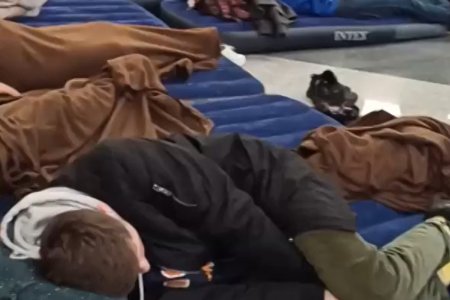
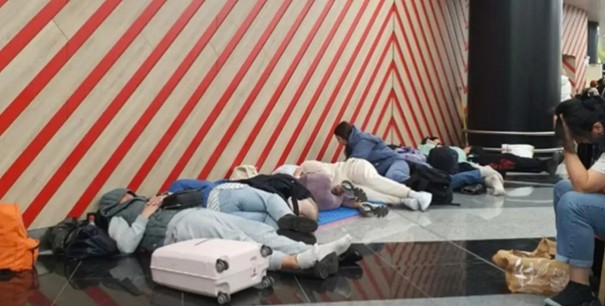
There are no clear criteria for determining that this or that house or apartment is ‘ownerless’ with this clearly making it easy for the occupying state to seize choice properties. Essentially any property owned by those who left after the invasion could be declared ‘ownerless’ with the timeframe for proving otherwise shortened, as feared, from 1 January 2028 to 1 July 2026, with the law to be in force until 2030. It has also become significantly harder for Ukrainians trying to return to occupied territory to be allowed in, with the so-called ‘filtration’ measures at Sheremetyevo airport in Moscow time-consuming, degrading and very likely to result in a person being banned for up to 50 years. Ukrainian human rights Amdriy Yakovlev also warns that the very possibility of getting through via Sheremetyevo may soon be blocked altogether.
Although the property is supposedly to be ‘nationalized’, the occupation ‘authorities’ will be able to allocate it to former ‘veterans’ and / or their families; to members of the enforcement bodies or military, or to families who lost their homes as a result of the war. How the last of these options is determined is, however, questionable as there have been numerous occasions over the last three years where the legal owners of property destroyed by the Russians, for example, in Mariupol then saw new buildings erected on the site of their property and sold to those able to afford the mortgage, with this excluding them.
Although the bill envisages ‘compensation’ for the supposedly former owners of such appropriated property, this will only apply to those who have taken Russian citizenship, with the procedure to be determined by the local occupation ‘authorities’. There is no guarantee that such ‘compensation’ would be forthcoming. More importantly, it has become increasingly clear that the invading state can seize any Ukrainians from occupied territory, with those who left and then returned quite likely to end up abducted and charged with ‘spying’, ‘treason’ or ‘sabotage’. In such circumstances, the presence of Russian citizenship is likely to make it even harder to secure the person’s release.
See also: Russian legislators formalize mass plunder of Ukrainians’ homes on occupied territory