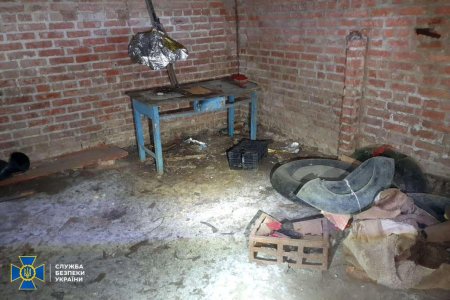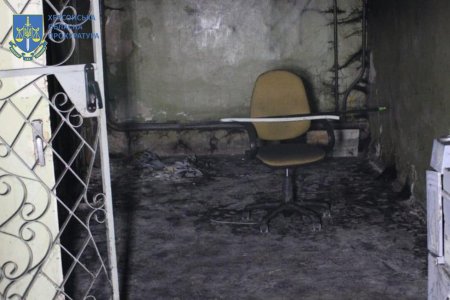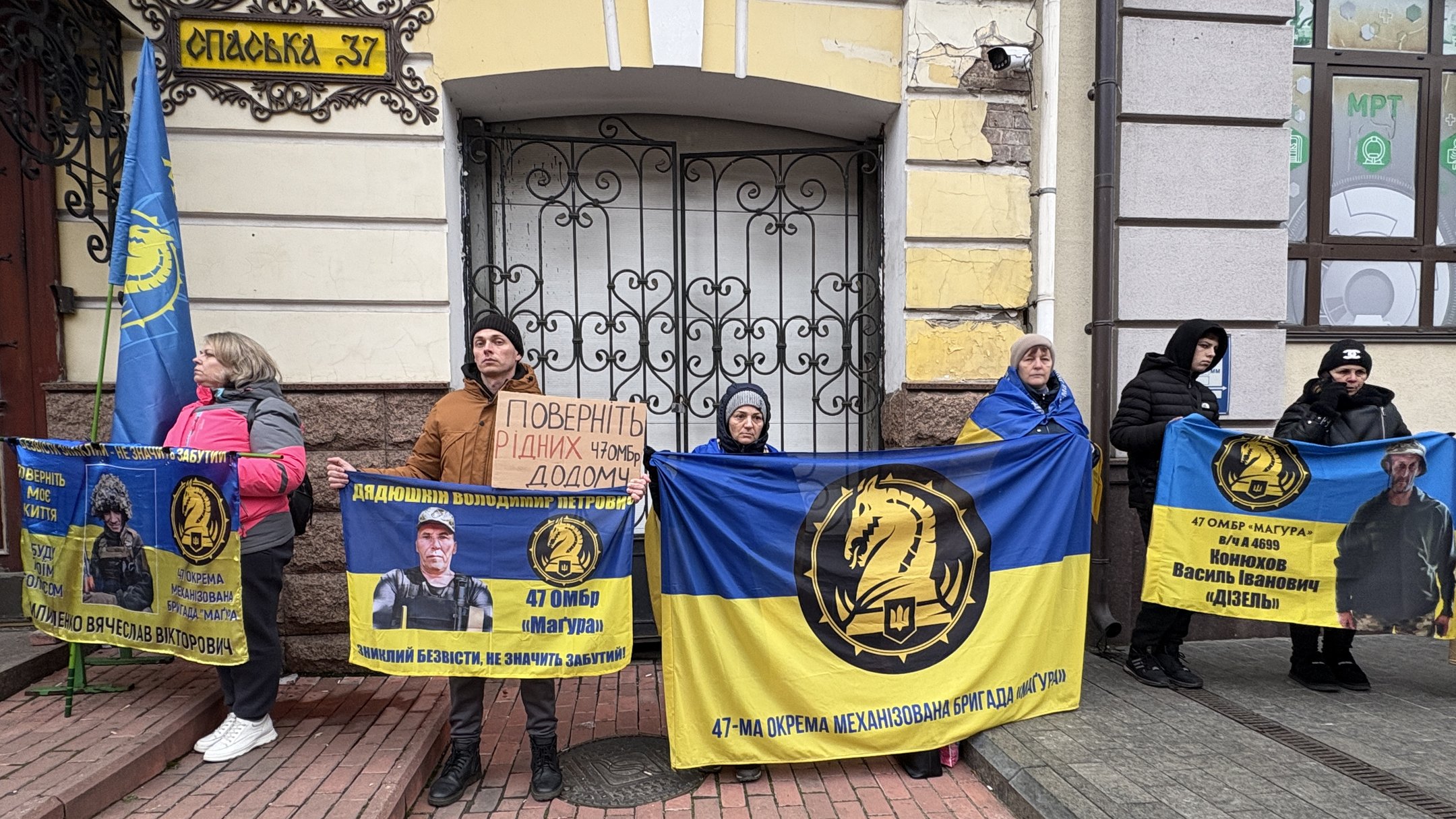
The words about torture in Russian captivity, from the families of men imprisoned for over two years, are no hyperbole. Virtually every freed Ukrainian prisoner of war has given harrowing accounts of the torture to which all Ukrainian captives are subjected, with these including needles poked under a person’s fingernails; electric shocks; beatings and different forms of asphyxiation. According to Natalia Morozova from the authoritative Memorial Human Rights Centre, “you get the impression that the enforcement bodies are allowed to do anything to Ukrainian prisoners of war, absolutely anything, with the only limitation being their own imagination.”
Morozova was speaking about the latest Memorial report: ‘Ukraine: War Crimes of the Russian Aggressors’. Part three of this focuses on Russian treatment of Ukrainian prisoners of war and civilian hostages.
The findings here, as in other reports, are based on the testimony of former POWs, released in prisoner exchanges. Such testimony made it possible to describe the horrific conditions and torture in ten Russian prisons or prison colonies however Memorial believes that the situation is likely to be the same in others.
One of the most notorious and terrible of the torture prisons known is Prison Colony No. 10 in Mordovia. This prison colony’s ‘special regime’ status means, in theory, that it is for men convicted, for a second time, of particularly grave crimes. In practice, such prison colonies simply have conditions even stricter than those in maximum-regime [‘harsh regime’] institutions, and are being used, in flagrant violation of international law, to hold Ukrainian POWs in total isolation. Ukraine’s Coordination Headquarters report that, as of April 2025, there were around 700 Ukrainian prisoners held in a prison colony intended for 850 men.
Mordovian Colony No. 10 is also notorious because of one of the worst of the torturers, a medical worker called Ilya Sorokin, but known to most of his victims as ‘Dr Evil’. This individual’s victims have recounted how he used stun guns to apply multiple electric shocks, as a method of torture. His refusal to provide medical treatment almost certainly caused the death of at least one prisoner of war, Volodymyr Yukhymenko. He had been so brutally beaten that blood was pouring from his swollen ear, yet he received no help and died (see: Russia’s ‘Dr Evil’ charged over savage torture of Ukrainian prisoners of war)
It was after speaking of this prison colony that Morozova spoke of the apparent carte blanche that Russian officials have been given when it comes to Ukrainian prisoners of war. “What we hear from Ukrainian POWs passes all bounds”, she says, stressing that “horrific torture” is being applied in all prison colonies.
Asked if Ukrainian prisoners are being singled out, Morozova answered yes. At least in the prison colonies that Memorial writes about, there are truly appalling conditions and horrific torture, with Russian prison guards clearly allowed (or encouraged) to behave with particular savagery towards Ukrainian prisoners.
Another form of torture seen is that the prisoners are forced to stand, without moving at all, from morning to evening. This is appallingly difficult, yet if a single prisoner moves his weight from foot to foot, all of the prisoners are savagely beaten. “After that, of course, all have problems with their legs, from varicose veins and ulcers even to gangrene. They set dogs on them, and that’s not to mention the beatings, the electric current torture. That, unfortunately, is seen on every page of our report.”
The same type of collective punishment is seen everywhere with prisoners being forced to sing Russian songs, learn the Russian national anthem and ‘patriotic poems’. Then all of the men are ‘checked’, and if even one gets the words wrong, all of them are beaten. Since that is carried out en masse, it is, she assumes, “an attempt at ideological re-education”.
There are no official figures for how many Ukrainian prisoners of war Russia is holding, with the situation probably even more difficult when it comes to civilian hostages. With respect to the latter, even Moscow appears to understand how gravely it is in violation of international law, and very often conceals all information about such hostages. There are no grounds for assuming that civilians get better treatment. Quite the contrary, given the deaths after torture of 27-year-old journalist Victoria Roshchyna and 63-year-old Mayor of Dniprorudne Yevhen Matvieiev (see: Russian prison identified where Ukrainian journalist Victoria Roshchyna and Yevhen Matvieiev died after being tortured )
In February 2023, Maksym Kolesnikov, one of 116 Ukrainian POWs freed in a prisoner exchange, stated in an interview that there were more civilian hostages in the SIZO [remand prison] where he had been held, than prisoners of war. He said that at the beginning, he had been held in a cell with 14 men, of whom only four had been soldiers. In the cell next door there had been 12 men, all civilians. He suggested that the ration could get worse, as the Russians did acknowledge holding prisoners of war and added them to exchange lists.
Yury Armash, a military medic and former prisoner of war, has reported being constantly called out to save the lives of fellow POWs or civilian hostages after the Russian prison staff’s torture had ‘gone too far’.
All of Memorial’s findings have been confirmed by, among others, the Office of the High Commissioner for Human Rights Monitoring Mission in Ukraine, and the Independent International Commission of Inquiry on Ukraine, created in 2022 by the UN’s Human Rights Committee. Danielle Bell, Head of the OHCHR Monitoring Mission has said that Russia subjects over 95% of Ukrainian prisoners of war to torture. In an interview on Dutch TV, she called the torture the worst she had seen in her 20 years of monitoring places of confinement.
The Independent International Commission of Inquiry on Ukraine has, since 2022, been documenting Russia’s use of torture, both against civilians in areas under occupation, and against prisoners of war and civilian hostages. Having already identified such violations as war crimes, on 29 October 2024, the Commission issued a new report in which it pointed to Russia’s coordinated state policy of torturing Ukrainian prisoners of war and civilian hostages as a crime against humanity (see: Russia’s torture of Ukrainian civilians and POWs is a crime against humanity – UN investigators
See also:
Russia confirms torture is state policy through withdrawal from vital European Convention
Ukrainian POW horrifically tortured, with words ‘glory to Russia’ burned on his chest
Russian torture of Ukrainian civilians and POWs is clearly state-endorsed policy – UN Rapporteur