While the aggressor state invariably treats all so-called veterans of its war against Ukraine as ‘heroes’, even those Ukrainians who remained on frontline territory out of support for Russia learn to their cost what ‘Russian world’ means. Not all survive to tell the tale, as was the case with the husband of Victoria Shvaiko who was first tortured and then shot dead by the same drunken Russian soldiers who gang-raped Victoria. The Shvaiko story stands out because of the victim’s pro-Russian views but was just one of at least three atrocities believed to have been committed by the Russian invaders in the week around Christmas 2025, against both Ukrainian prisoners of war and civilians.
Prisoners of War [POW]
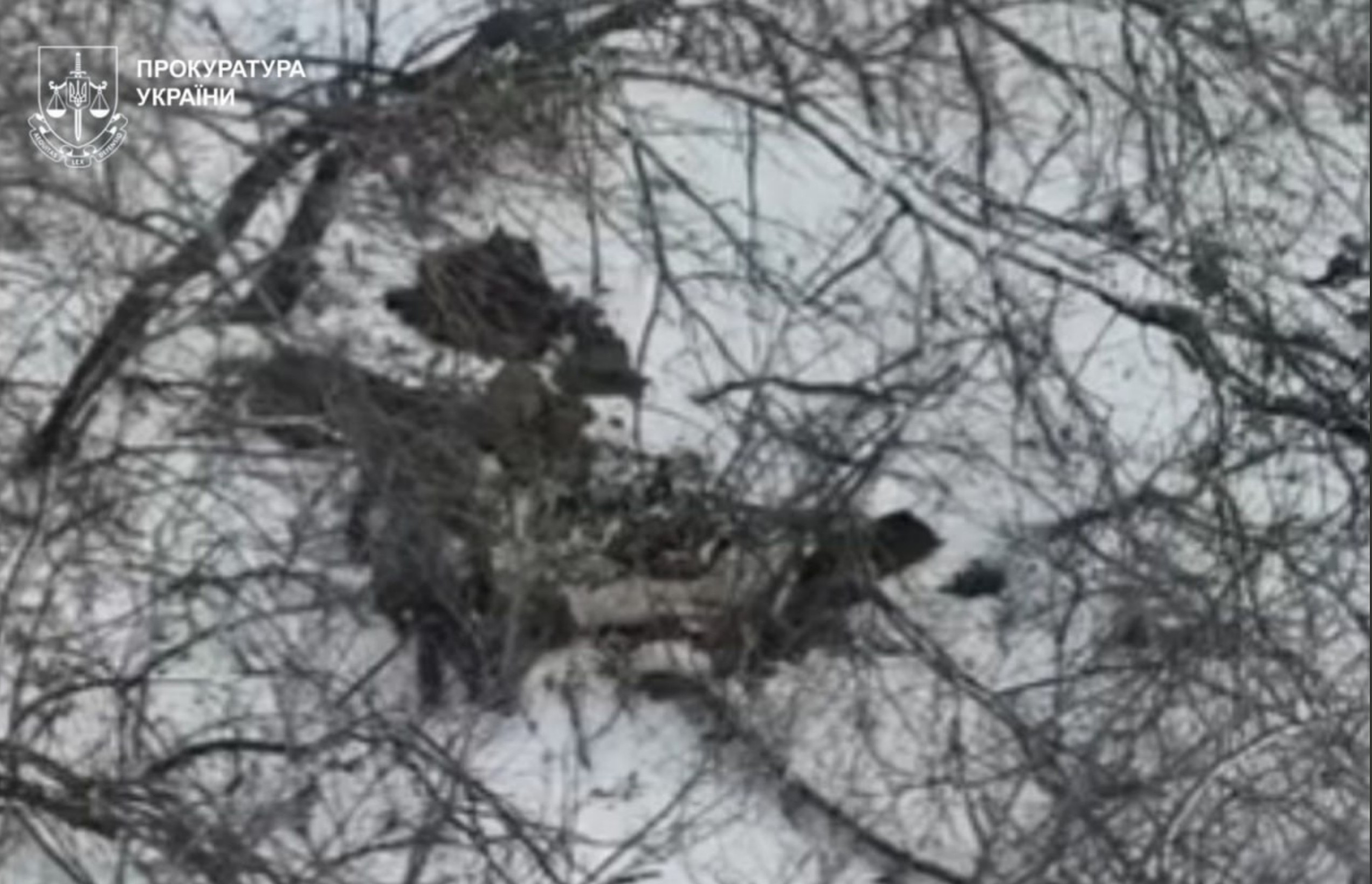
The Donetsk Regional Prosecutor announced on 29 December 2025 that a criminal investigation had been initiated over the gunning down by Russians of Ukrainian prisoners of war in the Pokrovsk district.
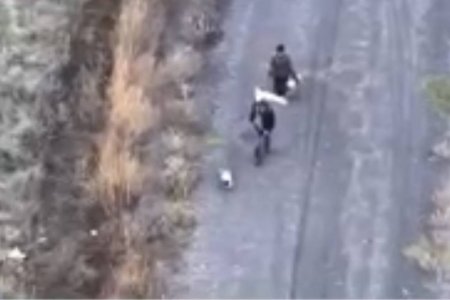
Two Ukrainian solders were taken prisoner on 27 December during an attack near the village of Shakhove. The Russians, levelling their rifles at the men, forced one of them to partially undress, and then shot and killed both of the unarmed Ukrainians. Having ascertained that the men were dead, the Russians removed the clothes from their second victim.
Any soldier who has laid down his weapons is, or should be, protected under international law, and such killings are rightly investigated as war crimes (under Article 438 § 2, since it was linked with homicide).
Russia has, however, demonstrated its contempt for such fundamental principles of international law, and there is considerable evidence, both from intercepted messages and from the testimony of Russians taken prisoner, that the invaders are actively encouraged to not take prisoners.
At the beginning of February 2025, the UN Human Rights Monitoring Mission in Ukraine reported a sharp rise in the execution of Ukrainian prisoners of war by Russian armed forces. Importantly, it has also pointed to the effective incitement to commit such war crimes from Russian public officials.
Civilian killings
The Ukrainian ‘I want to live’ Project (which assists Russian soldiers wishing to surrender) reported on 29 December that they had received information about two Russian soldiers killing seven civilians in Pokrovsk. The project’s source (“concerned people from the Russian armed forces) informed them that during the night from 20-21 December, two Russian soldiers from the 30th Separate Motor Rifle Brigade had burst into a home on Tsentralna St in Pokrovsk. The alleged killers: Rinat Rapifovich Galimzyanov, b. 31.05.1996, service tag AB-537852 and Alexe Anatolievichi Agafonov, b. 27.03.1987, service tag Yu-810131, are additionally identified according to the specific unit in which they are fighting and the republic within the Russian Federation from which they are from. Agafonov also appears to be a convicted prisoner, probably released after he agreed to fight in Russia’s war against Ukraine.
When the Russians turned up at the basement of the house, Oleksandr Zavadsky and his son, Yaroslav, came out and told the soldiers that they did not have the alcohol the latter were demanding. The Russians responded by opening fire, killing both men. They then, allegedly, went down into the basement and killed a family who were sheltering down there: Dmytro Hulko; his wife Oksana Hulko; their son, also Dmytro and Oksana’s mother, Nadiya, as well as somebody called Oleksandr. The seventh person, Petro Valeriovych Merontsev was wounded, but survived by pretending to be dead. He managed to get out and flee after the Russians left.
The two Russians then claimed to their commander (call-name ‘Voodoo’) that they had killed a Ukrainian sabotage and reconnaissance unit and had set fire to the house. They were, however, detained because of the surviving civilian’s testimony and were sent to Selydove. The ‘I Want to Live’ Project assumes, given the lack of any publicity, that the crime will be muffled. With or without publicity, the chances of the perpetrators being punished would be extremely remote. Journalist investigations have found that Russian soldiers committing crimes in Russia are treated very leniently, with this in cases where their victims were Russians, not Ukrainian civilians. In addition, Russian legislative changes have made it possible for virtually any criminal to have their investigations, detention or sentences waived if they agree to fight and / or continue fighting (see: Russia 'issues machine guns to maniacs' in return for killing Ukrainians)
Victoria Shvaiko
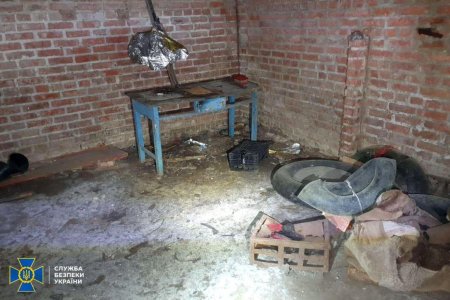
There are many reasons why civilians remain in areas on the frontline, especially those who are older and / or have no family or friends in other parts of Ukraine. There are, however, some who can genuinely be considered ‘zhduny’ [‘those awaiting’ – in this case, the Russian invaders). Victoria Shvaiko’s husband was clearly in that category, with his widow explaining that he had even planned to join the Russian army. Instead, he was tortured, first shot in the foot, and then shot and killed, ‘for entertainment’, by three drunken Russian soldiers from the same 30th Separate Motor Rifle Brigade, who burst into the family’s home during the night from 22-23 December. Victoria’s mother-in-law managed to escape only because the men were busy raping Victoria.
Even if some individual soldiers, perpetrating such crimes, are initially detained, there seem no grounds to expect any real accountability. Quite the contrary, in fact, when Russian leader Vladimir Putin reacted to the mounting evidence of crimes committed by Russian soldiers from the 64th Motor Rifle Brigade, including torture, rapes, killings and looting, by ‘honouring’ the brigade members. His decree talked of “mass heroism and daring, tenacity and courage”. He has since awarded or promoted others, also accused of grave war crimes.
See also:
Russians use child and her parents as human shields in their attack on Pokrovsk
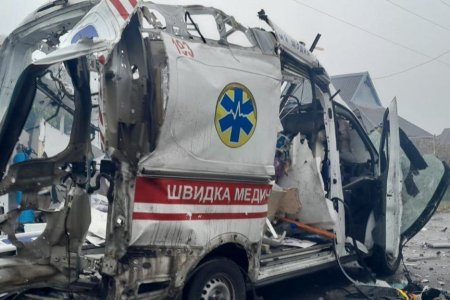
Russian invaders gun down civilians in Pokrovsk, try to kill others in evacuation van