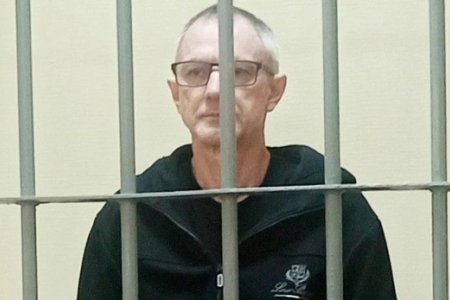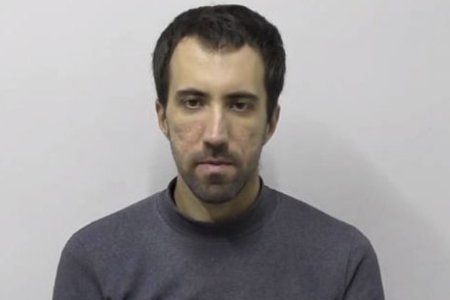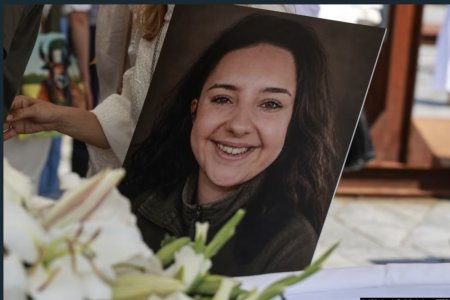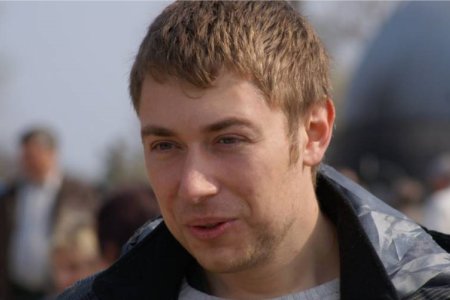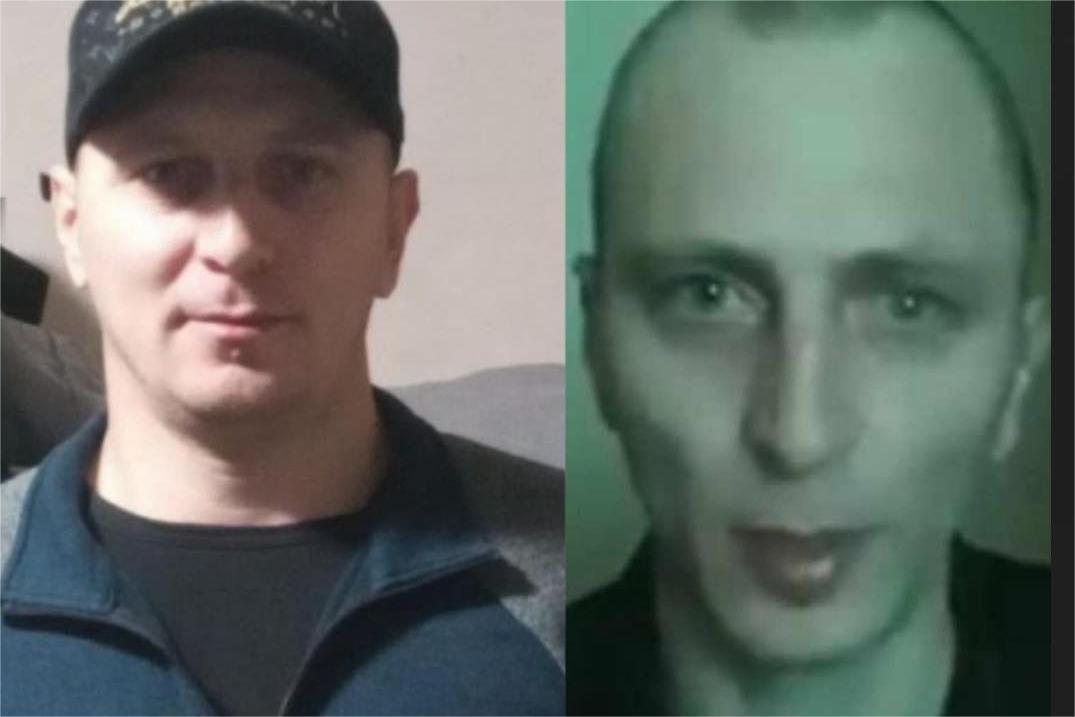
Former political prisoner journalist Vladislav Yesypenko spoke about the circumstances. He himself was released from Russian captivity on June 20 of this year, after more than four years in Russian captivity. Yakymenko is being held at Correctional Colony No. 4 in Pugachev, Saratov region.
“In general, Volodymyr ended up in a pre-trial detention center multiple times under far-fetched pretexts and without any guilt,” wrote Vladyslav Yesypenko. “This time, the reason was his failure to appear for a check-in. Volodymyr explained that he didn’t even have shoes to go out into the yard (only rubber slippers). To which he was told that he had everything, that everything had been supplied, and that there was even his signature on the receipt… Which is a hypocritical lie!”
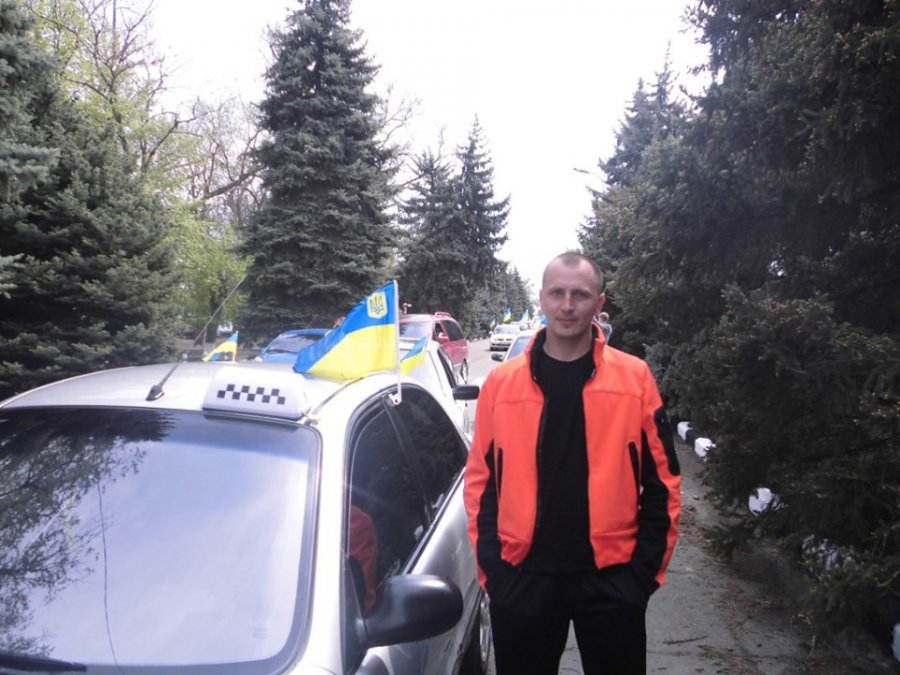
As we wrote earlier, Volodymyr Yakymenko is a resident of the village of Chaplynka in the Kherson region. He worked as a taxi driver, volunteered, and took an active part in the Automaidan: he helped the Ukrainian military and, in 2014, took people out of Crimea, those who wanted to move from the temporarily occupied peninsula to the free part of Ukraine.
The Russians detained Volodymyr on June 11, 2017, at the administrative border with Crimea, accusing him of “drug trafficking.” He was sentenced to 15 and a half years in prison.
Back in 2019, in an interview with Hromadske journalists, Volodymyr Yakimenko’s wife, Halyna, said that her husband was framed by the Russians, who learned about his active political position from social networks. After his detention, he was tortured.
“In the first days after he was detained at the Russian customs, they tortured him for three days, extracting a confession that he was indeed carrying drugs,” said Olena Yakymenko. “They succeeded, of course, because no one can withstand such torture. They put a gas mask on him, cut off his access to air until he lost consciousness, then beat him on the head. He was also repeatedly offered to cooperate with the Russian FSB, which he did not agree to, and for which he was also tortured. In addition, he was tortured after the trial, on the way to the colony where he is now. They even forced him to sign that he had an epileptic seizure, which is why he supposedly fell off his chair and hit his face on the table. After all, they had to justify the consequences of the beating. They demanded that he talk about the military and government representatives who were with him in the photos on Facebook. They demanded that he tell about the location of the Armed Forces of Ukraine on the border with Crimea, give phone numbers of certain individuals”.
In 2022, the then Commissioner for Human Rights of the Verkhovna Rada of Ukraine, Lyudmila Denisova, reported on his critical health condition. Due to substandard nutrition, the man’s stomach disease and duodenal ulcer worsened. When he went to the medical unit, the doctor said that “Khokhli [ethnic slur for Ukrainians] should be killed”.
Since then, little has changed. According to Vladyslav Yesypenko, Yakymenko has already lost 15 kilograms: “The food in the detention center is mostly boiled rotten cabbage, sometimes boiled herring. They give stale bread with a strong fishy smell. Now his stomach pain has worsened…”
In the penal isolator, Yakymenko has to sleep on the concrete floor because the bed is fastened to the wall around the clock. The cell is cold, and rats are running around. Volodymyr is being pressured, hinting that “he will not get out of prison alive.” The political prisoner has already attempted suicide, but he controls his state of mind, — Yesypenko wrote.
“Political prisoner Volodymyr Yakymenko has been in prison for nine years under trumped-up charges and still hopes that our country will bring him and other political prisoners home alive…” — the journalist noted.
The failure to provide medical care is a gross violation of Article 22 of the Standard Minimum Rules for the Treatment of Prisoners, approved by the UN Economic and Social Council, as well as Article 3 of the Convention for the Protection of Human Rights and Fundamental Freedoms and the Geneva Convention relative to the Protection of Civilian Persons in Time of War. Moreover, by not providing Ukrainian prisoners with standard medical care, the Russians are violating their own laws, in particular, 17 Federal Law No. 103-FZ “On the Detention of Suspects and Accused of Committing Crimes”.
Endless detention in a penal isolator is a common practice in Russian prisons. It is applied to both Ukrainian prisoners and Russians convicted under political articles. Prisoners are sent back to the pre-trial detention center on trumped-up pretexts as soon as their previous sentence expires. In this way, people are kept in the pre-trial detention center for months.