Even if Russia’s FSB are not rewarded for bulk persecution on occupied territory, they are clearly not required to provide compelling evidence to back this or that prosecution of Ukrainians. They know there is no need to bother since convictions and huge sentences are guaranteed, regardless of the nonsense set out in the indictment, with no amount of falsification leading to an acquittal.
Russia’s ‘treason’ charges against Ukrainian citizens living in their own country, yet forced by an invading power to accept Russian citizenship, have always been exceptionally cynical. After almost four years of occupation, such ‘trials’, under Article 275 of Russia’s criminal code, and massive sentences have become increasingly surreal.
Anatoliy Minaka (b. 1961)
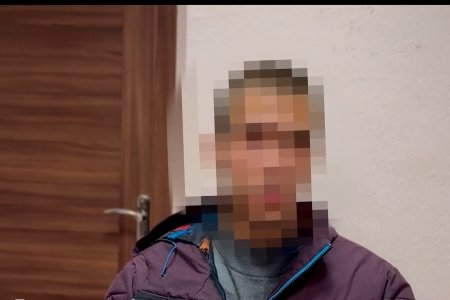
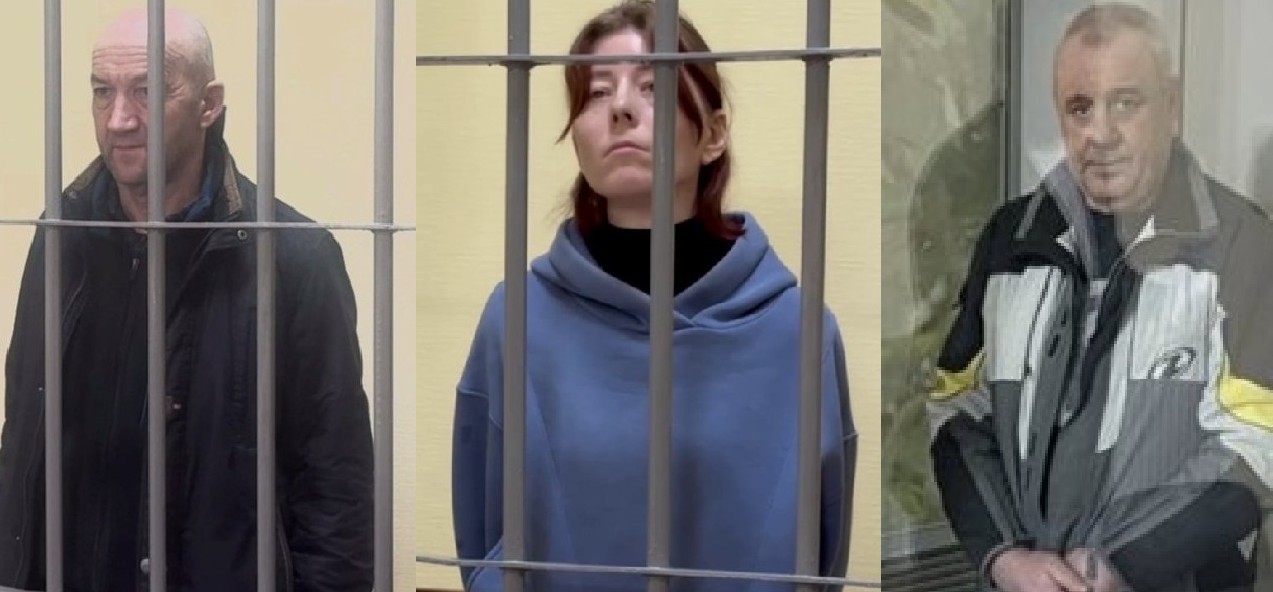
On 25 January 2026, the Russian occupation ‘Zaporizhzhia regional court’ reported its 14-year sentence in a maximum-security prison colony against 64-year-old Anatoliy Minaka, a security guard at some kind of hospital or clinic in occupied Melitopol. Given Russia’s near total information blockade, and the particular secrecy around all supposed ‘treason’ charges, the only information is that provided by this illegal ‘court’ and its press service.
From this, we know firstly that there was no trial, merely the date (5 December 2025 when the case was registered, and a ‘hearing’ at which the sentence was passed by occupation ‘judge’ Valery Valerievich Zmeyev on 23 January 2026.
The prosecution claimed that Minaka had contacted his son in government-controlled Ukraine via Telegram and WhatsApp in October 2023, with this apparently of relevance. He was then alleged to have, “in June -July 2024” taken photos on his phone of pages from the medical journal containing the personal data (date of birth; workplace; address and telephone) of patients and the medical establishment employees. He had then, purportedly, passed these on “via his son to an unidentified representative of Ukraine’s Armed Forces.”
It was further asserted that “an expert assessment” had determined that the information could have been used “to carry out acts of sabotage on the territory of the RF” [sic] The claim was that the information could have been used to send “dangerous infectious agents or poisonous substances”, or to get fake documents into “medical establishments, other services or departments.”
Nothing of the kind was claimed to have been carried out, and if there was any evidence that either Minaka, his son or the anonymous “representative of Ukraine’s Armed Forces” was planning this, it is unclear why it was not, at least, mentioned.
The ‘treason’ charges against Anatoliy Minaka were a slight variation on one type of charge, largely copy-pasted from sentence to sentence, namely the accusation that Ukrainians living on Ukrainian territory passed on information about the Russian invaders’ deployment of military personnel and equipment to Ukraine’s defenders. Where a person does not have Russian citizenship, the indictment is essentially identical, but the charge under Article 276.
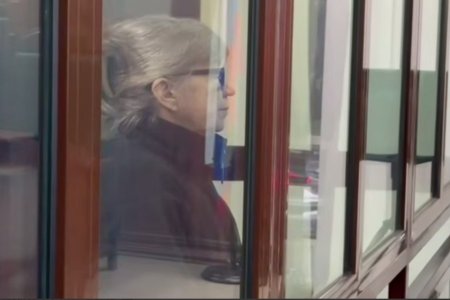
On 21 January 2026, a Russian court of appeal upheld a 14-year sentence on just such a copy-pasted ‘treason charge’ against 52-year-old Volodymyr Makarov from occupied Sevastopol. He was claimed to have passed on information about the position of Russian military sites and military units.
An ever-increasing number of massive sentences on ‘treason’ charges are over donations made to Ukraine’s Armed Forces, regardless of the amount, or the number of specific donations. It remains worryingly unclear how the aggressor state receives information about such donations, and there are also a frightening number of such cases where even the victim’s name is not revealed.
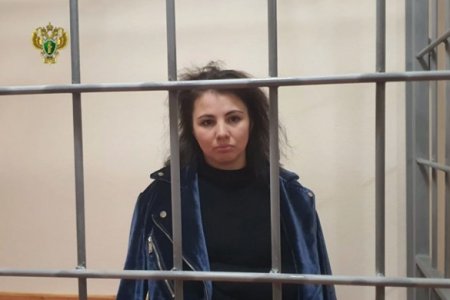
On 26 January 2026, the same occupation ‘Zaporizhzhia regional court’ reported that its sentence of 14 years against a resident of occupied Enerhodar had been upheld by the Russian first court of appeal’.
The young woman’s photo ‘in court’ is shown, however she is identified only as ‘Y’ and as having been born in 1988. The amount that she is said to have donated to her own country’s Armed Forces through six separate money transfers came to around 75 euros.
There have been a huge number of such sentences in all occupied parts of Ukraine, with the victims including some teenagers and Ukrainians of retirement age. In one case, that of Svitlana Dovhopola from Enerhodar, she was sentenced to 14 years for donations to the military unit in which her own son is serving.
See: Russia sentences three Ukrainian women to 12 years for supporting Ukraine’s defenders (scroll down for details about other victims)
These are not the only charges which Russia regularly uses to sentence Ukrainians to long terms of imprisonment.
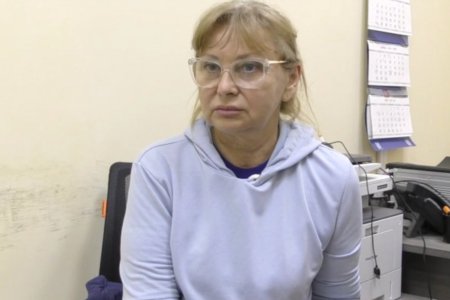
On 23 January 2026, the occupation ‘Kherson regional court’ passed a horrific 18-year sentence against 56-year-old Anatoliy Hron (b. 26.09.1969). It was claimed that he had tried to blow up a satellite communications tower, but had, supposedly, been caught in the act. The charges were under ‘sabotage’ (Article 281 § 2) and over the storing, preparation, etc. of explosives (Articles 222.1 § 3 and 223.1 § 3). As is typical of such cases, the prosecution claimed that Hron had planned such ‘sabotage’. Russia’s FSB appears to suffer from something of a conflict with such prosecutions. It wants to claim to have sufficiently ‘thwarted crimes’ but cannot admit that Ukrainians are impelled by patriotism to oppose the aggressor state. Hron was sentenced to 18 years’ maximum-security imprisonment, with the first five years in a prison, the harshest of all Russian penal institutions. A massive 500 thousand rouble fine was also imposed.
Russia, as occupying state, is prohibited by international law from applying its legislation on occupied territory, with this only one of multiple reasons for questioning any of these fake ‘trials’ with predetermined outcome.