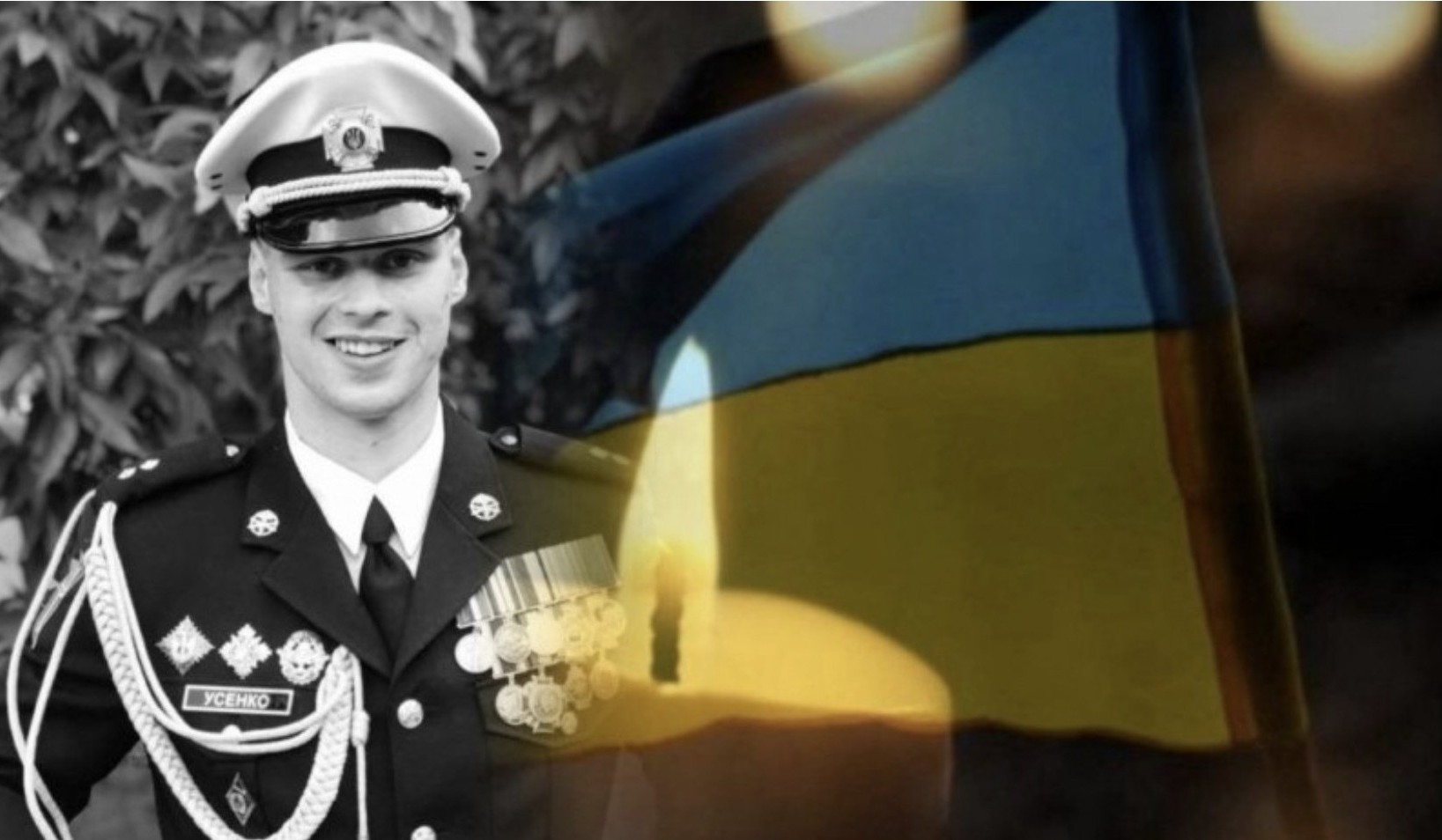
Two more Ukrainian prisoners of war have not lived to see their families and home again, with Bohdan Usenko and Andriy Zdorenko dying after years of torture and ill-treatment in Russian captivity. While Russia only accidently revealed the death of Andriy Zdorenko and has given no further information, the state in which Bohdan Usenko’s body was returned to Ukraine, without any acknowledgement that he had been in captivity, suggests that Russia was seeking to hide the torture likely to have caused his death.
Both men were taken prisoner while defending Mariupol, however Bohdan Usenko may have received particularly brutal treatment for another reason as well. A professional marine, Usenko was stationed in Feodosia when Russia began its invasion of Crimea. He remained true to Ukraine, and from 2014 to 2016 defended Ukraine in Donbas in what was, then, referred to as ATO [the ‘anti-terrorist operation’]. He later graduated from the Hetman Petro Sahaidachnyi National Ground Forces Academy in Lviv. While his wife, Maryna, remained with their two daughters, one an infant, in Mykolaiv, Bohdan was posted on 6 December 2021 to Manhush, near Mariupol. Maryna explains that he was among the first defenders to face the invading Russian forces.
Usenko was taken prisoner on 12 April 2022, after an unsuccessful attempt to break out of the Russian siege of the Ilych Iron and Steel Works. He died in captivity in April 2025, although it was many months before Maryna learned of his death.
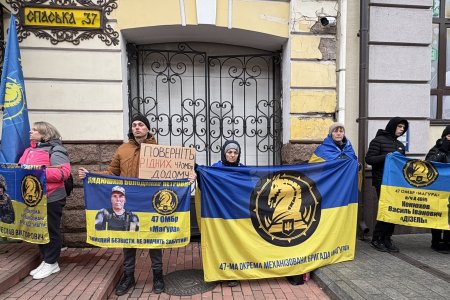
During those three years, Maryna campaigned tirelessly for the release of her husband and other prisoners of war. She knows from Ukraine’s Coordination Headquarters and other prisoners, freed in exchanges, that Bohdan was constantly moved between different SIZO [Russian remand prisons] and was constantly held in cells. No attempt, however, was ever made to fabricate ‘criminal charges’ against him, as Russia has done against many defenders of Mariupol.
For three years, Maryna lived in hope that her husband would be freed in a prisoner exchange. She calls 18 September 2025 the most terrible day of her life. It was on that day that a Ukrainian investigator phoned and informed her that they had received a body in August with the first and last name of her husband on the label. They had carried out a DNA test and found a match with Bohdan’s father.
Maryna can still not find words adequate to express the horror when she went to ‘identify’ the body. These were skeleton remains, she says, not a body. The remains, moreover, were not whole, with the rib cage pulled out, and the ribs poking out. Some teeth were missing and the jaw was hanging loose. She was told that this was the worst state of a body returned from Russian captivity that the investigators had ever seen.
Russia has even lied about the exact date of death, saying that he died on 17 April 2025, although the Coordination Headquarters have received testimony confirming he was alive on 18 April. They claim that he died of tuberculosis, although freed POWs have confirmed that he did not have the disease.
Maryna has told News of Donbas that she plans to lodge an application to the International [Criminal] Court over her husband’s treatment. We must not be silent about such crimes, she stresses.
“The public must know about this, and the world must see it. Our people are dying in captivity. Earlier they spoke of isolated cases, By now there are already hundreds. A lot is said about that, but it is not reaching all. Or they simply don’t want to know the truth.”
Her husband had dreamed of release, yet one day, she says, they simply killed him because they couldn’t defeat him in battle.
At least 200 prisoners of war are known to have been killed in Russian captivity. That includes well over 50 Ukrainian defenders who were almost certainly killed deliberately in a horrific explosion at the Olenivka prisoner camp in occupied Donetsk oblast on 29 July 2022. Other known victims were Oleksandr Ishchenko who was 55 when he died, on 22 July 2024 from a “closed wound to the chest caused by contact with a blunt item”, as well as multiple rib fractures and shock while in a Russian prison. The Russians also claimed that Serhiy Hryhoriev, a 59-year-old prisoner of war, had died of a stroke, however a witness who was held prisoner with him, as well as the autopsy, make it clear that he too was effectively tortured to death. Even those Ukrainian prisoners of war who have been released, return so emaciated and weakened from years of torture, ill-treatment and medical torture (through failure to provide even basic treatment), that not all survive. Oleksandr Savov, a marine who defended Azovstal in Mariupol, was freed in March 2025 and provided crucial evidence against ‘Dr Evil’, or Ilya Sorokin, the Russian medical worker accused of having savagely tortured Ukrainian prisoners of war at Mordovian Prison Camp No. 10. Oleksandr died nine months after returning from captivity, almost certainly as a result of the illnesses he had contracted in Russian prisons and the systematic torture which he had endured. He was 46.
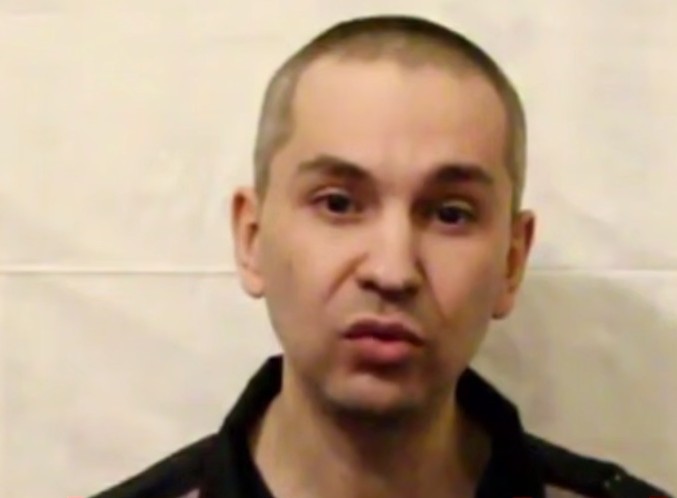
In the case of Andriy Zdorenko (b. 16 December 1985), we know only that Russia’s illegal charges against the Mariupol defender, imprisoned since April 2022, were terminated on 3 September 2025, meaning that he had died at some point prior to this.
Zdorenko was 39 and served as a driver in the 56th Separate Motorized Infantry Brigade ‘Zaporizhzhia Sich’. On a video posted by a pro-Russian Telegram channel, Zdorenko said that he had been a prisoner of war since 21 May 2022, While he may always have had a strong stutter, it is hard to watch the video and not suspect that he too had been subjected to torture. It is also near certain as virtually all Russia’s fabricated ‘trials’ of Mariupol defenders and horrific sentences appear to be based solely on videoed ‘confessions’, in which the prisoners of war give the distinct impression of saying what they have been forced to say, frequently off by heart.
Zdorenko, and the other POWs with whom he was ‘on trial’, are on the Memorial Support for Political Prisoners Project’s list of other victims of political persecution – where too little is known to definitively conclude that a person is a political prisoner, but where political motives seem clear.
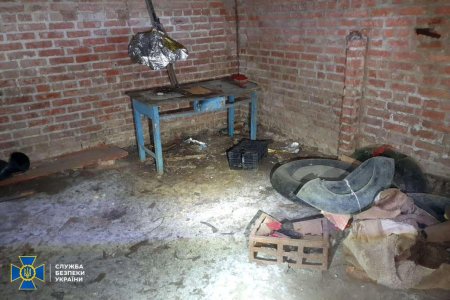
International investigators have concluded that 90% or more Ukrainian prisoners of war are subjected to torture in Russian captivity.
See:
While others are celebrating, Ukrainian POWs are being tortured in Russian prisons
Russia’s torture of Ukrainian civilians and POWs is a crime against humanity – UN investigators
Ukrainian POW horrifically tortured, with words ‘glory to Russia’ burned on his chest
Russian torture of Ukrainian civilians and POWs is clearly state-endorsed policy – UN Rapporteur