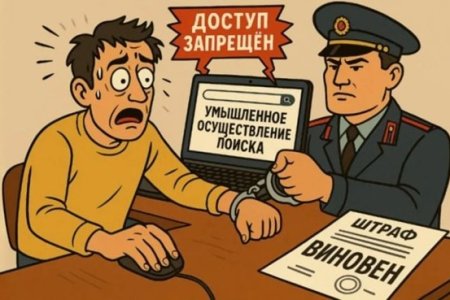
Russia’s State Duma has passed a bill giving the FSB effectively unlimited power to block individuals’ access to the Internet and mobile communications. The move comes as Russia is blocking the last remaining safe forms of communication for people in occupied Ukraine and is aggressively foisting a Russian state-controlled Internet messenger which exposes a person to near total surveillance.
On 17 February, the Duma passed in its second and third (final) readings amendments to the Law on communications, forcing operators on demand from the FSB, or Russian security service, to disconnect any person, anywhere (including occupied parts of Ukraine) from the Internet and mobile telephones. Since the bill received its first reading in January and was pushed through two readings in one day, it is safe to assume that a green light from Russia’s Federation Council (the upper house) and Russian leader Vladimir Putin’s signature are likely in the very near future.
If the bill proposed in January spoke of the FSB ‘requesting’ that a person be disconnected and suggested that this should be because of a ‘security threat’, the FSB will now be able to demand this and will not have to provide a ‘security’ pretext. According to Maksym Olenichev, a lawyer for the Perviy Otdel [First Department] human rights group, “the FSB effectively receive unlimited access and opportunity to suspend any communications”, with no criteria stipulated as to when the law can be applied. Olenichev points out that legislation already gave the FSB the right to demand that communications be disconnected. This, however, was solely to counter terrorism with such blocks only imposed in zones where an anti-terrorist operation is underway. Now they can be suspended on any occasion, and anywhere. Oenichev assumes that the FSB will use such power over providers as a weapon of political pressure, with communications suspended, for example, if people are planning protests. He points out that the FSB already use the powers they have for political persecution, against opponents of Russia’s war against Ukraine, etc.
The bill does refer to demands from the FSB “in cases established by normative legal acts of the Russian president”. This in no way changes the situation, however, and Yevgeny Smirnov, also from Perviy Otdel, agrees that there will be no limits on the reasons for blocking Internet and mobile communications. “The bill rather gives more scope to the president since he will determine which cases”.
Russia also appears to have blocked, or be in the process of totally blocking WhatsApp. Over recent days, Russia’s effective censor Roskomnadzor has also been blocking Telegram, with reports suggesting that it will be totally blocked by 1 April 2026. This is a disaster for Ukrainians on occupied territory, with WhatsApp and Telegram effectively the only way they could safely communicate with family and friends in government-controlled Ukraine or abroad.
As reported, Roskomnadzor confirmed in August 2025 that calls on WhatsApp and Telegram would be blocked. The official line was that that the services were failing to share information with Russian enforcement agencies in fraud and ‘terrorism’ cases. This was dismissed by WhatsApp which said that the attack was because it “defies government attempts to violate people’s right to secure communication”.
Russia is, undoubtedly, intent on blocking any messenger services which prevent it exerting control and surveillance, and on foisting its own state-controlled ‘MAX’, which provides it with a surveillance tool of terrifying scope. As reported, IT specialists have warned that installing MAX is like voluntarily passing your telephone into the total control of the security service.
The regime has encountered resistance, with this perhaps another reason for the unconcealed attempt to silence the only messenger services over which the FSB was unable to gain full control.
On occupied territory, Russia is also using other methods to force the use of MAX, which reportedly contains methods of ensuring surveillance, that are near impossible to bypass (see: Russia foists state-controlled 'MAX' app on occupied Ukraine with terrifying powers for surveillance )