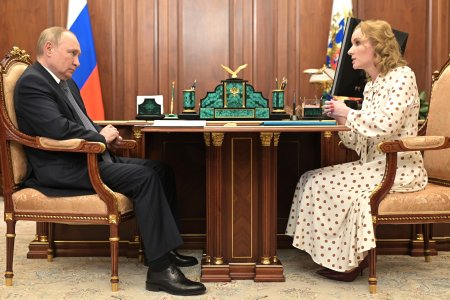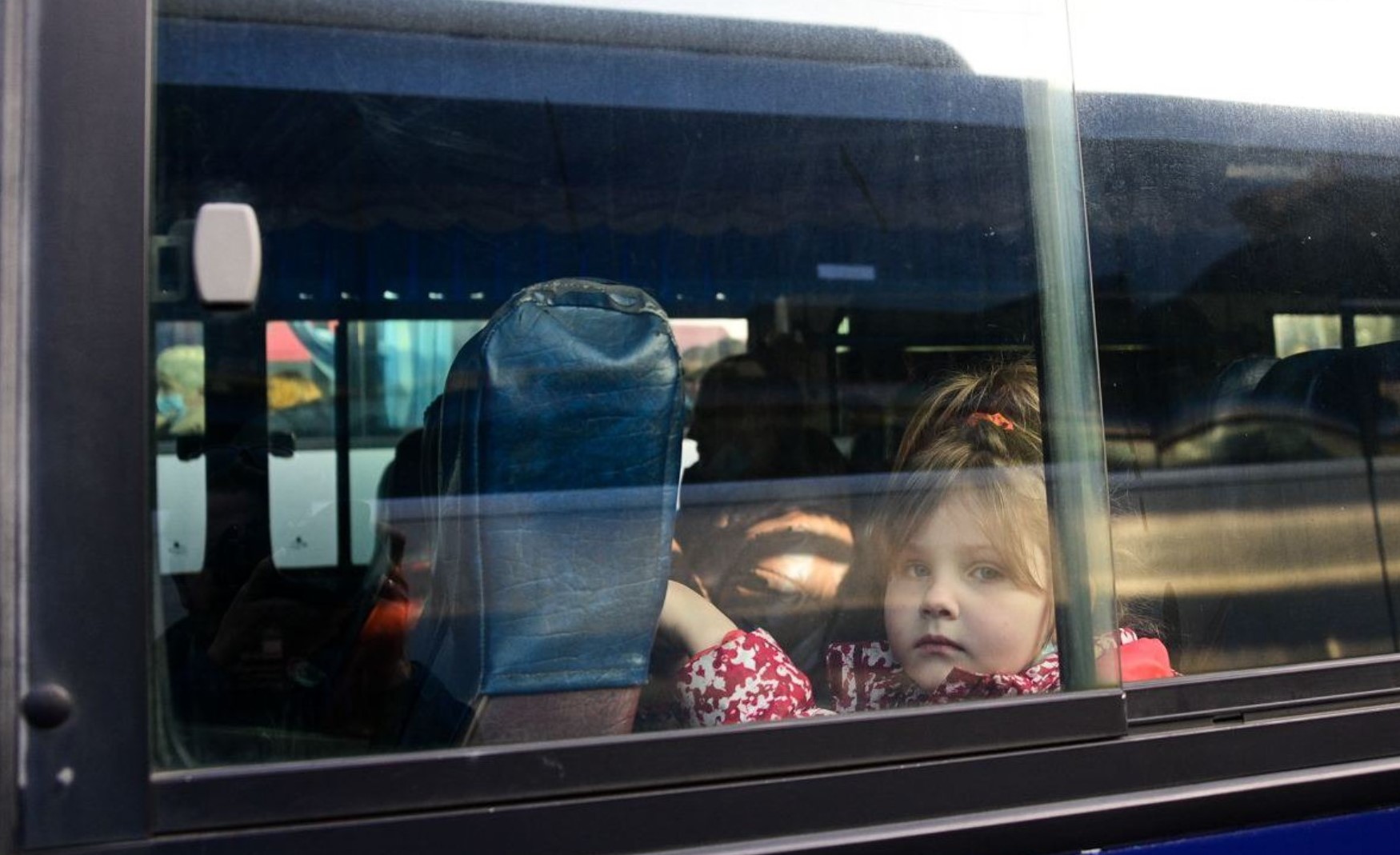
The UN Independent International Commission of Inquiry on Ukraine has published its latest findings on Russia’s deportation and forcible transfer of Ukrainian children to the Russian Federation. It found that these were on a major scale and systematic, and “amount to crimes against humanity and war crimes”. The Commission’s conclusions are important, but with 80% of those children known to have been forcibly deported not yet returned, real mechanisms are desperately needed to force Russia to stop committing such crimes now. Almost exactly three years after the International Criminal Court issued arrest warrants against Russian leader Vladimir Putin and his so-called ‘commissioner on children’s rights’ Maria Lvova-Belova for facilitating the forced deportation of Ukrainian children, the evidence is overwhelming, the scope for forcing compliance with international law minimal.
This is the Commission’s fourth mandate, and resulting report, since it was created by the UN Human Rights Council soon after Russia began its full-scale invasion of Ukraine. It is to be formally presented to the Human Rights Council in Geneva on 12 March. This is by no means the first time that the Commission has concluded that Russia’s unlawful deportation of children to the Russian Federation or forcible transfer to Russian-occupied territory amount to war crimes, however this is the first time that Russia’s targeting in this way of children has been found to be a crime against humanity. Such crimes against children, furthermore, “have irreversible consequences on their lives and their future."
“Compelling evidence concerning the deportation and transfer of a total of 1205 children from five oblasts in Ukraine, verified by the Commission, has led it to conclude that these acts amount to crimes against humanity and war crimes of deportation and forcible transfer of children. The Russian authorities have systematically failed to disclose the whereabouts of the children to parents or legal guardians and have kept them in a coercive environment obstructing their return. Instead of establishing a system facilitating the return of the children, the authorities have sought their long-term placement with families or in institutions in the RF”
The findings are especially damning given Moscow’s attempts, which escalated after the ICC arrest warrants were issued, to claim that it was merely ‘protecting’ children and removing them from danger. Before the arrest warrants were issued, the Russian authorities had not only foisted Russian citizenship on deported Ukrainian children and placed them on adoption databases but openly admitted to this and “provided updates on legislative and administrative measures they undertook to make this possible”. They backtracked on this after the ICC announcement and tried to claim that only temporary foster arrangements were in question. Such assertions are dismissed by the Commission which points out that “in most cases examined, Russian authorities did not establish a system to facilitate the return of the children to their families or country. Children, parents, and relatives carried out own efforts to locate each other. Returns that could be organized occurred after a series of obstacles, delays, and security risks. “
The Commission noted that Russia had deported almost one thousand children (995) from eleven institutions in the so-called ‘Donetsk and Luhansk people’s republics’ shortly before Russia launched its full-scale invasion of Ukraine. It claimed that ““this was an evacuation justified by an imminent security risk emanating from the Government of Ukraine, at a time when Russian armed forces themselves massed personnel and military equipment at Ukraine’s borders.”
“Most deportations and transfers of children investigated have not been temporary as required by law in the case of evacuation. On the contrary, Russian authorities at the highest levels of government have coordinated actions to facilitate the long-term placement of the children in the RF”.
In terms of international law, there must be compelling health, medical treatment or safety reasons for temporarily evacuating children. In Russia’s case, these were not the principal motivating factor, the Commission states, and the Russian authorities did not seek the consent of parents, legal guardians or of the Ukrainian authorities, as required by law. All of this had earlier prompted the Commission to conclude that the unlawful deportations and transfers of children from Ukraine amounted to war crimes.
The fact that these took place over a huge geographic area and followed a well-established pattern of conduct indicated that the acts were widespread and systematic and that they were coordinated by the Russian authorities at the highest levels. “This demonstrates the existence of a pre-established policy, which has been conceived at the highest level of the Russian State and leads the Commission to conclude that Russian authorities have committed deportations and forcible transfers of children also as a crime against humanity.”
The Commission notes that the “deportations or transfers of children, their disappearance, and the ensuing prolonged separation with families, have been highly traumatic for all those involved. A mother who did not manage to find her daughter, placed in an institution in the Russian Federation, stated, “[…] I am still looking for my daughter, and I am terribly afraid of what she might think of me and how she survives there, where many people hate Ukrainians […]”.
See the advance (unedited) Report of the Independent International Commission of Inquiry on Ukraine*
And more details here
“I am still looking for my daughter”: crimes against humanity committed by Russian authorities against children from Ukraine
The report also addresses Russia’s fabrication of ‘trials’ against Ukrainian civilians and prisoners of war, including the use of ‘confessions’ extracted through torture or ill-treatment. It also looked into the methods of coercion and deceit used by Russia to recruit nationals from 17 countries to fight against Ukraine, and investigated testimony from 85 Russian soldiers about violent treatment from commanders. “These included shooting on the spot, beating, detaining in a pit, tying to a tree, as a punishment for refusing to participate in military assaults that would lead to certain death or for withdrawing from the frontline when injured or lacking supplies. The accounts demonstrate a total disregard for human life and dignity and suggest that the use of violence against subordinates is widespread and systematic within the Russian armed forces. “
The criticism of the Ukrainian authorities is not new, with this over ongoing concerns about shortcomings in the interpretation and punishment for collaboration; failure to provide alternative forms of military service and issues linked with military recruitment.
On the previous findings of the UN Independent International Commission of Inquiry on Ukraine
Russia’s enforced disappearances of Ukrainian civilians are crimes against humanity – UN Commission
Russia’s torture of Ukrainian civilians and POWs is a crime against humanity – UN investigators
UN report demolishes Russia’s attempts to blame Ukrainian POWs for its atrocities in Mariupol