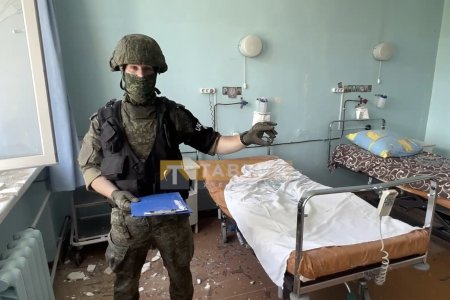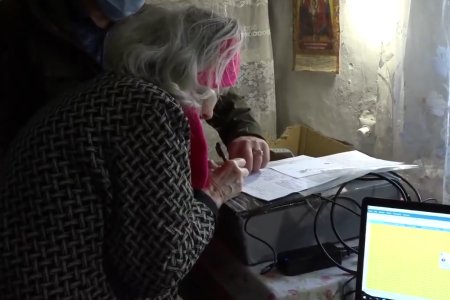
Almost four years after Russia seized control of Oleshky in Kherson oblast, the city lies in ruins, with its remaining inhabitants facing death by starvation, from cold or through lack of basic medication. The Russians are primarily using Oleshky, on the left bank of the Dnipro, to shell Kherson, and have no interest in rebuilding the city or ensuring that the remaining 5-6 thousand residents have enough to eat and homes with heating. They are, however, refusing to provide safe evacuation routes, with local residents suspecting that the blockade is in order to use them as human shields.
By December 2025, the situation had become so dangerous that deliveries were halted to Oleskhy. On 25 February 2026, Tetiana Hasanenko, Head of the Oleshky Military Administration, reported that there had only been one delivery of foodstuffs since the middle of January. Other attempts to get food into the city had, she said, resulted in deaths as vehicles hit mines or came under fire, with the city effectively facing a blockade and the Russians not providing for the basic needs of the civilian population.
Just over a month later, Ukraine’s Human Rights Ombudsman Dmytro Lubinets warned that the situation has in no way improved, with the city facing “a catastrophic shortage of drinking water, no stable electricity and gas supplies and restricted medical care. This is not merely a humanitarian crisis. It is deliberate terrorism by the Russian Federation against the civilian population.”
It is not known how many residents were killed in June 2023 when Russia probably deliberately blew up the Kakhovka Dam but the death toll cannot have been small, especially given the lack of any adequate measures by the Russian invaders. Quite the contrary, with many civilians reported killed by the Russians as they either tried to flee themselves or attempted to rescue their relatives. Now, yet again, the Russians are preventing people from fleeing and Lubinets is not alone in believing that the current catastrophe in Oleshky cannot simply be written off as inevitable consequences of the war.
Lubinets noted that he had approached Russia’s ombudsperson Tatyana Moskalkova and the International Committee of the Red Cross at the beginning of March. Moskalkova has demonstrated a highly specific attitude to human rights since her appointment in 2016, however Russia, as occupying state, is obliged by the Fourth Geneva Convention to ensure food and medical supplies, bringing these in where necessary and ensuring safe passage for such supplies (Articles 55 and 59). There was no response to the request for a humanitarian corridor to evacuate residents and bring in supplies, with the situation ever more critical.
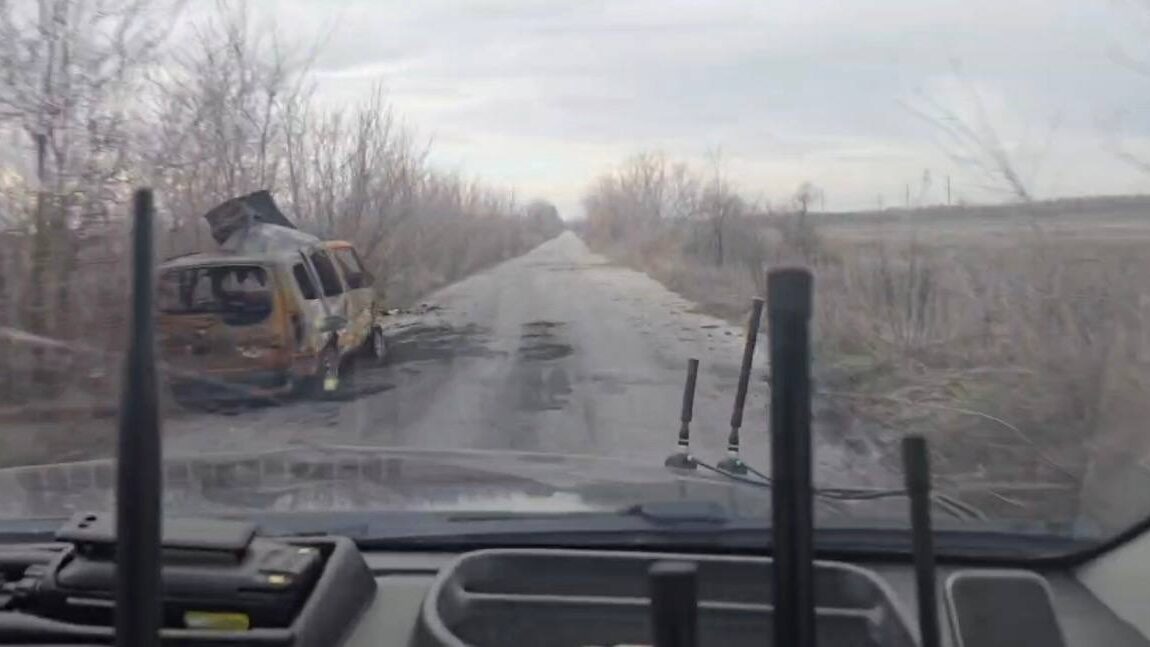
The Media Initiative for Human Rights [MIHR] has reiterated that people are left without electricity, food, medicine or the ability to leave, and that only a humanitarian corridor can save them. MIHR has received witness accounts (which, for the people’s safety, must remain anonymous), that people are dying of hunger and from the cold in their own homes. Reports that the city was under blockade began appearing on local Telegram channels at the end of December 2025, with people writing that the entrances and exits from the city were strewn with mines and spikes, and civilian cars constantly came under attack from Russian drones. Under such circumstances, any attempt to either get food, etc. to Oleshky or to evacuate people is fraught with the very real likelihood of being killed.
On 7 or 8 February, for example, several cars had set off from occupied Skadovsk, but had come under attack near a Russian checkpoint in the vicinity of Hola Prystan . On a video posted by Russian channels, you could see two cars. One had probably hit spikes and already swerved off the road when it was hit by a drone. The other vehicle did not have noticeable damage from the drone, but the body of a man was lying next to it, with loaves of bread strewn around. You could see that the man had a gunshot wound to the head, with MIHR presuming that he had been shot and robbed by the Russian military. He was recognized by locals as from Oleshky, although he had recently been living in Skadovsk. He was supposed to have been bringing pensions, as well as items of food.
MIHR stresses that travelling to and from the city had never been particularly easy. With Russia using the city to shell Kherson, the Ukrainian Army has no choice but to try to prevent Russian military technology and personnel from getting to Oleshky, since all such supplies made the attacks on civilians even more intense. Russia’s attacks on Kherson and unoccupied parts of Kherson oblast became more savage after the invaders were unable to hold the regional centre and Kherson residents greeted Ukraine’s defenders with open joy on 11 November 2022. In May 2025, the UN’s Independent International Commission of Inquiry on Ukraine issued a special report on Russia’s use of drone attacks on civilians. The Commission found that Russia had, since July 2024, been using drones to drop explosives and kill civilians in Kherson oblast, as well as in double-tap strikes, where ambulance workers were targeted after they rushed to the scene of such attacks. There were compelling grounds, it concluded, for viewing such violations of international law as deliberate state policy and as crimes against humanity.
Oleshky is under Russian occupation, yet local residents report that neither the Russians, nor local collaborators are doing anything to resolve the situation, and they too are constantly targeted by drones. One source told MIHR that the Russians claim that it is Ukrainian drones that are killing people. The person continued: “but we’re not complete fools and understand perfectly well that it is the occupiers who are terrorising us”.
People gather near the hospital in the hope that cars will get through, as they last did on 7 January 2026. They know they need to be there as any food will disappear within seconds, and report that drones regularly attack people standing around shops, or going to the market in the hope of finding some food for sale.
One resident told MIHR that the Russians had once, or twice, handed out ‘humanitarian aid’, with this, however, extremely limited, humiliating and confined solely to those who had taken Russian citizenship. Others were refused any aid, regardless of their age or evident need.
The publicity about hunger in the city and the blockade has resulted in one response, but of a chilling nature. It seems that members of the so-called Russian military police have turned up and, in plain clothes, stand in queues, listening to what people are saying about the occupation ‘authorities’. Locals have begun warning each other of the danger – to them for their comments, not to those who have caused the disaster.
It is difficult not to conclude that the blockade is deliberate. Locals recount that those who have decided, despite the risk, to try to get to Skadovsk have been stopped at the Russian checkpoint near Hola Prystan. The Russians are openly laughing at them, they note.
Locals suspect that they are not being allowed out of Oleshky deliberately as the Russians need them there as human shields while carrying out systematic attacks on Kherson from the city.
They ask that people write to international organizations and circulate information about the critical situation in Oleshky. Yes, the city is under Russian occupation, but they are Ukrainians and did not remain in Oleshky out of support for the invaders. MIHR spoke with one woman who told them:
“This is my home, it was unbearable to think of leaving and of the invaders settling in my home. I planned to stick it out until de-occupation, and therefore endured the cold, the lack of contact, the shelling and did not complain. Yet now it looks as though we have to survive hunger as well.”