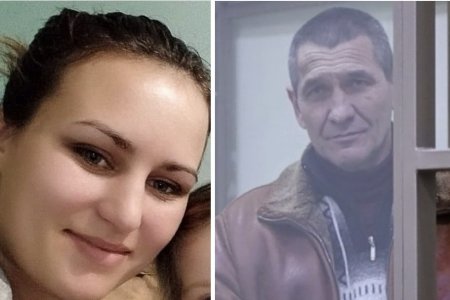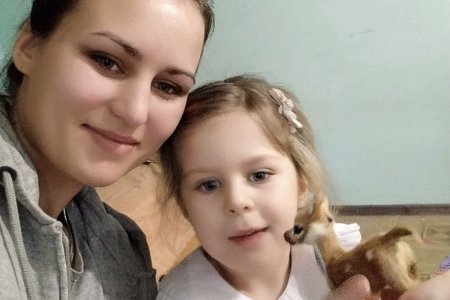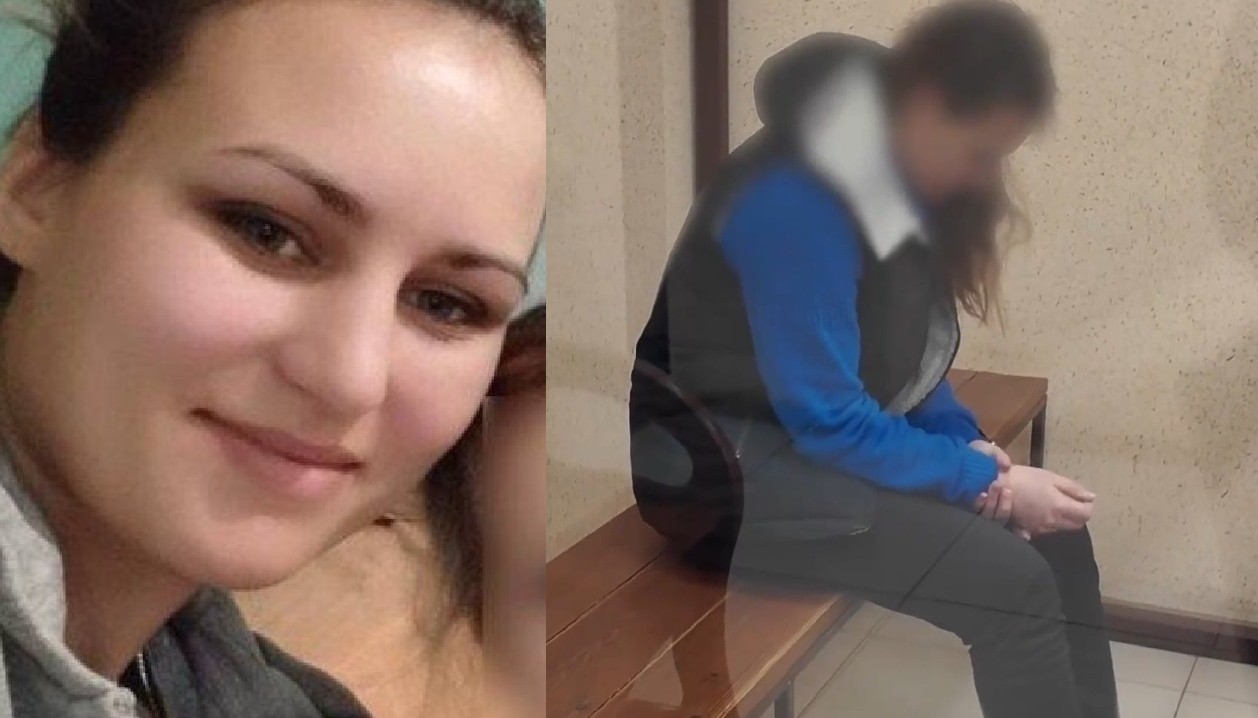
Russia’s FSB claimed on 8 April 2026 that they had “detained an agent of Ukraine’s Security Service” and even produced a video in which this supposedly 25-year-old ‘detainee’ is seen providing a ‘confession’ which corresponds to the FSB allegations. It rapidly became clear, however, that the FSB’s victim was Sakha Manhubi, a 26-year-old solo mother with two small children whom the FSB had abducted from her home in occupied Crimea 18 months earlier. It is just possible that this apparent ‘arrest’ was supposed to be reported back at the end of January 2026 when the FSB finally stopped holding Sakha incommunicado, without any formal status, and had her officially remanded in custody. Why the publicity was delayed three months is unclear, however the discrepancy can only compound suspicion already elicited by the latest FSB enforced disappearance which took 15 months to be admitted at all.
Most of the allegations made in the FSB report on 8 April are those that seem copy-pasted from one such indictment to another. It is claimed, for example, that the young woman (who is not named) made contact with an officer of Ukraine’s Military Intelligence. On instructions from her ‘handler’, she purportedly passed on information about the places of deployment of anti-aircraft systems, about the movement of Russian military and the location of boats in the Kerch strait The information was, allegedly, provided to enable “Ukraine’s militarized formations” [sic!] to carry out missile and artillery attacks on Russian military positions.
The only element that is different in this case is the claim that, again on instructions from her ‘handler’, Manhubi went to a place near Russia’s illegal Crimea bridge from where she supposedly coordinated a missile attack on a freight railway ferry in the Part Kazkaz in Russia’s Krasnodar region.
More standard is the allegation that Manhubi received money for this in a cryptocurrency account. While regularly churning out charges of ‘treason’ or ‘spying’ against civilians from occupied territory, the FSB and Russian Investigative Committee almost invariably seek to avoid any suggestion that those they arrest acted out of patriotism, by suggesting a mercenary motive.
The charges are those which were reported by the Irade human rights initiative back in early February 2026, namely ‘treason’, under Article 275 of Russia’s criminal code. This carries a sentence of 12-20 years, with convictions from Russian or Russian occupation courts effectively guaranteed. ‘Treason’ and ‘spying’ charges also carry the advantage for the players in Russia’s prosecutions that all proceedings are held behind bars, and the occupation enforcement bodies control what information is made public. In this case, and many others, that includes a ‘videoed confession’, almost certainly extracted while Manhubi was held incommunicado and being subjected to physical torture or other forms of duress.
As reported, Sakha Manhubi (b. 28.01.2000) appears to be Russia’s first Karaim political prisoner. She was bringing up her small son and daughter, following her divorce, with her parents looking after the children while she was at work. 2 November 2024 was a Saturday, and Sakha had rung her mother to say that she would just tidy up in the apartment and then pick up the children.
She did not come, with her mother’s calls going unanswered. It was Sakha’s landlady, who lived next door, who contacted her parents and told them that five masked men had turned up and, from 2 to 5 carried out a search of Sakha’s home before taking the young woman away.
Sakha’s mother reported her apparent abduction to the occupation police. Having heard nothing from them in a week, she phoned to ask if her daughter had been reported as missing. It was only then that she was told to come in and given a piece of paper saying that her daughter had been taken away by Russia’s FSB.
Over the following six months, the family’s formal requests for information went unanswered by the FSB. When the FSB finally responded, it was to deny any knowledge of the young woman’s whereabouts. Unofficially, the family were told that the FSB had received three anonymous denunciations against Sakha. Russia cultivates Soviet-style denunciations on all occupied territory. It also cultivates terror and distrust, however, and it is possible that there was some other reason for targeting the young woman.
It is known that she was held incommunicado in SIZO No. 2, one of the two remand prisons opened soon after Russia began its full-scale invasion of Ukraine. SIZO No. 2 is believed to be controlled by the FSB who use it exclusively for holding political prisoners and civilians abducted from territory seized after February 2022.
It was at the end of January that the FSB stopped hiding Sakha Manhubi. The young woman, who only turned 26 on 28 January this year and who has very small children, was remanded in custody, but moved to SIZO No. 1. She is currently in a psychiatric hospital, for the purely formal ‘psychiatric assessment’ which the aggressor state carries out once it has officially admitted that a person is in Russian captivity. It is tragically likely that the next news will be of a long sentence, with that quite possibly counted only from when her FSB tormentors admitted to holding Sakha Manhubi prisoner, 15 months after she was abducted.