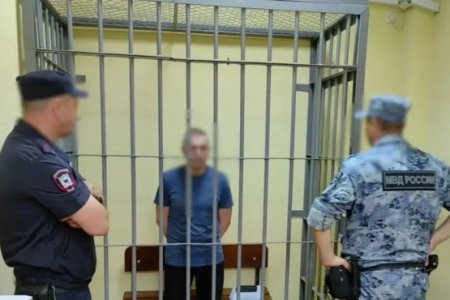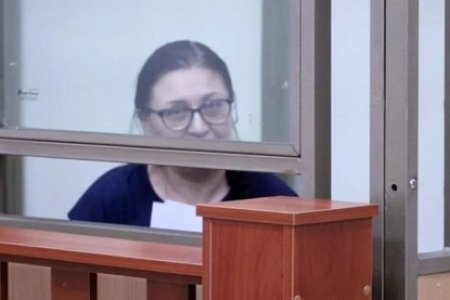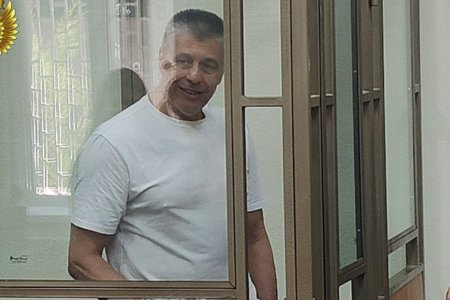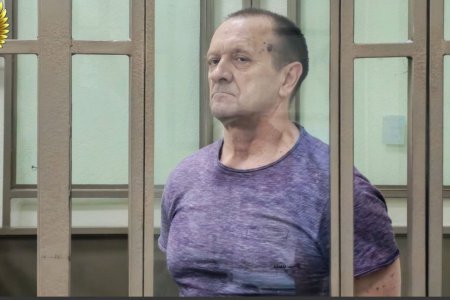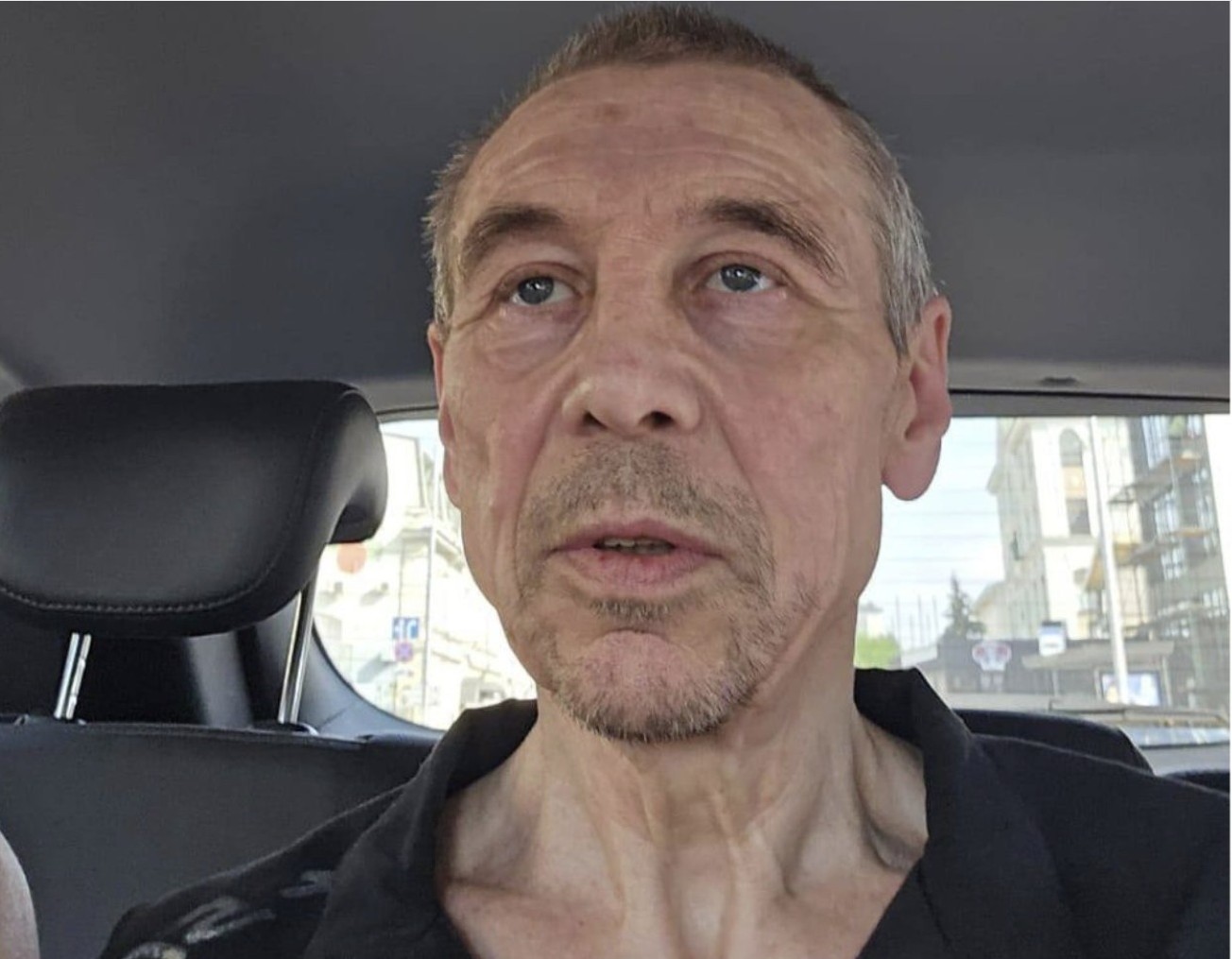
Russia’s FSB have all but dropped any observance of normal procedure in occupied Crimea, with those targeted on ‘political charges’ increasingly abducted and held incommunicado, rather than arrested, and near total secrecy around any supposed trials. Russian secrecy around the abduction and imprisonment of 63-year-old Oleksandr Osadchy is, nonetheless, a record-breaker, as, three years after his abduction, it is not only unclear what he is charged with, but also whether he is awaiting ‘trial’ or has already been sentenced to 18 years.
Oleksandr Osadchy b. 1.10.1962 is from a family with Bulgarian roots. He was born in Vilshanka (Kirovohrad Oblast) and studied at Odesa University before moving to Crimea, where he initially worked on a ship-building factory in Feodosia and then became a businessman. He also taught children to swim and developed various social and educational projects. According to the Crimean Tatar Resource Centre, he held a pronounced civic position, loved Crimea and Ukraine and was therefore not prepared to leave after the Russian invasion. Unfortunately, no more is needed to place a person in danger on any territory under Russian occupation.
The Russian FSB burst into his home on 24 August 2023 and, after carrying out a search, took him away. He had recently visited his brother and his then 90-year-old mother in Kirovohrad Oblast, with this involving travelling from Crimea to Russia, crossing into Georgia, and other countries, before reaching mainland Ukraine. That was the last time they spoke with Oleksandr and his 92-year-old mother is desperate to see her son.
There was total silence for almost a full year, with Oleksandr’s family knowing nothing about his whereabouts, or even whether he was alive. In an interview to Suspilne, Serhiy Osadchy explained that it was only in June 2024 that they received a call from Crimea. The person ringing said that he was a lawyer and that “Oleksandr asked me to pass on that he’s alive. He’s in SIZO [remand prison].”
It was also around then that the Crimean Tatar Resource Centre learned of a videoed ‘confession’ on a Russian propaganda channel. The person’s face was blurred however Serhiy recognized his brother’s voice. He says that Oleksandr is accused of three charges and mentions two – ‘state treason’ and ‘abetting terrorism’. Serhiy Osadchy describes them as “the standard charges used against patriots who don’t give up”.
In fact, most reports mention two charges – ‘treason’ under Article 275 of Russia’s criminal code and ‘spying’, under Article 276. Both have indeed become the default charges used in political trials, not least because they have the advantage for the occupation regime that near total secrecy can be maintained, with all hearings held behind closed doors.
According to Olha Kuryshko, Presidential Representative on Crimea, Oleksandr Osadchy “was detained in November 2023”. The time gap is fairly typical, with the FSB clearly holding Oleksandr incommunicado, without any charges being laid, for several months before officially acknowledging that he was in their custody. Such periods of time, when a person is in particular danger, as their whereabouts are unknown, and the FSB deny any knowledge of them, are most often used to torture out ‘confessions’.
Kuryshko says that the occupation enforcement bodies claim that, “having a pro-Ukrainian position, [Osadchy] took photos and videos of an oil tank and then passed this on” [to Ukraine]. This is, in fact, like the vast majority of supposed ‘trials’ on such charges, where the claim is almost invariably that the person passed on information to Ukraine’s Security Service or Military Intelligence. It is often unclear how the person was supposed to have access to information and / or why Ukrainian bodies would place them in danger for information that they could probably obtain from open sources and satellite imagery. These are closed ‘trials’ with the only information usually being that provided by occupation sources. In many cases, doubts seem legitimate that there was a trial as such, not simply a ‘hearing’ at which the person was sentenced. The sentences are massive, up to 20 years’ maximum-security imprisonment. Oleksandr is not a young man and his health has sharply deteriorated and he has also lost a huge amount of weight. Serhiy says that they are able to get letters from Oleksandr, but he writes almost nothing about himself. He doubtless understands that all such letters are read and that he would face reprisals if he wrote openly.
Olha Kuryshko also addressed the fact that some sources say that Oleksandr Osadchy has already been sentenced to 18 years, while others, including, seemingly, his family, believe he is still awaiting sentence. In August 2025, for example, Crimean Process wrote that the unnamed person sentenced by an occupation ‘court’ to 18 years was Oleksandr Osadchy. In fact, the person sentenced in that case was supposed to be 31, so was clearly not Oleksandr. On the other hand, the Memorial Support for Political Prisoners Project also writes on its site that Osadchy has been sentenced and is now awaiting the appeal hearing.