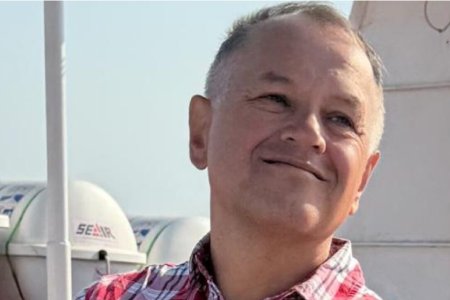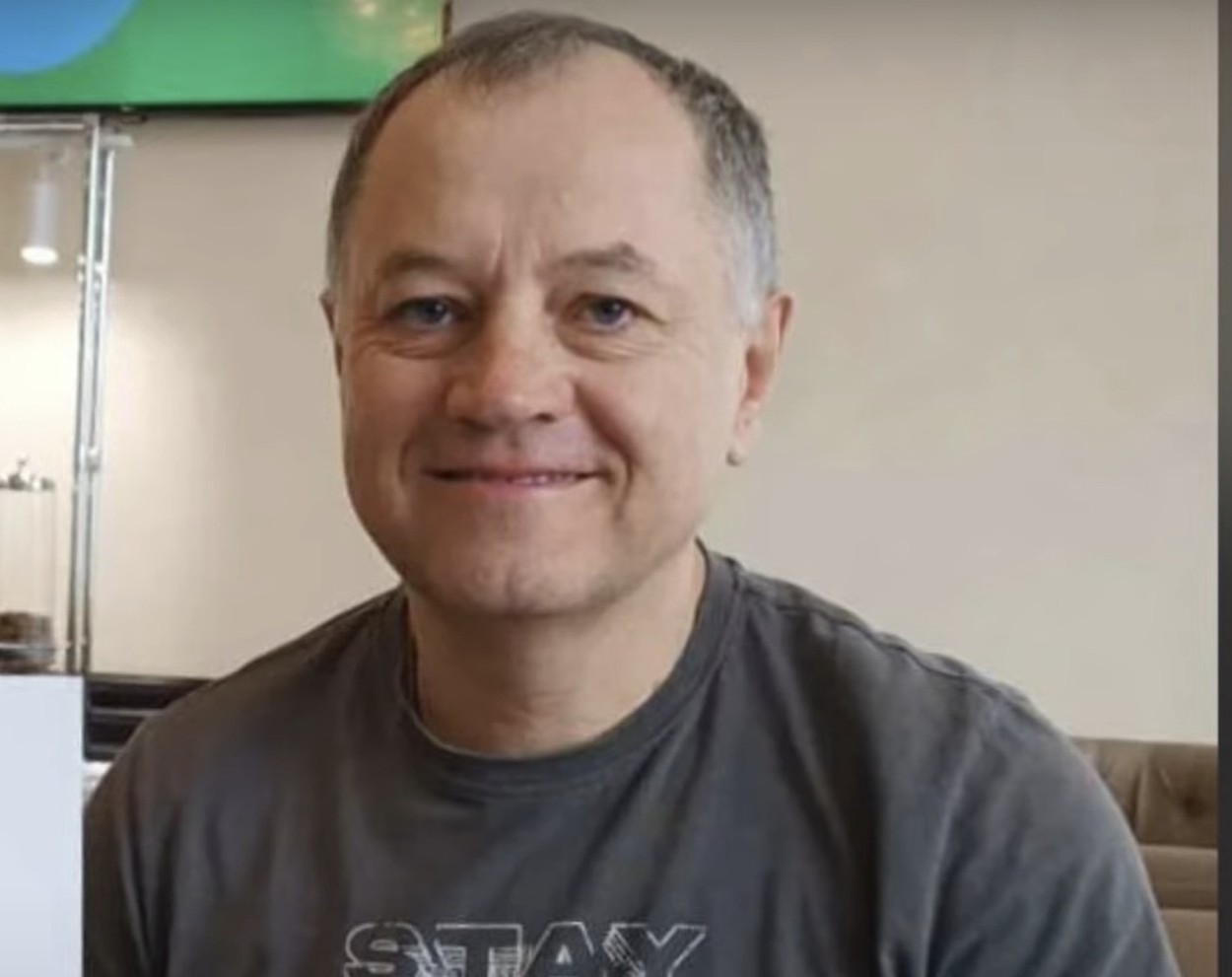
Serhiy Hrishchenkov’s family have learned that ‘court proceedings’ have begun against the 59-year-old IT specialist almost exactly 13 months after he was abducted from his home in occupied Sevastopol. This is effectively the first confirmation that he is alive, after the Russians systematically refused to provide any information about his whereabouts and an occupation ‘court’ refused to formally oblige them to confirm or deny that he was in their custody.
Daria Hrishchenkova has told Suspilne Crimea about the ‘court proceedings’ against her father, with this all that the family have been told. There has been no notification of the official charges, although it seems likely that the aggressor state is accusing Hrishchenkov, who has never concealed his strongly pro-Ukrainian position, with ‘state treason’ against Russia, under Article 275 of Russia’s criminal code.
In normal circumstances you might wait for more detailed information to emerge. There is, however, nothing normal about Russia’s persecution of civilians from occupied territory where the first information about a person abducted more than a year earlier has on many occasions been news of their 13 or 15-year sentence. Any ‘court’ hearings are invariably behind closed doors, and it is often unclear if there was even one full hearing before sentence was passed. Publicity is vital as the main motive for such blitzkrieg and secret ‘trials’ is almost certainly to ensure that the person on ‘trial’ does not retract confessions extracted out of them through torture or threats while they were held incommunicado, often before any formal charges were laid.
Daria earlier explained that she first learned of her father’s abduction during the night from 5 to 6 May 2025 when she received a text message asking her to ring immediately from a telephone that had belonged to her late grandfather. It turned out that the message was from her mother whose own phone had been taken by the FSB. Her mother told her only that Hrishchenkov was accused of ‘treason’.. It is not clear how much more she could have said, had the FSB not forced her, under threat of criminal prosecution, to sign a non-disclosure undertaking. She did tell her daughter that, during the search, the men first looked everywhere for Daria’s 18-year-old brother and then, very aggressively, demanded to know where he was. The young man was, thankfully, safe, having first left occupied Crimea for Kyiv and then begun studying abroad.
It later became clear that both Daria’s parents had initially been taken away and interrogated by the FSB. The charge mentioned was of ‘state treason’, with Hrishchenkov accused of having worked for Ukraine’s Security Service for two years. The accusation appeared to be based on the supposed ‘testimony’ of some third person, with it claimed that something had been handed over in Bakhchysarai.
Had there been any real evidence to back such charges (which Russia, as occupying state, has no right to bring), Hrishchenkov would have been arrested immediately. Instead, he was effectively abducted and hidden away for 13 months. The FSB constantly denied any involvement in his disappearance or knowledge of his whereabouts. The ‘Black fleet military prosecutor’s office’ refused to carry out any check, with complaints to the occupation ‘central prosecutor’s office’ about such inaction sent back to those against whom the complaint was lodged.
Hrishchenkov’s family lodged a formal complaint with the occupation ‘Gagarin district court’ in Sevastopol. During the hearing on 24 February 2026, ‘judge’ Natalia Gamimullinaya looked evidently worried when told that there was CCTV footage of Hrishchenkov’s abduction. Despite this, she refused to watch the footage; rejected the application and terminated the proceedings. Daria commented afterwards that it was evident from her behaviour that she was under pressure and was handing down a ruling which she had not herself written. It is, unfortunately, near certain that other occupation ‘judges’ will prove just as willing to provide the long sentence against Serhiy Hrishchenkov demanded of them.