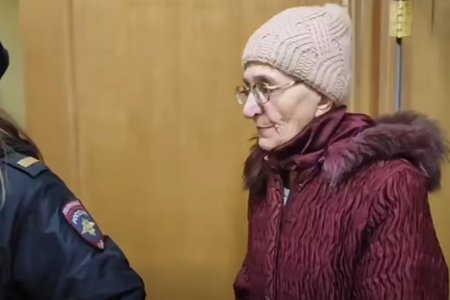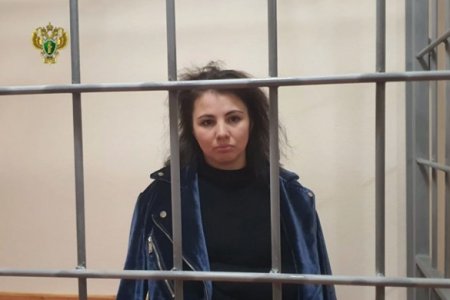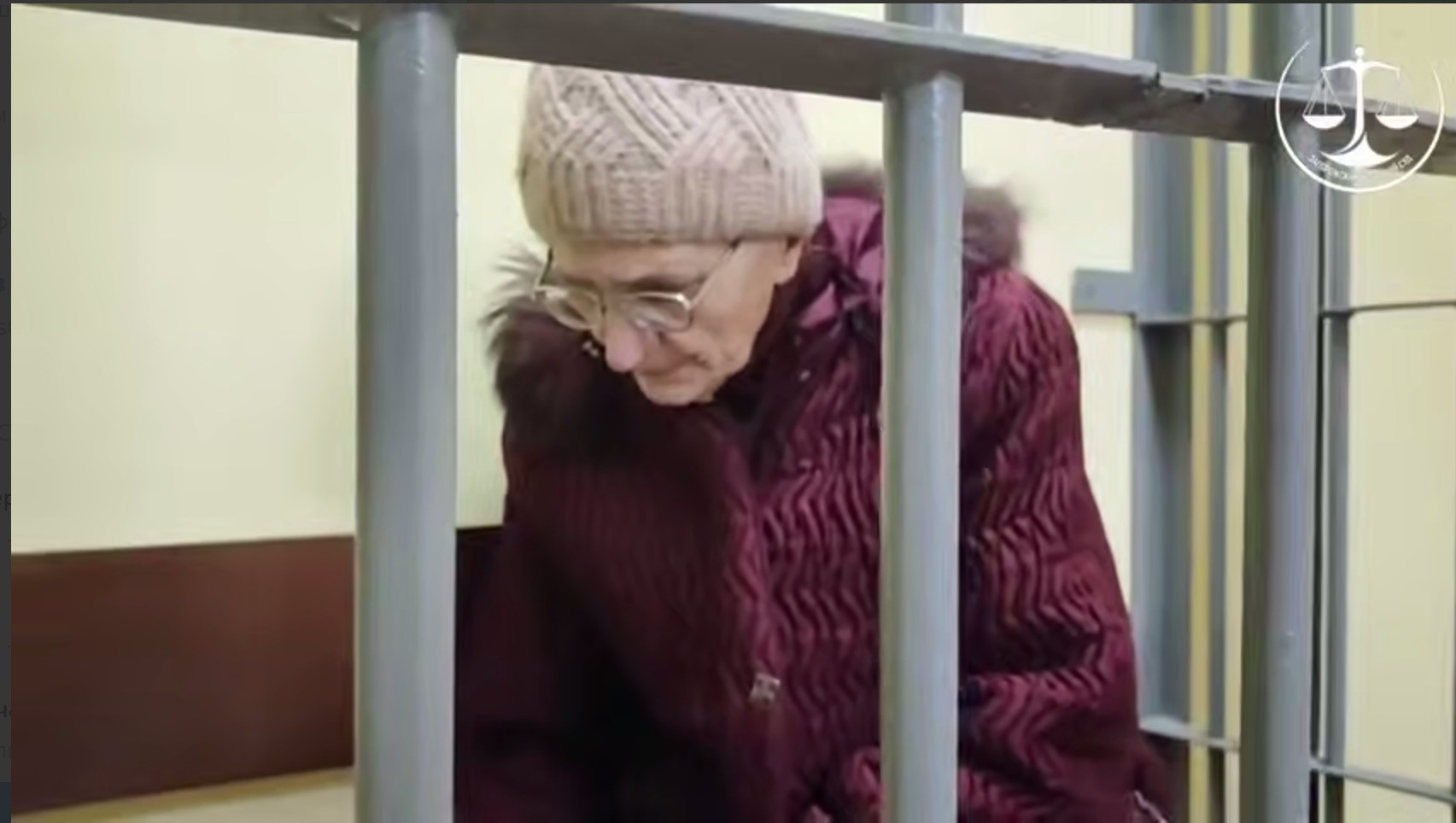
Russia’s First court of appeal has not only upheld an illegal conviction by an occupation ‘court’ against 68-year-old Halyna Bekhter for supposed ‘treason’ through a donation to Ukraine’s Armed Forces but has increased her sentence from eleven to twelve and a half years’ imprisonment. The brutality is especially shocking as a human rights activist in contact with a cellmate of the Ukrainian pensioner reported several months ago that she was showing signs of dementia. While it would normally be inappropriate to bandy about such ‘diagnoses’ without a proper medical examination, Russia has not only failed to provide any such assessment but has even increased an already appalling sentence.
According to Sota Vision, the appeal against the original sentence was lodged by the prosecutor who had demanded a 16-year sentence for a donation made to the defenders of Halyna Bekhter’s own country. As reported, the excuse for ‘treason’ charges, under Article 275 of Russia’s criminal code, was the Russian citizenship without which the occupiers have made it impossible for Ukrainians to live in their own homeland. Halyna Bekhter (b. 19 December 1957), who is from Plodorodne in the Melitopol raion was claimed to have, in July 2023, used a Ukrainian mobile banking app to send money to Ukraine’s Armed Forces. This was alleged to have been “financial help to the armed forces of a foreign state in activities aimed against the security of the RF”.
The official version is that Halyna Bekhter was ‘detained’ on 2 October 2025, however it seems likely that she has been in Russian captivity for much longer. The cellmate from whom information has come about Halyna’s deteriorating health is seemingly imprisoned with her in SIZO [remand prison] No. 1 in occupied Simferopol and writes that she has known Halyna since June 2025.
Halyna was sentenced on 5 March 2026 by ‘judge’ Valery Valerievich Zmeyev, a Russian citizen illegally deployed in Russia’s occupation ‘Zaporizhzhia regional court’. He also ordered that her mobile phone be confiscated and, presumably, sold to obtain the 1240 roubles, or 14 euros, which Halyna had donated to the Ukrainian Armed Forces.
It was that donation which the Russian prosecution demanded a 16-year sentence for, and for which a Russian appeal court gave 12.5 years. It chose to treat the fact that the donation had been made while Russia was carrying out mobilization as aggravating Halyna’s ‘guilt’.
It is not entirely certain that the occupation ‘Zaporizhzhia regional court’ truly exists, let alone that there was even one hearing before a video was posted of Halyna Bekhter in a ‘cage’ receiving sentence. All such ‘treason’ trials take place behind closed doors, with this apparently true also of the appeal hearing on 6 July 2026.
In late May 2026, Sota learned from a human rights activist who corresponds with prisoners, including Halyna Bekhter’s cellmate, that the latter suspected that Halyna is suffering from Alzheimer’s. The cellmate wrote that she had known Halyna since June 2025, that all had appeared to be fine, with the dramatic deterioration having been in the past two months or so. The cellmate explained, among other things, that Halyna was refusing to eat, and that they had to positively hold her so that she doesn’t run away from the table and force her to eat something.
The human rights activist writes that in the last letter, Halyna’s cellmate wrote that Halyna’s weight had become critically low and that they were trying to get a medical examination. A doctor had, purportedly, examined her a couple of times, but Halyna herself was unable to tell her cellmates about the examinations, if any took place. Legal help is needed to try to secure Halyna’s release on health grounds.
It would seem that nothing was done, and now Russian ‘judges’ have gone along with the prosecutor and increased an already brutal sentence which, for Halyna Bekhter constitutes horrific medical and psychological torture.