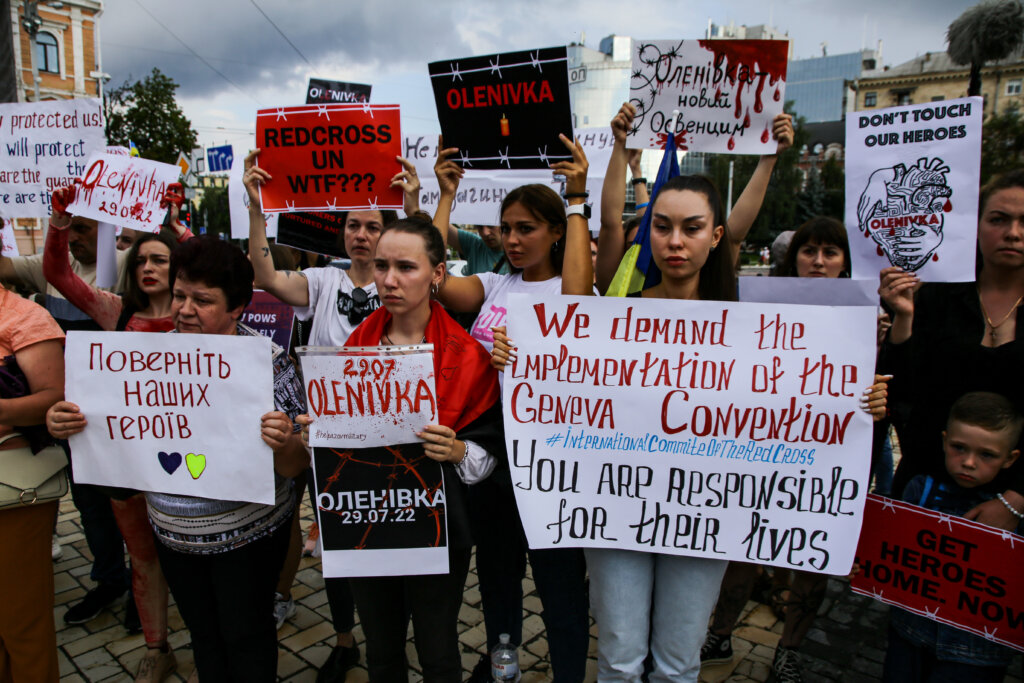
Four years have passed since 50 Ukrainian prisoners of war were killed in a massive explosion at Olenivka in occupied Donetsk oblast, or over the following hours when prison staff deliberately denied them treatment for their injuries. Although the European Commission openly called this a mass killing of Ukrainian prisoners when imposing new sanctions on 14 July 2026, there has still not been an international investigation specifically into the events that night which one witness has called “a show execution”. The International Criminal Court has yet to respond to the submission made two years ago by Ukrainian human rights groups. In its statement on 28 July 2026, Ukraine’s Foreign Ministry specifically on the ICC, as well as other international bodies to “continue investigating crimes related to the mass murder of Ukrainian prisoners of war in Olenivka”, with accountability also for “those who ordered the crime or facilitated its concealment.”
It is debatable whether the word “continue’ is appropriate here. By the beginning of January 2023, UN Secretary-General Antonio Guterres had disbanded the ‘fact-finding mission which gained headlines when first announced on 3 August 2022, but nothing more. In fact, the headlines in January 2023 make it quite clear why a proper probe is so urgently required. The UN representative, as quoted by Associated Press. stated that the team had been disbanded “in the absence of the required security guarantees and the “conditions required for the deployment of the mission to the site.” The AP report says that both “Russia and Ukraine” demanded an investigation, and follows the UN representative in providing no clarification that the lack of security guarantees had come from Russia. This is of critical importance, as otherwise reports, like that by AP, invariably descend into “Russia says …” and “Ukraine denies this and says …”, with the reader left to take their pick.
On the eve of the first anniversary, the UN Human Rights Chief Volker Türk “decried the lack of accountability for Olenivka killings” and rejected Russia’s claim that the explosion had been caused by a Ukrainian-fired HIMARS missile. He, at least, did note Russia’s effective blocking of any proper investigation.
Although Russia had blocked any access by international investigators or the International Committee of the Red Cross [ICRC] to the survivors and to the scene of the explosion, by the first anniversary the Media Institute for Human Rights was already able to publish a damning report. While the direct nature of the explosions remained unclear, it was evident that the barracks in the industrial zone of the former Volnovakha prison colony had just been prepared. On 26 July, guards had appeared at the barracks where Azov Regiment POWs were held and read out the names of those who were to be moved to the new barracks.
It is unlikely that Russia wanted another investigation finding ‘DNA-level’ physical evidence like that retrieved from the wreckage of MH17 in July 2014 which showed that a Russian BUK missile had downed the airliner.
Even without evidence of what caused the explosions, there is plenty of proof of Russia’s crimes, including the fact that nine of the men were not killed outright, but from the failure to provide any medical care. In January 2025, Dmytro Martsyn, a prosecutor from Ukraine’s Prosecutor General’s Office, reported that 41 men are believed to have been killed in the explosion, while nine died of their injuries with the prison staff having done nothing.
On 13 January 2025, Pablo de Greiff, Commissioner of the Independent International Commission of Inquiry on Ukraine, spoke of this during his address to a UN Security Council meeting. After the explosion, “a blast in which dozens of Ukrainian soldiers were killed, Russian authorities did not provide necessary medical assistance to severely injured soldiers. Basic aid was provided by fellow co-detainees, while the leadership of the colony “stood and watched” as Ukrainian prisoners of war died from serious injuries.
In an earlier, 2024, report, the Independent International Commission of Inquiry on Ukraine concluded that Russia’s torture of Ukrainian POWs and civilians is widespread and systematic. “The Russian authorities have committed torture as a coordinated state policy and, hence, crimes against humanity.”
It was for this reason that the European Commission earlier in July added Dmitry Neelov [/Neyolov], first deputy head of the Olenivka prison, to its sanctions list. He is “involved in the torture, beating and humiliation of Ukrainian POWs and civilians. He is directly responsible for the mass killing of Ukrainian prisoners in Olenivka on 28-29 July 2022 following a Russian attack, by deliberately delaying the evacuation of the wounded.”
The head of the prison at the time of the killings was Serhiy Yevsiukov, a Ukrainian turncoat, however he is believed to have been killed when a car bomb went off in December 2024.
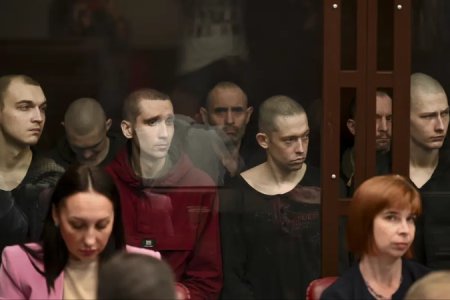
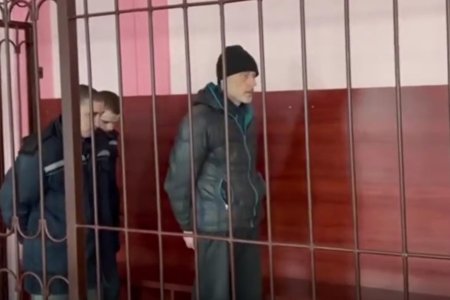
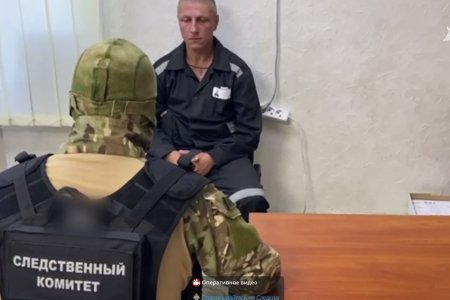
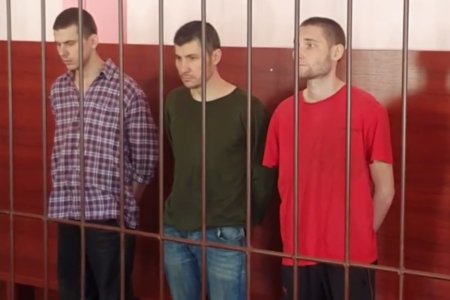
According to the Media Initiative for Human Rights, over 130 men were injured in the explosion during the night from 28-29 July 2022. Of these, less than half have been released in prisoner exchanges, with over fifty men held, despite Russian promises, in Russian captivity. While some are held incommunicado, others have faced kangaroo courts and sentences on the surreal ‘terrorism’ charges based solely on the Russian supreme court’s politically motivated ruling of 2 August 2022 claiming the Ukrainian Armed Forces’ Azov Regiment to be ‘a terrorist organization’.
Their treatment and that of all defenders of Mariupol in Russian captivity is horrific, with many Ukrainian prisoners of war having been tortured to death or died from lack of medical care.
An international investigation is needed for accountability but also to put pressure on Russia to free men who are likely to have never received proper medical treatment and whose life may well be in danger.