Russia’s Southern District Military Court has passed horrifically long sentences against six Ukrainians from occupied Crimea, imprisoned since May 2023 and probably tortured for ‘confessions’ to fabricated charges. At least two of the defendants stated clearly in court that they had never met the other Ukrainians with whom they were supposed to have plotted ‘acts of terrorism’ against Russian-installed collaborators, while well-known sportsman Kyrylo Barannyk also gave a harrowing account of the torture methods used to extract his original ‘confession’. These included electric shocks and asphyxiation, as well as threats to kill his mother if he did not ‘cooperate’. One of the two women on trial told the court that she had only signed her supposed ‘confession’ because the FSB had threatened that otherwise her child would be placed in a children’s home. Doubts are also legitimate over the manner in which two alleged ‘plots’ were later merged into one, with the doubts only compounded by the multiple irregularities in the court proceedings.
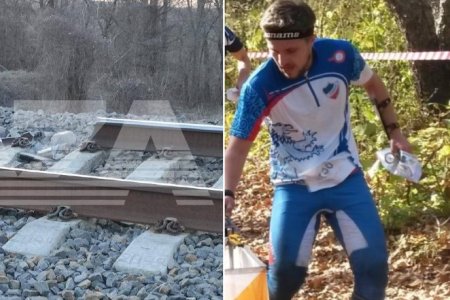
Most of the ‘arrests’ were announced on 3 May 2023 when the FSB in occupied Crimea claimed to have thwarted assassination attempts against Sergei Aksyonov, Russian-installed Crimean ‘leader’ and two other collaborators - Vladimir Konstantinov (occupation ‘parliamentary speaker’) and Yanina Pavlenko, head of the occupation administration in Yalta. The FSB claimed that those detained had been planning “a series of high-profile acts of sabotage – terrorism”, including by blowing up parts of transport infrastructure. Most of the assertions were backed only by likely staged displays of explosives and by a ‘confession’ probably extracted through torture from Victor Podvalny. The fact that there was one episode which did actually happen, namely the explosion on 23 February 2023 that damaged a part of the railway track in the Bakhchysarai raion, did not make the ‘plot’ any more credible given that the FSB had already spent three months carrying out a huge number of armed searches and effective abductions of Crimean Tatars as part of their ‘investigation’ into that episode. Six men were named as having been detained: Serhiy Kryvosheiin; Oleksandr Lytvynenko; Denys Petranov; Victor Podvalny; Serhiy Voinarovsky; Kostiantyn Yevmenenko and Ihor Zorin. The FSB claimed to have discovered five explosive devices concealed in hotplates brought into occupied Crimea. as well as detonators, radio-controlled mechanisms and trackers. According to their version, they had uncovered a channel, “organized by the Ukrainian Security Service”, or SBU, by which the explosive devices were smuggled in from Bulgaria, via Turkey and Georgia.
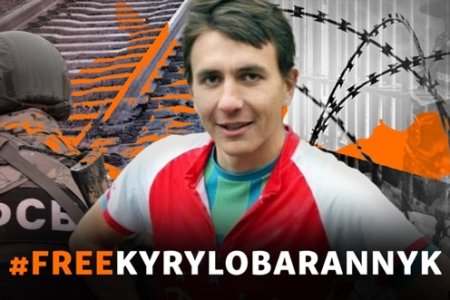
Kyrylo Barannyk (b. 1998), a sportsman who had won several Ukrainian championships in sports orienteering, was seized in a separate ‘operation’, on 30 May 2023. The FSB initially accused him of rail sabotage - involvement in the above-mentioned explosion on 23 February 2023, and of possession of explosives or firearms. Barannyk was then represented by one of the courageous lawyers whom Russia has since persecuted and even stripped of his licence. It was thanks to this lawyer that details became public about the torture to which Barannyk was subjected. “The FSB officers forced me to admit to a crime that I hadn’t committed. At first, they tortured me with electric currents, connecting electric terminals to my fingers, toes, earlobes and buttocks. They threatened to fully rape me, and I took the threat seriously. Then they beat and kicked me around the torso and head, with this resulting, I believe, in a broken rib on my right side.”, They also threatened to rape or kill his mother, or to kill him, claiming that he had tried to escape.
It became clear in January 2024 that the charges against Barannyk had been radically escalated, with the young man now also accused of ‘state treason’ (under Article 275 of Russia’s criminal code) and of ‘involvement in the activities of a terrorist organization’ (Article 205.5 § 2).
This, it transpired in April 2024, was because the FSB had merged the charges against Barannyk with its mass ‘saboteur plot’ and passed the final indictment to the Southern District Military Court in Rostov.
Eight Ukrainians from occupied Crimea were to go on trial: Kyrylo Barannyk (b. 8.02.1998); Olha Kravchuk (b. 20.10.1957); Serhiy Kryvosheiin (b. 26.01.1998); Denys Petranov (b. 24.05.1979). Victor Podvalny (b. 22.01.1967); Serhiy Voinarovsky (b. 6.11.1984); Olena Voinarovska (b. 28.08.1985) and Ihor Zorin (b. 5.05.1972).
The two women were accused only of possession, purchase, etc. of explosives, by a group, under Article 222.1 § 4. Since just this charge alone could carry a sentence of 15 years’ imprisonment, it is at least welcome that the women, both of whom have been in detention since May 2023, received 5- and 5.5-year suspended sentences. It is not clear what sentences the prosecutor had demanded, with this, unfortunately, of relevance since any appeal by the prosecutor in cases involving Ukrainian political prisoners has always resulted in the sentence becoming worse.
The men were all charged with ‘treason’ (Article 275); possession, etc. of explosives (Article 222.1); ‘involvement in a terrorist organization’ (Article 205.4 § 2) and multiple counts of Article 205 § 2 (carrying out or planning a terrorist act).
It was learned in December 2024 that two of the men first reported to have been ‘detained’ - Oleksandr Lytvynenko (b. 1986) and Kostiantyn Yevmenenko (b. 1971) had been convicted of the same charges in a separate ‘trial’, with Lytvynenko sentenced to 10 years; Yevmenenko to 9.5 years.
In all other cases, the defendants rejected the charges. Kyrylo Barannyk appears to have stated that he was involved in rail sabotage, but that he had acted alone and that he had not known the men with whom he was claimed to have been in conspiracy. In reporting the sentences demanded by the prosecutor on 7 October, Crimean Tribunal noted that Victor Podvalny, who was claimed to have organized the so-called ‘terrorist organization’ and to be the other men’s ‘handler’, stated that he had met Zorin once and had not known the other men at all. One of the other defendants stated in court that he suspected he had been seized because he often parked his car near a place where Konstantinov, one of the three alleged targets, was often present. As mentioned, Olena Voinarovska, whose husband was also facing a huge sentence, stated that her signature on the purported ‘confession’ was extracted through FSB threats that her child would be taken away and placed in a children’s home.
There were other serious irregularities, albeit standard for the Southern District Military Court and specifically presiding ‘judge’ Igor Vladimirovich Kostin. The latter has taken part in numerous political trials of Crimean Muslims, many of whom have been involved in civic journalism or activism for the now effectively outlawed Crimean Solidarity human rights movement. Kostin also recently passed the life sentence against Volodymyr Teteriev over another non-existent ‘assassination’ plot against a local collaborator.
The FSB invariably bases its supposed ‘evidence’ on secret witnesses, with Kostin allowing this here, as on other occasions, although there was almost certainly no attempt made to ascertain why the person needed to testify without being identified. It is a manifest infringement of the men’s right to a fair trial to allow ‘testimony’ that cannot be verified, with the ‘judge’ in these cases also typically blocking questions aimed only at demonstrating that the alleged ‘witness’ was lying.
Crimean Process points out that the court constantly ignored or rejected legitimate applications from the defence over inadmissible evidence, etc. It also ignored the fact that one supposed ‘prosecution witness’ used the same words as in his initial statement in court, while proving unable to answer the simplest of questions outside of that prosecution script.
There are also the general gaping flaws in all such ‘trials’ which Russia has no right as occupying state to hold against Ukrainian citizens in Russia and under Russian legislation. It would also be absurd, even if such acts took place, to classify acts aimed at sabotaging railway transportation used for Russia’s war of aggression against Ukraine or attempts on the lives of collaborators as ‘terrorism’.
Any lingering doubts about the predetermined outcome of this so-called ‘trial were dispelled by the extraordinary haste with which Kostin and two other ‘judges’ churned out their convictions and long sentences. These were announced on 8 October 2026, less than 24 hours after the prosecutor demanded sentences totalling 152 years against the defendants. All of the sentences are for maximum-security imprisonment, where the conditions are appalling and which would mean that the men were imprisoned somewhere in the Russian Federation, most likely thousands of kilometres from Crimea.
Victor Podvalny was sentenced to 27 years, with the first five of these in a prison, the harshest of Russian penal institutions. The sentence was to be followed by two years’ restricted liberty and he was also fined 700 thousand roubles.
Kyrylo Barannyk received an identical sentence, except for the size of the fine (600 thousand roubles) with the sentence five years longer than that demanded by the prosecutor.
Denys Petranov received a 23-year sentence (one year longer than that demanded by the prosecutor) with five years in a prison and a fine of 600 thousand roubles.
Ihor Zorin received the 20-year sentence demanded by the prosecutor, with the first four years in a prison; a fine of 500 thousand roubles, and a subsequent 18 months’ restriction of liberty.
Serhiy Kryvoshein and Serhiy Voinarovsky received a sentence one year lower than that demanded by the prosecutor. They were sentenced to 19 years with the first 4 years in a prison, a further 18 months of restricted liberty, as well as a fine of 500 thousand roubles.
The men will certainly lodge appeals.