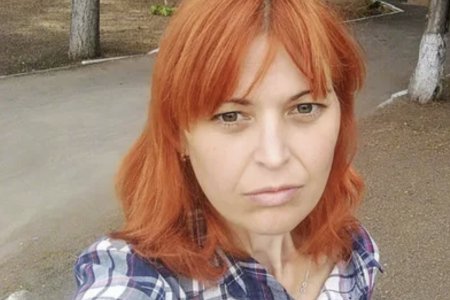
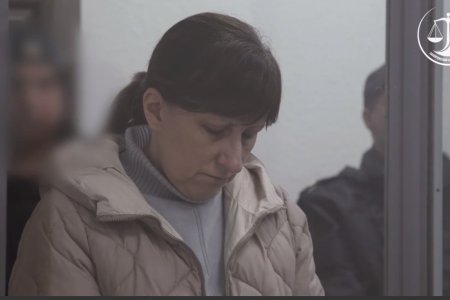
Russia’s so-called ‘Zaporizhzhia regional court’ has sentenced 64-year-old Liubov Plakhina from occupied Blahovishchenka to 17 years’ imprisonment for alleged, although suspiciously ill-defined resistance activities. The aggressor state used the Russian citizenship that it foists on residents of occupied territory to claim that such activities constituted ‘state treason’ against Russia.
According to the Memorial Support for Political Prisoners Project, Liubov Plakhina (b. 9 November 1961) was detained on 4 March 2025, and will have been in captivity since then. While the secrecy behind all such ‘trials’ and use of an illegitimate occupation ‘court’ make information scant, Memorial has already added Plakhina to its ‘List of other victims of political repression’, where political motives for her persecution are considered very likely.
In fact, the illegality of Plakhina’s persecution is scarcely in doubt. Russia, as an occupying state, has no right to prosecute Ukrainians from occupied territory under Russian legislation, and the fact that Plakhina was charged with ‘treason’ is effective acknowledgement that the impugned activities were resistance to its illegal occupation of Ukrainian territory. Whether or not there are legitimate grounds for the charges is quite another matter, with the radical discrepancy between the ‘court’ statement after her sentence and FSB’s claims eliciting warranted doubts.
The indictment, as repeated in the ‘court’s announcement of the sentence on 1 October 2026, contains details specific to this particular case, as well as claims that are largely copy-pasted from ‘trial’ to ‘trial’. Plakhina was, purportedly, contacted by a representative of Ukraine’s Military Intelligence in December 2022, and agreed to help her own country (or, as per the Russian reports, “help an enemy Intelligence service”). It is claimed that Plakhina, who used the codename ‘Nuar’, received physical coordinates via Signal and used them to locate and remove “parcels sent by drones and containing radio stations; explosive substances; explosive devices and other components needed for making homemade explosive devices.” She supposedly then created new hiding places and sent the coordinates and photographs of these via Signal. According to the ‘court’, she set up eight hiding places from February through September 2024, with her supposedly ‘criminal activities’ claimed to have been stopped by Russia’s FSB. The latter give a quite different figure, claiming that there were a massive 60 hiding places.
Plakhina was accused of ‘state treason’, under Article 275 of Russia’s criminal code and of the illegal purchase, transfer, possession, etc. of explosive devices and substances by a group of people, acting by prior conspiracy and involving the Internet, under Article 222.1 § 3. Even if the 17-year sentence in a medium-security prison colony is counted from her actual arrest, it will still mean that Liubov Plakhina, who is about to turn 65, would be around 80 when the term of imprisonment ended, with this to be followed by a year’s restricted liberty. A large, 350 thousand rouble fine was also imposed.
Liubov Plakhina is one of a large, and ever-mounting, number of Ukrainians in their sixties or seventies seized by the Russian invaders and sentenced to long terms of imprisonment. All are, in one way or another, persecuted for remaining true to Ukraine, with Russia using ‘treason’ charges against Ukrainians who made donations, however small, to Ukraine’s Armed Forces, or for supposed ‘spying’, by providing details about Russian military movements or places of dislocation. Liubov Plakhina’s case differed only in that the Russian invaders accused her of slightly more active resistance activities, albeit with telling discrepancies in the indictment.