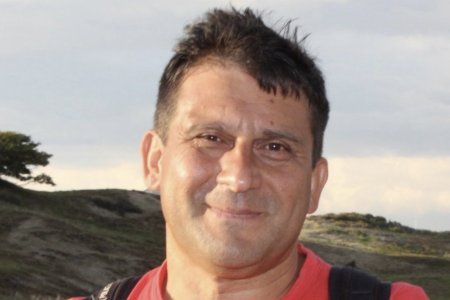
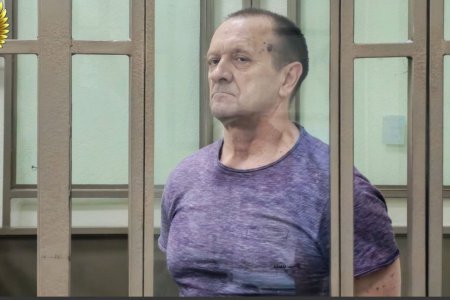
A Crimean occupation ‘court’ has found Lenora Dyulber, presenter of the Crimean Tatar talk show Merkez and a political scientist, ‘guilty’ of two administrative charges regularly used to silence protest and truthful reporting about Russian violations in occupied Crimea. Dyulber was accused of ‘producing and circulating extremist material’ under Article 20.29 of Russia’s code of administrative offences, and of ‘discrediting the Russian Federation’s armed forces’, under Article 20.3.3 § 1 and fined 33 thousand roubles.
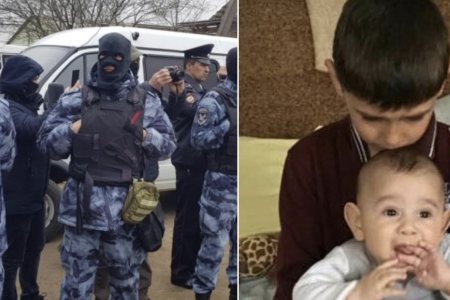
The human rights initiative Crimean Tribunal first reported the two prosecutions on 12 January 2026 which were linked with the events of 4 December 2025. As reported, armed FSB and other enforcement officers turned up at Dyulber’s home at around 6 a.m. that day, carried out what they claimed to be ‘an inspection’ and then took her and her computer away. She was only released several hours later, with it clear that she and her family had been placed under pressure to say nothing about this latest act of intimidation against journalists and other prominent figures in Crimea.
It now transpires that both prosecutions were passed to the occupation ‘Kievsky district court’ in Simferopol back on 4 December 2025. Since Dyulber herself was not informed of this, it was hardly surprising that she did not lodge appeals against the two administrative convictions, with both said to have come into ‘legal force’ on 15 December.
The supposed administrative offence of ‘discrediting Russia’s armed forces’ (Article 20.3.3) was one of four criminal and administrative charges rushed into legislation within ten days of Russia’s full-scale invasion of Ukraine. It has been very widely used in Crimea to persecute those who express opposition to the war or simply pro-Ukrainian views. The charge in this case was over opinions expressed by Lenora Dyulber during a live broadcast on YouTube of the important competition ‘Krymsky Inzhir’ on Crimean Realities She was found ‘guilty’ as charged by ‘judge’ Valentina Frantsevna Kamynina and fined 30 thousand roubles.
That same Kamynina also declared her ‘guilty’ of ‘producing and circulating extremist materials’, under Article 20.29, with this over an academic sociological study, entitled Crimean Tatars amid the Transformation of the Political Environment which Dyulber co-authored. The occupation regime had ‘discovered’ and removed the work from the library, with a so-called ‘expert assessment’ claiming that the book contained opinions by the respondents with “the linguistic signs of justifying the activities of Hizb ut-Tahrir and the Mejlis of the Crimean Tatar people”.
The Mejlis is the self-governing body of the Crimean Tatar people and came under Russian attack from the outset due to its firm opposition to Russia’s invasion and annexation of Crimea and its clear identification with Ukraine. Both Russia’s persecution of Mejlis leaders (Nariman Dzhelyal, Akhtem Chiygoz and others) and its extraordinary ban on the Mejlis, as a supposedly ‘extremist organization’ in April 2016, have received international condemnation. The academic work almost certainly presented an accurate picture of an internationally recognized self-governing body, with the occupation authorities using a politically motivated ban as pretext for the prosecution.
The same is true of the claim that the work showed “signs of justifying Hizb ut-Tahrir”. The latter is a peaceful, if controversial, transnational Muslim organization which is legal in Ukraine. Russia is illegally using a flawed and out-dated supreme court ruling from 2003 declaring Hizb ut-Tahrir ‘a terrorist organization’ as a weapon of political and religious persecution in occupied Crimea, in particular targeting Crimean Tatar civic journalists and activists of the Crimean Solidarity human rights movement.
The Russian occupation authorities keep reaching new depths, with such persecution especially shocking given that Lenora Dyulber was prosecuted over an academic work. It seems clear that the occupation authorities were determined to find any pretext to stage a demonstrative search, interrogation and prosecution of the prominent Crimean Tatar political analyst, journalist and talk show host.