Bohdan Musikhin is one of a number of Ukrainian prisoners of war in February alone who have been sentenced to massive terms of imprisonment on surreal ‘terrorism charges’. The situation in his case, and those of his comrades from the 48th Separate Assault Battalion, named after Noman Çelebicihan, is especially absurd since neither the Russian supreme court, nor ‘judges’ from the Southern District Military Court appear to have understood what exactly was being outlawed as ‘a terrorist organization’ back on 1 June 2022.
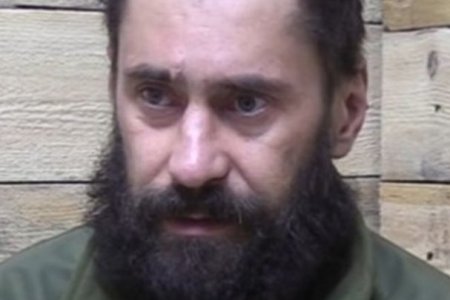
Bohdan Musikhin (b. 12.01.1997) has been in Russian captivity since 18 October 2024. Given the assertions about his ‘testimony’ made by a Russian propaganda publication on 21 October 2024, he is one of the estimated 90 to 95% of Ukrainian prisoners of war whom Russia has subjected to torture.
The indictment against Musikhin was passed to the Southern District Military Court a year later, on 25 October 2025, with the Ukrainian POW illegally accused of ‘involvement in a terrorist organization’, under Article 205.5 § 2 of Russia’s criminal code, and of ‘training in terrorist activities’ under Article 205.3. Although there were several court hearings, a ‘guilty’ verdict and long sentence were, essentially predetermined. This does not absolve ‘judge’ Oleg Alexandrovich Cherepov of responsibility for passing a knowingly wrongful verdict on 6 February 2026 and sentencing Musikhin to 17 years’ maximum security imprisonment, with the first three years in a prison, the harshest of Russia’s penal institutions.
Although Cherepov must have been aware that the man before him was a soldier who had been defending his country as part of the Ukrainian Armed Forces, the entire ‘trial’ was based on a politically motivated ruling and deliberate obfuscation as to whom that ruling concerns.
On 1 June 2022, Russia’s supreme court declared the Noman Çelebicihan Crimean Tatar Volunteer Battalion a ‘terrorist organization’. Despite its name, the Battalion was an unarmed civic organization which is perfectly legal in Ukraine. It was founded by Crimean Tatar activist and businessman Lenur Islyamov on 1 January 2016, with the first members people who had taken part in the civic blockade of occupied Crimea. This blockade was initiated by Crimean Tatar leaders Mustafa Dzhemilev and Refat Chubarov, together with Islyamov, on 20 September 2015, initially with clear human rights demands. The blockade enormously riled Russia as it highlighted the need to block all supplies of goods, electricity, etc. to Crimea while it remained under Russian occupation, something that the Ukrainian authorities had, until then, failed to do.
Russia’s persecution of Crimean Tatars on charges linked with alleged involvement in the Battalion back in early 2018. Russia’s ‘trials’ for involvement on Ukrainian territory in a legal Ukrainian organization were flagrantly illegal from the outset, but there was no suggestion of so-called ‘terrorism’. The person was charged under Article 208 § 2 of Russia’s criminal code (“taking part in the activities of an illegal armed formation, acting on the territory of a foreign state for purposes which are against the interests of the Russian Federation”).
Although the Battalion had ceased to exist, there was a huge increase in such prosecutions after Russia began its full-scale invasion of Ukraine, with the Russian invaders using the charge as pretext for abducting Crimean Tatars and other Ukrainians from occupied Kherson oblast and fabricating charges against them.
The Russian supreme court ruling from 1 June 2022 seemed evidently politically motivated and aimed at escalating the charges against those abducted Ukrainian citizens. There was no other ‘Noman Çelebicihan Battalion’ at the time, and it was clear from the reports that the ruling was based on an application from the Russian prosecutor general referring to the blockade.
Russia continued to escalate its persecution of men alleged to have been members of the Battalion, but still under Article 208 § 2, with sentences guaranteed, but at least shorter than those handed down for supposed ‘terrorism’.
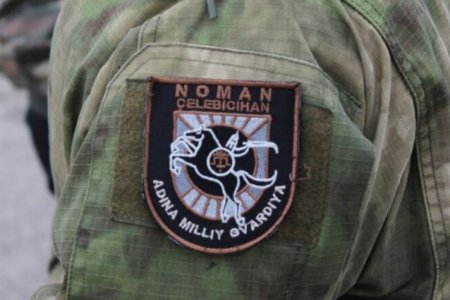
The situation changed in 2025, with Russia beginning to use the 1 June ruling as a pretext for bringing ‘terrorism’ charges against Ukrainian prisoners of war from the 48th Separate Assault Battalion, named after Noman Çelebicihan. While the 48th Separate Assault Battalion is historically linked with the original Noman Çelebicihan Battalion, it was formed in 2023 as part of Ukraine’s Armed Forces, and specifically the 123rd Territorial Defence Brigade.
Russia has used a ruling outlawing a civic organization, which no longer existed back in 2022, as pretext for persecuting prisoners of war who were seized as part of a battalion of Ukraine’s Armed Forces which did not exist at the time it is now claimed to have been outlawed. The ‘terrorism’ charges allow Russia to bring massive sentences (of 20 years against Serhiy Yatskov and Ivan Varchuk, for example), and Russian state propaganda media to refer to Ukrainians defending their country as ‘terrorists’.
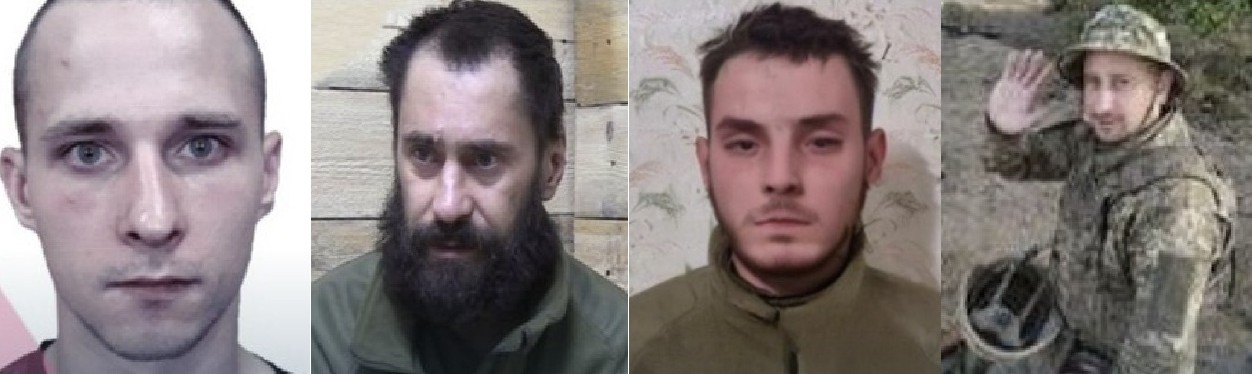
On 13 February 2026, the renowned Memorial Support for Political Prisoners Project declared 14 Ukrainian prisoners of war from the 48th Separate Assault Battalion, including Bohdan Musikhin, political prisoners. Yevhen Batoh; Ivan Kovbasiuk; Mykyta Kucher; Oleh Miruk; Bohdan Musikhin; Ivan Perepelitsa; Dmytro Stadnikov; Yevhen Tolstoy; Ihor Varchuk; Volodymyr Volsky; Serhiy Vorseniuk; Serhiy Yatskov and Oleksandr Yevdokimenko have all received sentences of 14-20 years’ maximum-security imprisonment, with Yuriy Tsiupak awaiting such a sentence.
Memorial condemned the violation of the men’s right to a fair trial, and of the Geneva Convention on the treatment of prisoners of war and demanded their release.
The Russian prosecution had claimed that the men had joined the Crimean Tatar Noman Çelebicihan Volunteer Battalion, outlawed in Russia as a ‘terrorist organization’, and had ‘undergone training in terrorist activities’ and ‘taken part in military action’. In fact, Memorial noted, the men had served in the military and had carried out military tasks as part of a regular unit of the Ukrainian Armed Forces, namely the 48th Separate Assault Battalion, named after Noman Çelebicihan.
Not only was the Russian supreme court ruling from 1 June 2022 unlawful, but it had nothing to do with the 14 men who were all military servicemen from a battalion which is part of Ukraine’s Armed Forces.
“The application of anti-terrorist legislation against prisoners of war merely for taking part in an armed conflict is in breach of Russian and international law and directly violates the Geneva Convention which prohibits the persecution of combatants for carrying out their military duty.” Such use of criminal prosecution against Ukrainian prisoners of war, Memorial stresses, is unlawful and politically motivated.