21-year-old Maria Hryn has been sentenced by Russia’s notorious Southern District Military Court to 20 years on charges that have become standard for Russia’s political ‘trials’ in occupied parts of Ukraine. There were, however, crucial differences, with these the monstrous size of the sentence and the likely set-up used to try to justify presenting the young Ukrainian as ‘a terrorist’.
According to the Russian reports, Maria Hryn (b. 1 March 2024) was seized on, or around, 13 July 2024 when she was just 20. There are no independent sources, with all information about her ‘arrest’ and, later, about the monstrous sentence coming from Russian / occupation propaganda media and the Southern District Military Court. Conclusions, however, can be drawn from certain discrepancies and omissions in the account.
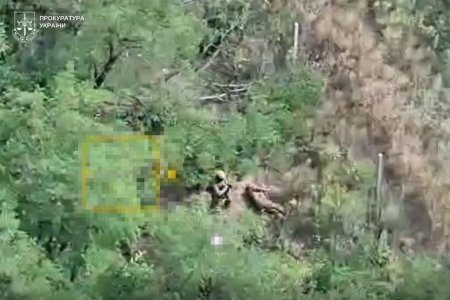
On 18 July 2024, Russian propaganda media reported that “a terrorist attack had been thwarted” in the so-called ‘Donetsk people’s republic’ or ‘DPR’, with Maria Hryn, referred to as “a Russian citizen” claimed to have been caught in the act, while acting on instructions “from a Ukrainian nationalist formation” and doing so for remuneration. The supposed ‘terrorist attack’ was, in fact, merely throwing Molotov cocktails at the occupation ‘Kirovsky inter-district court’ in Donetsk. More importantly, Hryn is heard on the supposed ‘operational video’ talking about planning to use these Molotov cocktails together with a friend. The two women had, she said, bought the ingredients for the petrol bombs together, with the other woman having helped to carry the bottles to the forested area, and held them while Hryn poured the flammable mixture into them.
There are certain telling differences in the Southern District Military Court’s report of the verdict and sentence on 17 February 2026. While the FSB standardly claims that the motive for any impugned act of resistance was money, not patriotism, the other omission is chilling. It is, unfortunately, very likely that there was ‘a friend’, or somebody who pretended to be such. Since there was never any suggestion that this second woman had also been arrested, and no mention of her at all in the court report, it is possible that she was part of the set-up targeting Hryn.
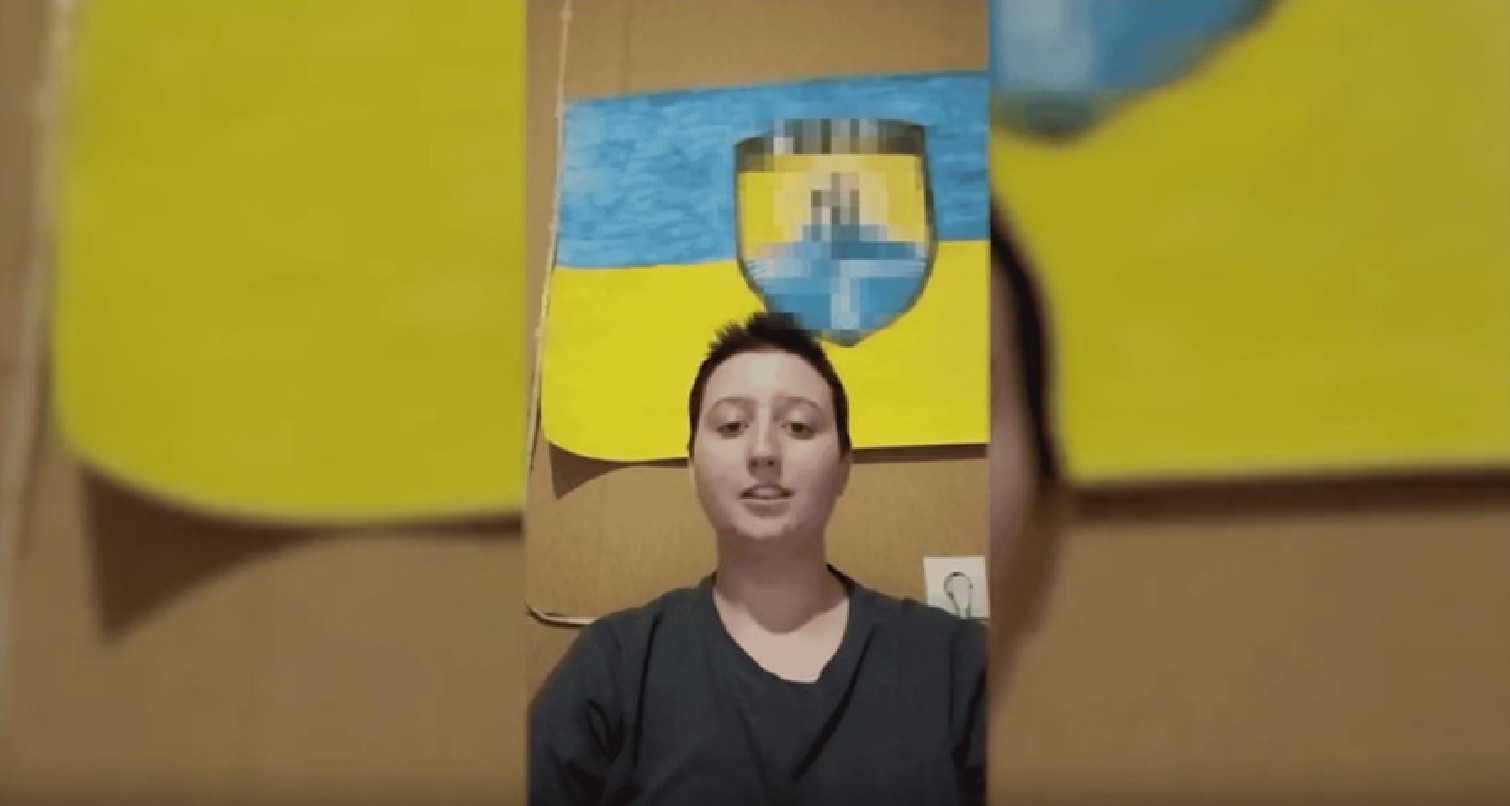
The second part of this set-up was, almost certainly, the videoed oath in Ukrainian which Hryn is shown making, supposedly, in order to join the Azov Regiment. The Russian prosecution claimed that she had joined Azov in June 2024, having taped her oath of allegiance. Even without the preposterous claim on 17 February 2026 that the videoed oath was demanded by Ukraine’s Security Service [SBU], this would still be evident nonsense. Russia has systematically demonized the Azov Regiment, which played a major role in the defence of Mariupol, and used the subservient Russian supreme court back in 2022 to label it a ‘terrorist organization’. None of this, nor the persistent claim that it is a ‘nationalist battalion’, can change the fact that the Azov Regiment and its members are part of Ukraine’s Armed Forces, and categorically not ‘a terrorist organization’. It is possible, even likely, that Maria Hryn supported the Azov Regiment and wanted to help them defend Ukraine, but any demand for such a videoed oath undoubtedly came from those seeking to fabricate charges against the young woman. If she was told to do so by the person she believed to be from Ukraine’s SBU, then he too was part of the trap.
In the final indictment, passed to the Southern District Military Court in April 2025, Maria Hryn was charged with ‘treason’, under Article 275 of Russia’s criminal code; planning a terrorist act (Article 205 § 2a); training in terrorist activities (Article 205.3) and ‘involvement in a terrorist organization’ (Article 205.5 § 2).
It was claimed that Hryn had, on 23 June 2024, contacted an officer of Ukraine’s Security Service and had agreed to ‘confidential cooperation’ with the SBU. She had, purportedly received a task to provide information about the places of deployment of Russian military sites and personnel on the territory of the so-called ‘DPR’. Prior to this, she was supposed to have “at her own initiative”, gathered information about the places of deployment of a Russian motorized rifle division which she then passed on to the SBU officer.
She was then supposed to have, on 26 June, photographed cars belonging to employees of the Russian occupation ‘Donetsk police’ and of the occupation ‘Kirovsky inter-district court in Donetsk’ and to have passed these as well.
She was claimed to have, in the course of correspondence, have expressed her wish to take part in “the banned terrorist Ukrainian militarized nationalist organization - the Azov Battalion having agreed the route for leaving the territory of the RF [sic] to Ukrainian territory. it was this “SBU officer” who told her to video the oath against the background of the Battalion emblem, with this something she had done on 26 June 2024. She was then alleged to have, the next day, undergone training in using substances and items “presenting danger to people’s life and health”, with this, almost certainly, the six Molotov cocktails. All mention has disappeared of the ‘friend’, with Hryn alleged to have purchased the necessary components for these petrol bombs and made them by herself.
The court report does not bear scrutiny, with it claimed that, on 13 July 2024, Hryn had gone to the back of the occupation ‘Kirovsky interdistrict court’ in order to “set it alight, however Hryn and other participants of the organized group could not carry out their criminal plan as they were detained by law enforcement officers.”
There is no mention of anybody else having been ‘arrested’, and the young woman, who was almost certainly duped, was ‘on trial’ alone.
There were around 10 hearings at the Southern District Military Court, with this suggesting that Hryn denied some or all of the charges. There is no information as to whether she had an independent lawyer. What is clear is that the sentence, which is still subject to appeal, was passed by ‘judge’ Roman Victorovich Saprunov, an individual who has taken part in imprisoning very many Crimean Tatar and other Ukrainian political prisoners.