Tavilzhanka is a small village in the Dvorichansk settlement community of the Kupiansk district, Kharkiv region. Before the full-scale invasion, up to two thousand people lived here. From here to the Russian border is only twenty kilometers. On February 24, 2022, the occupiers entered Tavilzhanka.
— As they entered on the first day of the war, they are still there today, — says the former headwoman of the Tavilzhanka Starostyn district, Svitlana Moroz. — I remember, at five in the morning, our children, who live in Kharkiv, started sending videos to my husband and me that they were being bombed. The Russians didn’t shell us because they occupied us right away, but we saw everything flying from us to Kharkiv…
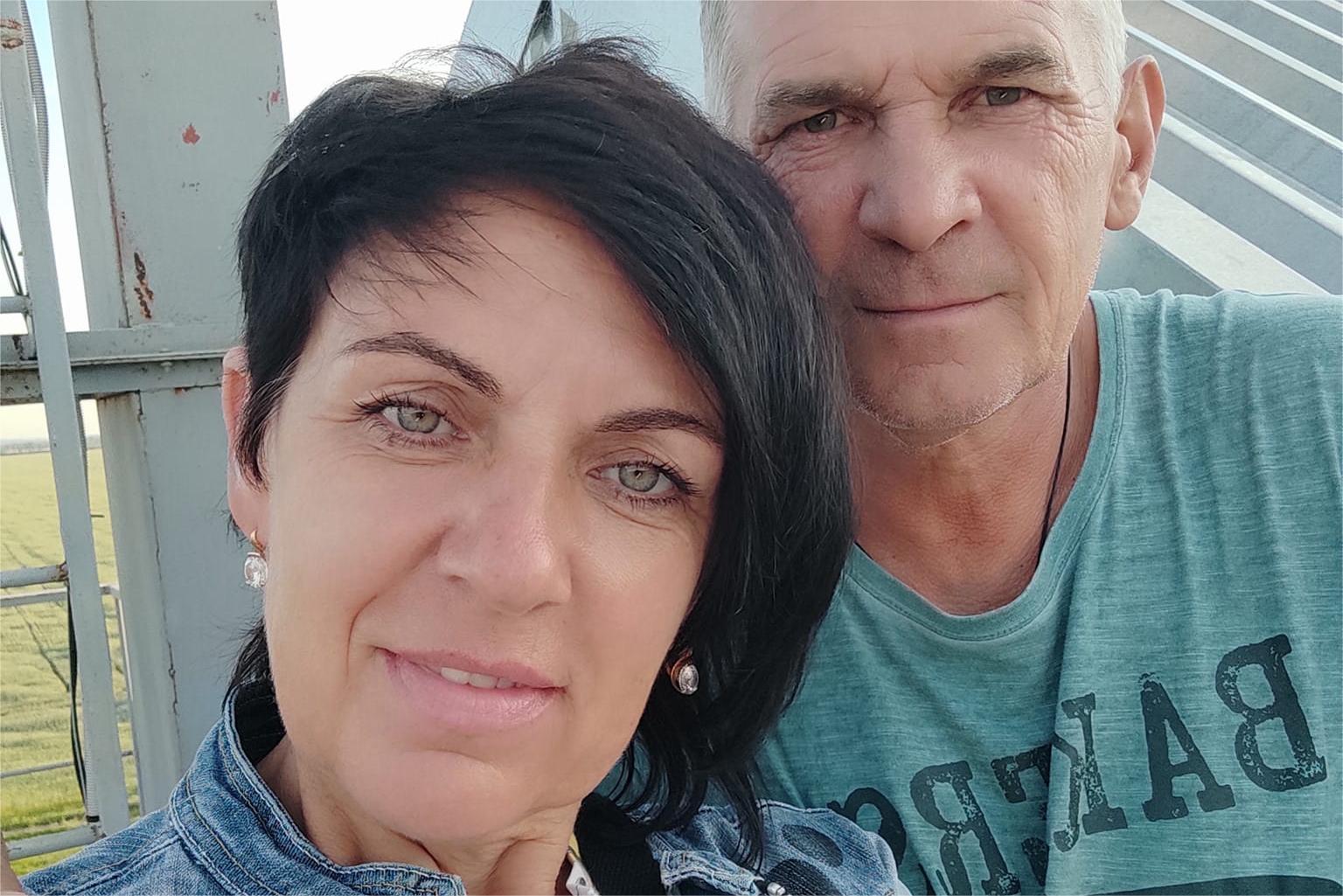
The occupiers took a lot from Svitlana: her home, the job she loved, and, most frighteningly, her husband. The last time she saw Yuri was when, in the summer of 2022, he drove her to the Pecheneg Dam, where a corridor was then in place through which civilians could cross from the occupied territory to free Ukraine. The Russians, however, did not let the men across. Now Svitlana Moroz lives in Kharkiv, works in the regional military administration, and heads the Department of Economic Analysis and Forecasting of the Department of Socio-Economic Development. Looking for her Yurochka…
— I feel like I've cried myself dry over it all, — she says sadly, recalling everything that happened to her during the months of living under occupation.
From the first hours of the invasion, as a headwoman, she had to take care not only of her family, but also of the residents of the Starostyn district.
— Already on February 24, everything was closed: kindergartens, schools… ATMs were not working. People bought up all the food in the stores in a couple of days. Life stopped. The police and border guards disappeared. We were left alone in the Starostyn districts. My territory was the largest in the Dvorichansk settlement council—four villages and almost three thousand people. But people started coming to us because they thought it was safer here. They came from Izium, Lysychansk, and Starobilsk. People even came from Kharkiv. And I had to accommodate all these people in my house. We lost communication, gas, and electricity. We must have been without electricity and gas for several months. Thank God that there was a private agricultural enterprise on our territory. With its director, Oksana Volodymyrivna Shylo, we turned into the main ones. Every morning, people would gather in the center of the village and talk. We had farms—huge farms that had lost their sales. The bridges were blown up, and there was no way to export the products. Oksana Volodymyrivna would give grain, the bread was made, and we would deliver that bread to people. We would drive to the river, and there we would carry boxes in our hands across the bridge. A car was waiting on the other bank…
Due to stress or constant physical exertion, Svitlana developed a tumor on her arm that was growing rapidly. There was nowhere to get medical help in those conditions. Chance helped. Among the displaced people who came to the village, a surgeon was found. So the woman was operated on at an unequipped village first aid room without electricity.
— We called out to the villagers. Someone brought a needle to sew up the wounds, and someone brought surgical thread from home. Someone brought alcohol. Furthermore, someone brought painkillers. So, in the first aid room, somehow or other, the surgeon cut out the thing for me.
Meanwhile, the Russians began to establish their own order. The then mayor of Kupiansk, Gennady Matsegora, agreed to cooperate with them. The occupation authorities began holding meetings in the villages, promising residents humanitarian aid and financial assistance.
— I never went to those meetings! Other leaders went, tried to organize work, and nothing worked out. Of course, because the territory is huge, and no one knows this territory and the needs of the people as I do… Understandably, they started complaining about me. In April, my colleague from the neighboring village, from Vilshana, Serhiy Marakhovsky, disappeared. I understood that I would be next. Well, it has happened.
On Saturday morning, May 7, Svitlana and her husband, Yuri, were sitting down to breakfast when a car pulled up to their house. The woman wasn’t surprised; she thought the next group of displaced people had arrived.
— I go out into the yard, and they are already standing on the doorstep. There were about 15 of them, all in balaclavas. They surrounded the house. They took my phone and my documents and put me in a van. And two of our detainees were already there—a judge and a former police officer. It was very scary. I sat down, and through the crack I saw Yurochka walking around. I didn’t know whether Yura was being taken away too. I was anxious. And so I tried to see him through some cracks. And the Russian guarding us forbade me from doing this. He shouted, “Sit down and keep still!” And from that moment on, I started crying. And I didn’t stop.
The car set off. They stopped several times on the way; during one of these stops, they put a bag over the judge’s head and transferred him to another car. Svitlana and another detainee were taken further, to Kupiansk. There, the occupiers set up a torture chamber on the territory of the district police department. Near the regional department building, distressed Yuriy Moroz was already waiting for his wife.
— He either guessed where we would be taken, or he knew somehow… He couldn’t get close to us; it was fenced off. And when I saw him, I asked the guard to allow me to come near him for at least a minute. He didn’t let me. When they took me to the cell, one of the superiors said, “Sit down! I went to look at your case!” I was surprised. What is “my case”?
That day, Svitlana was interrogated three times. During the interrogations, the woman was forced to undress so that she would show the tattoo on her back. They wanted to see if it was Ukrainian symbols. In the end, the tattoo in the form of a small flower did not arouse suspicion, unlike the traces of a recent operation on her arm.
— They saw that my arm was bandaged. One of them asked, “What’s wrong with you?” I say, “I had an operation at home.” But they still tore off the plaster. All my stitches came apart. I don’t know what they were looking for there…
At first, the Russians tried to convince the woman to cooperate with the occupation authorities.
— I cried. That’s how small children cry when they can’t be calmed down. I say, “Wait, what kind of cooperation? You’ve just taken my job away! You’ve taken my family away! I can’t contact my daughter, I don’t have electricity, my people are suffering, there are cancer patients, people with diabetes, and I should cooperate with you. No, not yet.” To be honest, I told them that I would think about it. And I’m not ashamed to admit it, because everyone wants to live, you know?
In addition, the occupiers accused Svitlana Moroz of… creating a sabotage and reconnaissance group.
— The thing is that when everything was closed—kindergartens, medical centers, schools—we became afraid that there would be looting. So we gathered about 15 men from the village. In the evening, we walked the streets, guarding. And the Russians must have been informed about this situation. They tell me: you have organized a “group” among yourselves. My God, at first I didn’t even understand what we were talking about! They mistook our company for a sabotage and reconnaissance group.
Late in the evening, the cell became very cold. The frozen, tired, frightened woman didn’t know what to expect. At that moment, the guards opened the door and told her to get out.
— I ask—where? And he says: to be shot! You know, to be honest, I feel relieved. I was ready for this. It’s almost night. We go out to the threshold of the police station, ahead—an empty courtyard. And the Russian says, “Go.” I really thought they were going to kill me right now. It felt like a movie: as if I were going to walk across this empty field right now, and he would shoot me in the back. And he: “Go home! Do you live far away?” I say, “About 30 kilometers…” — “Well, go!” Whether I walked or ran, I can’t tell you anymore… I hadn’t even left Kupiansk yet when I saw my Yurochka! He went home, took a warm jacket for me, and wanted to bring it to me. And I met him! He was driving into Kupiansk while I ran out…
When they let her go home, the Russians did not return any documents to Svitlana and ordered her to return the next day for an “interview.” This time, they asked about residents who fought in the ATO (Anti-Terrorist Operation, the official term for the war in eastern Ukraine before 2022). But the village council has nothing to do with military registration.
— It was such a moral humiliation… There were moments when you had to tell a lie. And when you tell a lie, and they answer you with facts, then you, an adult, sit like a little child, like a beaten puppy…
Svitlana realized that living in the occupied territory was no longer possible. On July 11, 2022, she left through the Pecheneg Dam to Kharkiv to see her daughter. She says that she was not sure that she would be let through. After all, every day, the occupiers took more and more people to the torture chambers.
— Yura stayed at home. He said, “You go, and I will wait for you.” We have a very nice house; we used to live very well.
The farm where Yuriy Moroz worked had a generator—one that kept the water pump running when electricity went out, keeping the village supplied.
— With management’s blessing, Yuriy went there three times a day to start it up. People would gather and fill up while it ran. But in those final days, Russian soldiers began coming for water as well. Yura told me, “All the people who were standing in line were leaving so the military could get water...” And every time, while the generator was working, Yura would go to the second floor of the building, where he could at least get a little connection, and call me in Kharkiv. I asked him, “Yura, don’t call, I’m worried about you, don’t call so often!”
On September 22, the husband didn’t get in touch, as usual. And on the 23rd, either. Svitlana understood something had happened. On September 24, she and her daughter went to the police in Kharkiv and filed a report about Yuri’s disappearance.
Later, fellow villagers said that an armored personnel carrier had arrived at the Morozovs’ house, and screams and shooting could be heard in the yard. And later, Yura was thrown into a car and taken to an unknown destination. Later, with the help of the Ukrainian military, Svitlana established that her husband’s phone had stopped working near Valuyki, in the Belgorod region, Russia.
— In Valuyki, the Russians either threw away the SIM card or something… I don’t know, there’s no further trace. No more information about Yurochka ever came. We turned everywhere… We somehow got in touch with Russian volunteers and the Red Cross, and wrote to the Russian Ombudsman… Nothing.
Around the same time that Yuriy Moroz disappeared, the Russians kidnapped another civilian from Tavilzhanka, Ivan Zabavsky. We wrote about him: the young man, who lived in Kharkiv at the time, went to Tavilzhanka to save his mother, whose house was literally on the front line. Last year, the City Court in St. Petersburg sent him to prison for 11 years on charges of “espionage”.
According to the director of the Kharkiv Human Rights Group, Yevhen Zakharov, at least 15,000 Ukrainian civilians are being held in prisons in Russia and the temporarily occupied territory of Ukraine, illegally detained or kidnapped in the temporarily occupied territory.
Someone is being tried on trumped-up charges, such as espionage or treason. But most of them are being held without contact with their families and without legal assistance for the so-called “opposition to a special military operation [SMO].” It only recently became known: on March 8, 2022, Putin officially allowed people to be placed in pre-trial detention centers “for opposing the SMO” without a court decision. And this even though an offense such as “opposition to the SMO” is absent from Russian criminal and administrative legislation.