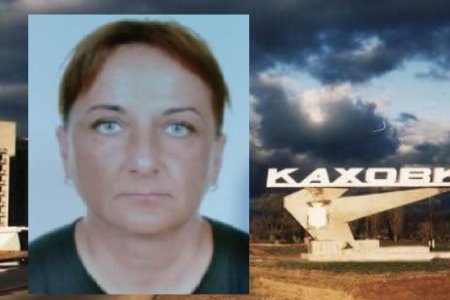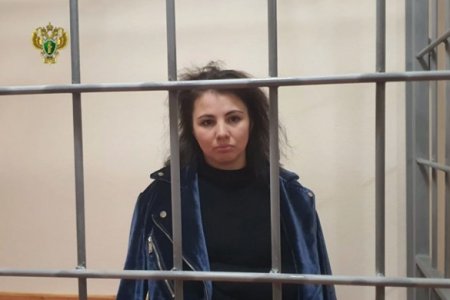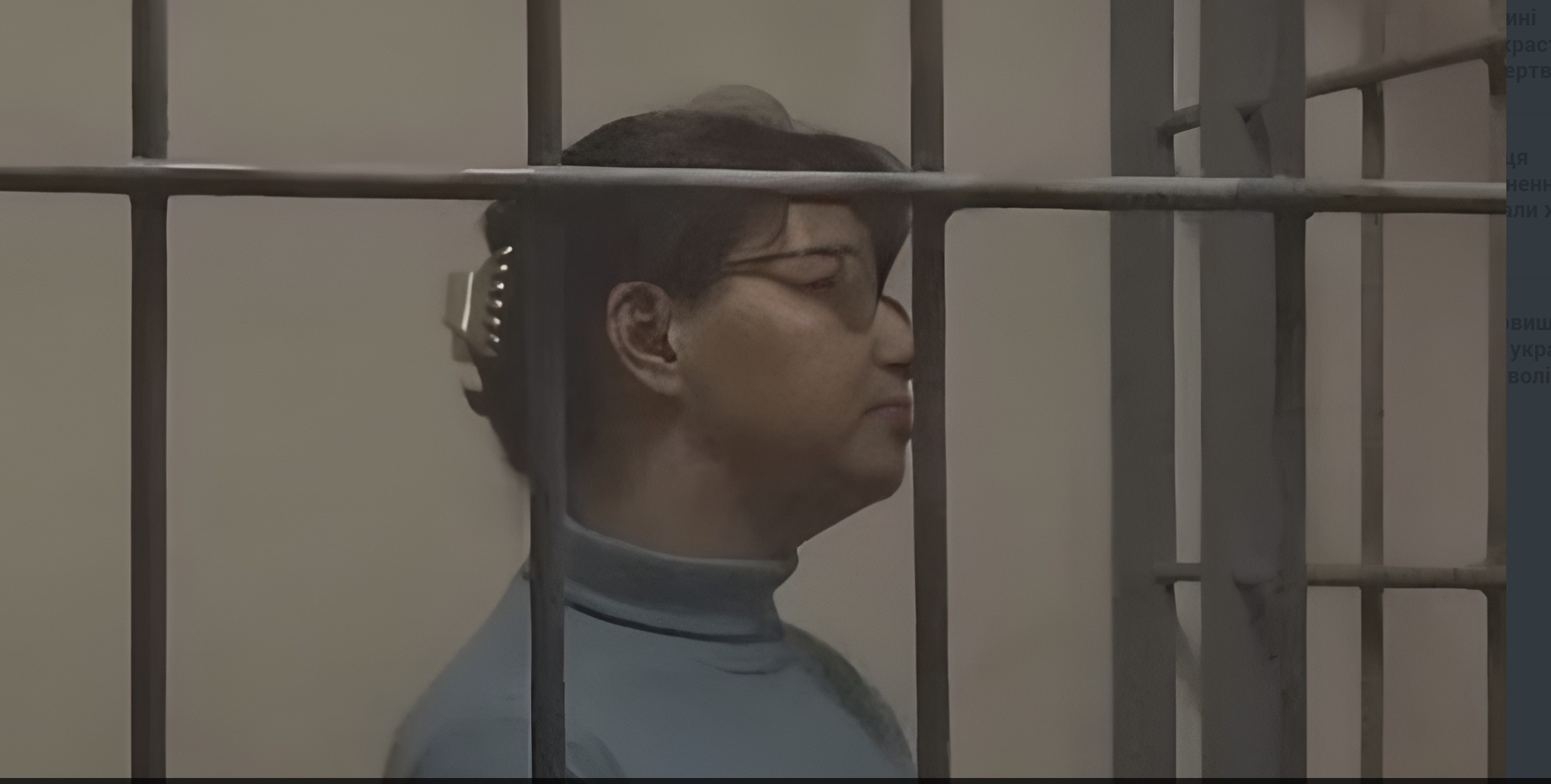
47-year-old Olena Nishanova from occupied Kherson oblast has become the latest in a huge number of Ukrainian men and women abducted by the Russian invaders and sentenced to huge terms of imprisonment on surreal ‘espionage’ charges. The victims in each case are different, with their own families and the lives Russia has torn apart. The indictment, on the other hand, is near identical, as are the methods used to imitate ‘trials behind closed doors’, which have received a devastating assessment in the latest report published by the UN Independent International Commission of Inquiry on Ukraine.
Russia has imposed such an information blockade and atmosphere of fear on occupied territory that very often little or nothing (not even the name) is known about individual victims. Here we know only that Olena Nishanova is 47 and can deduce that she has not taken Russian citizenship, as she was charged with ‘spying’ under Article 276 of Russia’s criminal code, not ‘treason’ (Article 275). There is no information as to when Olena Nishanova was seized, with this quite conceivably long before the occupation ‘Kherson regional prosecutor’ announced on 11 February 2026 that the indictment against her had been passed to the occupation ‘Kherson regional court’. The alleged ‘spying’ is supposed to have been in the middle of April 2024, with it claimed that Nishanova “gathered data about the movements and places of deployment of military technology, as well as military personnel of Russia’s armed forces and passed these to representatives of Ukraine’s Military Intelligence. The information could have been used to direct fire at places of deployment of Russian military”. Aside from the dates, the indictment could have been copy-pasted from countless others brought against residents of occupied parts of Ukraine.
Equally predictable was the fact that the next report was of Olena Nishanova’s sentence of ten years in a supposedly medium-security prison colony (the harshest for women prisoners). It is unclear whether there were any actual ‘hearings’ before the sentence was passed by an unnamed ‘judge’ from the occupation ‘Kherson regional court’ on, or before, 16 March 2026.
Everything about this non-trial is identical to those of two other women from occupied Kherson oblast sentenced to ten years in February 2026. On 9 February 2026, 46-year-old Olena Kosenko was sentenced by the same fake ‘court’ to 10 years’ imprisonment, with the supposed gathering of information about Russian military personnel in Kherson oblast alleged to have been in April 2024. Olena Kosenko had clearly not taken Russian citizenship and was also charged under Article 276 of Russia’s criminal code.
Slightly more is known about Iryna Hedzyk, who is from occupied Kakhovka and was abducted from her apartment on 25 June 2024. As is almost always the case, she simply vanished, with nothing known of her whereabouts for 18 months, with such periods where a person is held without any official status or contact with the outside world typically used to extract ‘confessions’ through torture or other forms of duress. Hedzyk was also ‘tried’ under Article 276, with it unclear whether there was even a single hearing before she was convicted and sentenced to 10 years by the same occupation ‘court’ on (or before) 5 February 2026.
UN Independent International Commission of Inquiry on Ukraine
The Commission’s report, formally presented to the Human Rights Council in Geneva on 12 March 2026, stood out most because of its conclusion that Russia’s deportation, transfer and enforced disappearances of Ukrainian children constituted not only war crimes, but crimes against humanity.
The report did, however, also document other grave violations, including those seen in Russia’s fabricated ‘trials’ of Ukrainian civilians and prisoners of war.
“The Commission found that these courts have deprived the accused from fundamental fair trial guarantees and have therefore committed grave breaches of international humanitarian law, which constitute war crimes.
Russian authorities have systematically used evidence that they fabricated or obtained by means of torture or ill-treatment to incriminate the accused. The courts have disregarded the fair trial guarantees concerning the presumption of innocence, the non-retroactivity of laws, the right not to be compelled to confess guilt, the right to public proceedings, and the right to defence. The evidence of the Commission points to a lack of independence and impartiality of the courts, with pre-determined verdicts and the guilt of the accused assumed from the outset. “
Other victims from occupied Kherson oblast
Olha Hulchak, Olena Penza and Yulia Stanika
Russia sentences three Ukrainian women to 12 years for supporting Ukraine’s defenders
Iryna Horobtsova
Natalia Kozhemiatska
Serhiy Tsyhipa
Mykola Petrovsky and Serhiy Kotov