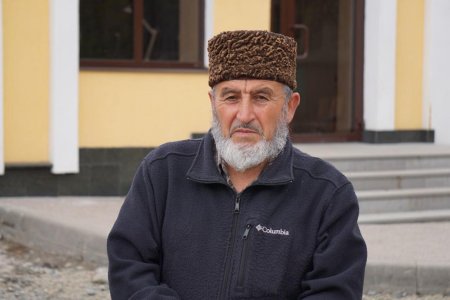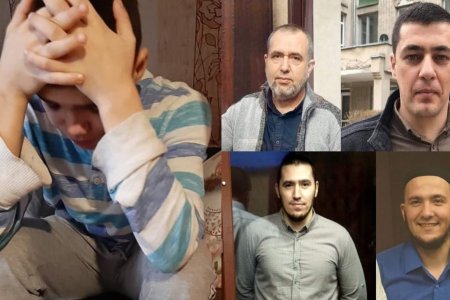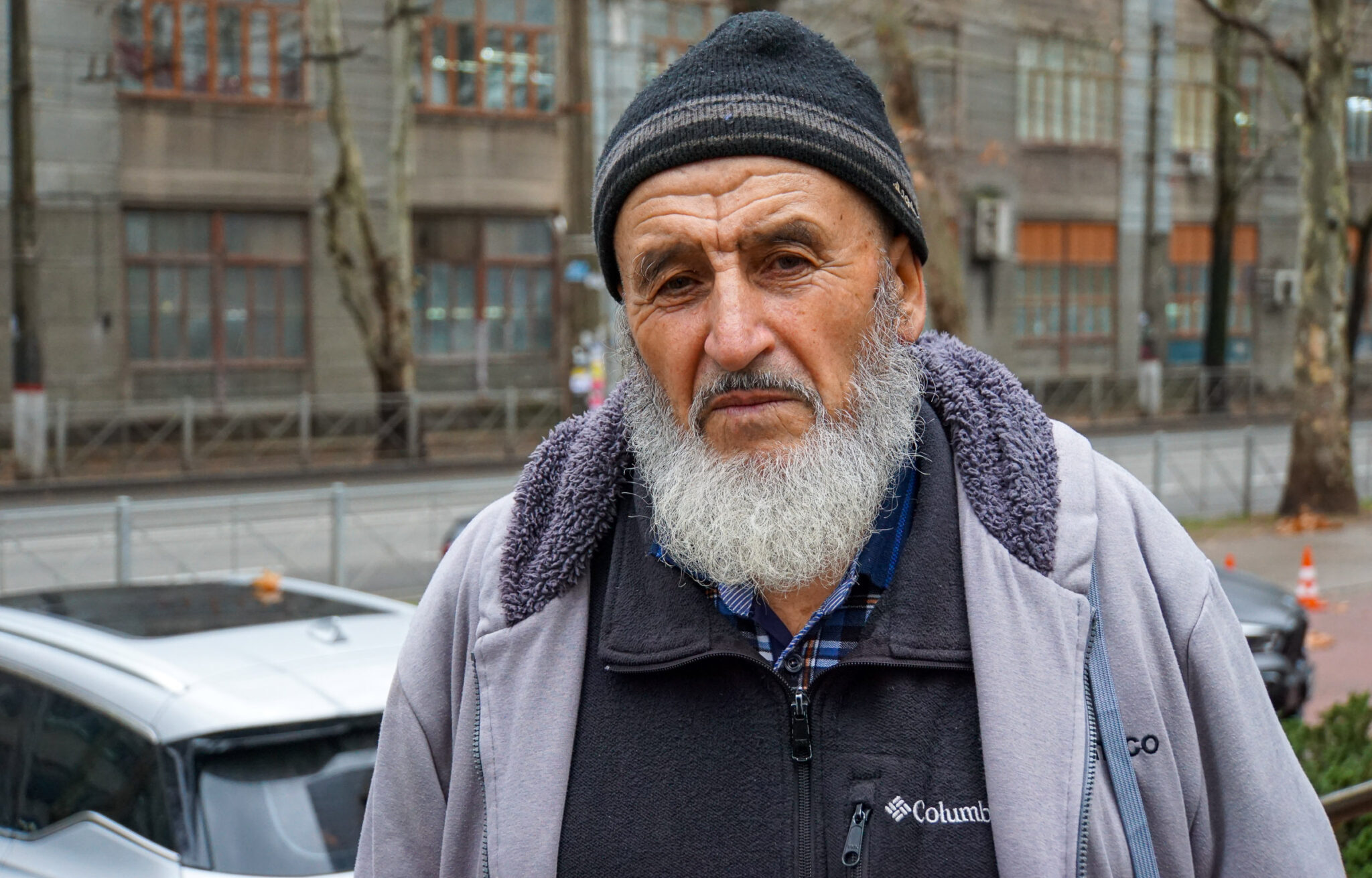
A Crimean occupation ‘court’ has upheld the conviction, under flawed Russian legislation, against historian Enver Seitmemetov over an interview he gave about the 1944 Deportation of the entire Crimean Tatar people. The 74-year-old Crimean Tatar’s three nephews are all recognized political prisoners and the two-thousand rouble fine was small, if compared with the appalling sentences (14-17 years) which his nephews are all either serving or facing for peaceful civic activism and their faith. This does not change the fact that the retired teacher of history was prosecuted for telling the truth about a crime, recognized by Ukraine, all of the Baltic Republics; Canada; Poland; the Czech Republic and the Netherlands as an act of genocide, and convicted of expressing an entirely legitimate opinion, one shared by very many historians. The prosecution of Seitmemetov is a dangerous precedent, with Russia’s use of legislation against historical facts clearly aimed at silencing any discussion about crimes committed by Moscow, whether under the Soviet regime or since Russia’s invasion of Crimea.
As reported, Enver Seitmemetov was detained on 25 November 2025 by officers of Russia’s so-called ‘centre for countering extremism’. He was released after several hours but charged over his comments on a video about the 1944 Crimean Tatar Deportation. The video had been posted on the Crimean Solidarity website on 18 May 2020, the anniversary of the Deportation. Five years later, on 18 May 2025, it was reposted on the same site to mark the 81st anniversary. On the ‘offending excerpt’, Enver Seitmemetov says the following:
“It was a continuation of the genocide which began in 1783 against the Crimean Tatar population. They tried to get them all on the square in the space of 15 minutes. There were screams, din, chaos and crying. They thought they were being taken away to be short because what had happened during the War to the Jews was still fresh in people’s memory. And after 1944, the regime did not repent, not before the Muslims of the Caucuses, of Crimea; not before those who were subjected to repression, exiled, robbed at state level, calculatedly. I say calculatedly because at state level a policy was carried out of “Crimea without Crimean Tatars”. The international community, or in general those who presently speak about rights being violated, and pass[ed] laws on human rights in 1948 – they effectively don’t work, these laws. There shouldn’t only have been the Nuremberg Trials. I think there should have been another international court as well which would have tried those same victors… The day will come when all will be in its place and families will greet their sons, fathers, husbands…”
For expressing this widely held opinion, Enver Seitmemetov was charged under Article 13.48 of Russia’s administrative code with “publicly equating the aims, decisions and actions of the Soviet leadership with the aims, decisions and actions of the leaders of Nazi Germany”.
Russian legislators first came up with a legislative ban on any public statements likening the roles played by the USSR and Nazi Germany in World War II back in May 2021 [details here] The ban, as an administrative offence carrying fines, was signed into law by Russian leader Vladimir Putin in April 2022.
According to Lutfiye Zudiyeva, writing for Graty, there have so far been three such prosecutions in occupied Crimea, with the first over a repost of a text by Arkady Babchenko about the negative activities of the USSR during the Second World War. Considering that the Soviet Union and Nazi Germany were allies until 22 June 1942 and agreed, in a secret protocol, to carve up Poland between them, there is a lot to say about such negative activities, even without mentioning the Deportation of the Crimean Tatars and some other nationalities from Crimea. All of it is true, and all of it is likely to get you prosecuted in Russia or Russian-occupied Ukraine.
The hearing in the case against Enver Seitmemetov began at an occupation ‘magistrate’s court’ in Simferopol on 25 November, with the first ‘judge’ insisting on studying the material and agreeing with the defence that the supposed witness for the prosecution and ‘specialist’ Oleg Romanko be called in for questioning. The hearing was, therefore, adjourned until 2 December 2025. There it transpired that the first ‘judge’ had merely been replacing Sergei Moskalenko. It was the latter who did allow Romanko to be questioned and the defence to provide compelling arguments for why the prosecution was flawed, yet still ruling against Enver Seitmemetov, imposing a fine of two thousand roubles.
It was this ruling which was upheld on 18 March 2026 by ‘judge’ Alexei Mikitiuk from the occupation ‘Kievsky district court ‘ in Simferopol.
Russia has been using legislation to try to crush honest discussion about its past since before its invasion of Crimea, with other possibilities even more extreme. See, for example, Court in Russia imposes massive fine for criticizing Stalin and telling the truth about Soviet collaboration with Nazi Germany and Russia’s Supreme Court rules that the USSR did not invade Poland in 1939).
Russia effectively banned public remembrance of the victims of the Deportation of the Crimean Tatar people shortly after its invasion and annexation of Crimea. During the first years of occupation, there were usually administrative prosecutions over simple and peaceful acts of remembrance. Over recent years, the occupation regime normally confines itself to turning up at the homes of prominent Crimean Tatars and handing them official ‘warnings’ about the inadmissibility of violating Russia’s legislation on ‘extremism’, with this how the Russian aggressor state views honouring the memory of the victims of a horrific crime.
Targeted persecution
According to Lutfiye Zudiyeva, who is herself a prominent human rights defender for which she has faced constant harassment and worse, the measures against Enver Seitmemetov would be hard to call a surprise. Ever since his elder nephews Seitumer Seitumerov and Osman Seitumerov were arrested in March 2020, he has attended political trials and spoken out in defence of his nephews and all other political prisoners.
Persecution by family
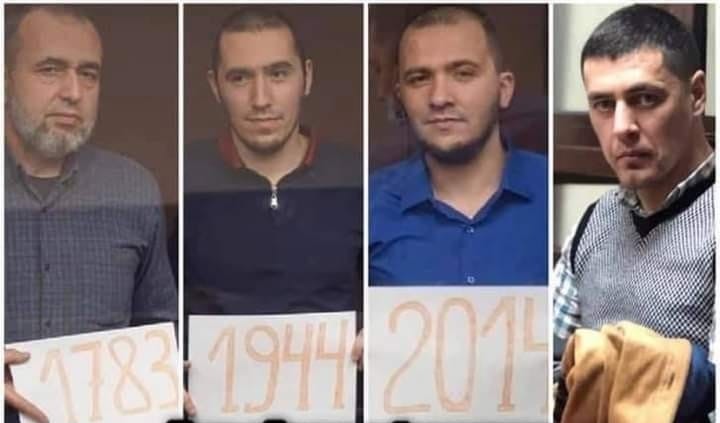
As mentioned, three of Enver Seitmemetov’s nephews and all of the sons of another renowned Crimean Tatar historian, Shukhri Seitumerov, are political prisoners.
Seitumer Seitumerov (1988), his brother Osman Seitumerov (b. 1992) and their uncle Rustem Seitmemetov (b. 1973) were arrested on 11 March 2020, together with gravely ill Crimean Solidarity civic journalist Amet Suleimanov (b. 1984).
The brothers’ great-grandfather was executed during Stalin’s Terror for supposed ‘counter-revolutionary terrorist propaganda’. 80 years later, Russia’s occupation regime used chillingly similar charges for its own show trials and politically motivated sentences against men who had not committed any crime. On 29 October 2021, ‘judges’ Igor Kostin (presiding); Roman Plisko and Yevgeny Zviagin from the Southern District Military Court in Rostov (Russia) sentenced Seitumer Seitumerov to 17 years; Osman Seitumerov to 14 years; Rustem Seitmemetov to 13 years and Amet Suleimanov to 12 years. There was no way that they did not know that the latter was a death sentence, with grounds for concern also about the health of Rustem Seitmemetov. All of the sentences were for the worst of Russian penal institutions, with the first 3.5 years in a prison, where the conditions are especially harsh. They were upheld on 9 February 2023, by ‘judge’ Aleksandr Aleksandrovich Mordovin from the Military Court of Appeal in Vlasikha (Moscow region).
The FSB came back, two years after the first arrests, and seized the last son - 23-year-old Abdulmedzhit Seitumerov who had just become a father. He is currently on ‘trial’, with it tragically clear that he and the men arrested with him face similar sentences on profoundly flawed charges and after proceedings which flagrantly violated the men’s right to a fair trial.
See:
Brutal Russian roulette with the life of gravely ill Crimean Tatar political prisoner
Death sentence and persecution of Crimean Tatar family in Russia’s war against Crimean Solidarity