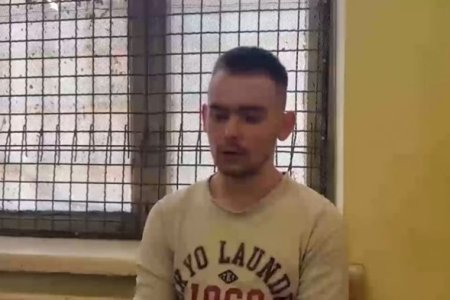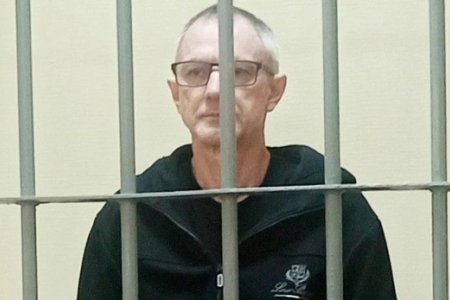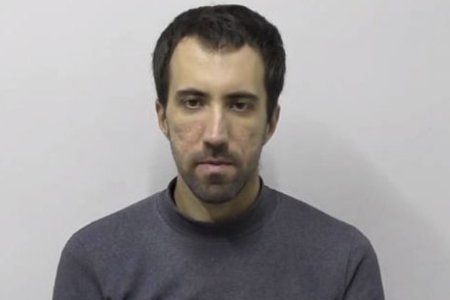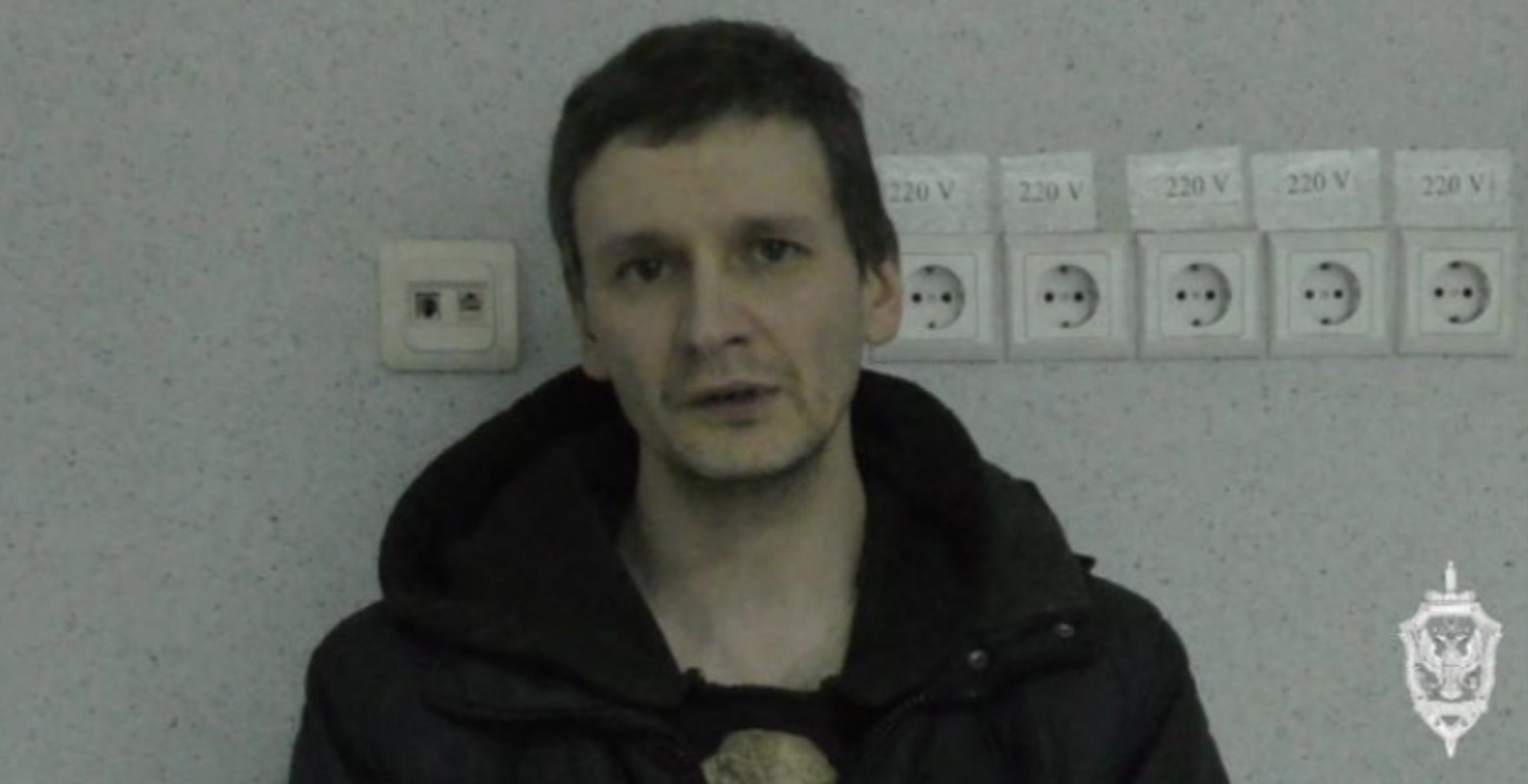
Russia’s occupation ‘Zaporizhzhia regional court’ has sentenced Artyom Krasko to 20 years’ maximum-security imprisonment for supposedly planning an attack on a member of the occupation administration, with the Russians claiming that this was ‘‘planning a terrorist attack’. There was no attack, and it is near certain that the only evidence to back charges including ‘treason’ and ‘terrorism’ against the 45-year-old from occupied Melitopol came from a videoed ‘confession’ he undoubtedly gave under duress.
Artyom Krasko (b. 01.10.1981) earned a living fixing computers and installing computer programs and, judging by the Ukrainian flag on his social media photo, did not conceal his pro-Ukrainian position. The latter alone would be enough to have made him a target for the Russian occupiers. Beyond that, the only information has come from Russian occupation sources.
The occupation ‘Zaporizhzhia regional court’s’ Telegram channel reported the sentence on 17 March 2026. There is no information on the ‘court’s’ site, making it impossible to gauge whether there was any imitation of a trial, or merely the ‘hearing’ at which the sentence was read out. This is particularly worrying given that Krasko is said to have been “detained” almost two and a half years ago and had clearly been held prisoner ever since. On all territory under Russian occupation, civilians are regularly abducted and held for months, sometimes years, incommunicado and without any official charges being laid. It is very likely that Krasko was being held prisoner in this way, with no procedural status, when Russian propaganda media posted a videoed ‘confession’ on which Krasko is heard ‘admitting’ to having prepared and kept a homemade explosive device. In all those cases where a person has later been released or received independent legal representation, they have provided harrowing accounts of the torture applied to extract such ‘confessions’.
The indictment, produced by the Russian invaders against a Ukrainian citizen, is, as always, breathtakingly cynical. Krasko is claimed to have agreed to join “a terrorist organization” purportedly created by Ukraine’s Military Intelligence. He was supposed to have gathered, studied and passed on to the head of the so-called organization information about a potential location for planting a homemade explosive device; to have received and stored explosive substances and devices, as well as other components needed for making homemade explosive devices from other members of this claimed ‘terrorist organization. He was also, it was allegedly, supposed to plant a bomb in the place of the “planned terrorist attack”. All of these alleged activities were supposedly aimed at furthering “a plan to carry out a terrorist attack” against somebody described as an employee of the occupation Zaporizhzhia regional administration’.
On 21 March 2023, Krasko was claimed to have gone to a secret hiding place, removed components for an explosive device, made such a device and begun secretly storing it.
The plot is not made any the more credible by the assertion that Krasko was not able to carry out his “plan” because he was seized by occupation enforcement agents on 20 November 2023, six months after he had purportedly studied where to carry out his so-called ‘terrorist attack’.
On the basis of the above ‘plot’, Krasko was accused and convicted of ‘treason’ under Article 275 of Russia’s criminal code; ‘planning a terrorist attack’ (Article 205 § 3b; ‘involvement in a terrorist organization’ (Article 205.4 § 2); ‘training in carrying out terrorist activities’ (Article 205.3) and explosives charges under Articles 222.1 and 223.1. The 20-year harsh-regime (maximum security) sentence can still be challenged however this will be in a military court of appeal, with these seldom doing more than reducing a sentence by a month or two.
Any member of an invading force’s ‘administration’, whether Russian or a local collaborator, is a legitimate target for Ukraine’s Armed Forces or resistance bodies. There would be nothing ‘terrorist’ about any such attack, had it genuinely been planned. The ‘treason’ charge is just as preposterous, especially given the coercion used to
It is, however, just as likely, if not more, that Krasko was seized because of his pro-Ukrainian position, with the alleged plot pure fabrication. Had there really been evidence against the Ukrainian, there would have been no need to hold him in captivity, almost certainly incommunicado, for well over two years.
If you can, please write to Artyom Krasko! Letters can be a lifeline and tell him, as well as Moscow, that he is not forgotten.
Letters need to be in Russian, handwritten and on ‘safe’ subjects.
344064 РФ, г. Ростов-на-Дону, ул. Тоннельная, д. 4, ФКУ СИЗО-5 ГУФСИН России по Ростовской области,
Краско Артём Михайлович, 1981 г. р.