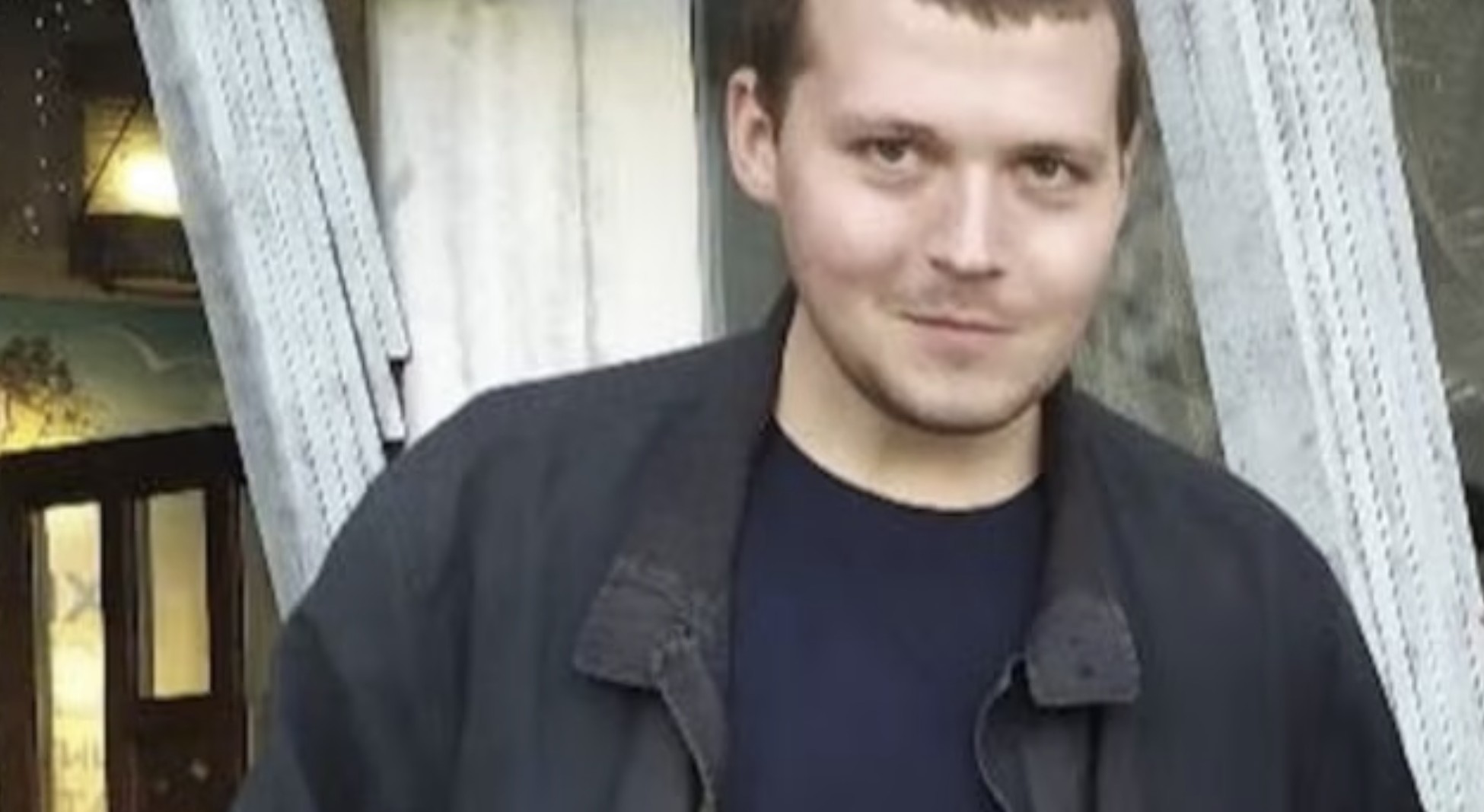
Arseniy Diachkin (b. 5.07.1996) was seized by the Russian FSB in occupied Sevastopol just days before his 27th birthday. He is about to turn 30 with his Russian captors having staged two entirely different ‘trials’ on charges that have become standard against Ukrainians on occupied territory. The second sentence – 16 years maximum-security imprisonment on ‘treason’ charges - has now come into force after a third occupation ‘court’ predictably rejected Diachkin’s appeal. The young man suffered serious injuries in 2021 and underwent several operations, one of which resulted in loss of part of his spleen. He needs constant medical care which he cannot hope to receive in the appalling conditions of Russian and Russian occupation penal institutions.
The Crimean Tatar Resource Centre notes that there is very little information about Diachkin’s ‘arrest’, not least because the young man’s parents do not share his pro-Ukrainian views and preferred to keep quiet about it. He was seized on 30 June 2023 and was almost certainly held incommunicado for a long time, very likely without charges being laid.
The first sentence was handed down by the occupation ‘Leninsky district court’ in Sevastopol on 20 November 2023. On that occasion he was charged with ‘purchase or possession of explosive substances’ under Article 222.1 § 3 of Russia’s criminal code) and sentenced to six and a half years’ maximum-security imprisonment and a 350 thousand rouble fine. Russia’s FSB is notorious for fabricating explosives or narcotics charges by staging the ‘searches’ which alleged to have found items that they brought with them. Even if this was the case here, such ‘explosive devices’ could have been as little as a Molotov cocktail or two, with the sentence excessive given that no other charges were laid.
Ten months later, on 5 September 2024, Diachkin was sentenced by the occupation Sevastopol municipal court to 16 years’ maximum-security imprisonment, with a fine of 450 thousand roubles, with this new sentence incorporating the first. It was claimed that he had been recruited by an official from Ukraine’s Security Service to carry out ‘confidential collaboration’. He had, purportedly, followed instructions from this person and, from September 2022 to April 2023, gathered information about fortifications in the Sevastopol Bay and passed this on “to a foreign country’s intelligence”. The appeal against the ‘treason’ sentence was rejected by the occupation ‘Crimean high court’ on 23 April 2026.
The charges were, in short, those used in almost all ‘treason trials’ under Article 275 or ‘spying’ (Article 276) where a person does not have Russian citizenship. The number of such ‘trials’ and huge sentences has increased massively since Russia launched its full-scale invasion of Ukraine, with the indictment each time differing mainly in dates and in the name of the victim.
These are not trials in any recognized sense of the word since convictions are guaranteed and virtually nothing is known about the ‘trials’ which are held behind closed doors.
Credibility in this case is, however, even further stretched by the two different ‘trials’. Diachkin’s telephone and any other technology would have been seized and scrutinized in June 2023. The FSB are also notorious for using torture and threats against a person’s family to extract ‘confessions’, with this normally during the first weeks or months, where a person has no official status and, therefore, no legal representation or contact with their families. Here there is no attempt to connect the different charges which were 10 months apart.
There would, in short, be every reason to assume a political motive behind Diachkin’s persecution, as has the authoritative Memorial Support for Political Prisoners Project. While there is no way of proving that Arseniy Diachkin was targeted for his pro-Ukrainian views, this has been the case in essentially all cases where information is available and there seems no reason to assume that this is an exception.