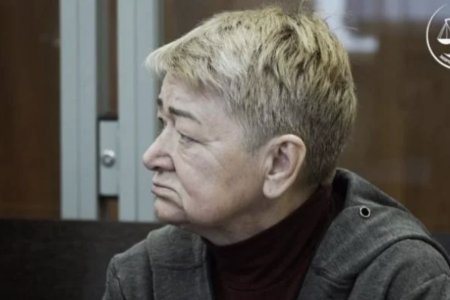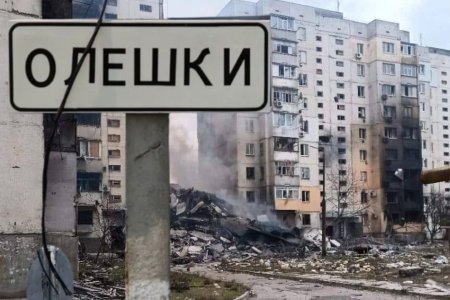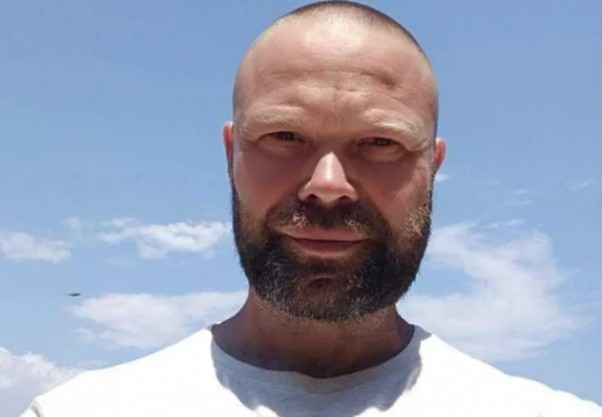
Russia’s Southern District Military Court has sentenced 47-year-old Serhiy Chumachenko to 26 years’ maximum-security imprisonment, accusing him of two unsuccessful attempts on the life of a collaborator, installed by the Russian invaders as ‘mayor’ of Kyrylivka, a village in the Melitopol raion of occupied Zaporizhzhia oblast. The sentence is monstrous, with the first five years to be in a prison, the harshest of Russia’s penal institutions, and a million rouble ‘fine’. It was seemingly passed by ‘judge’ Vitaly Victorovich Mamedov, who has taken part in many sentences against Ukrainian political prisoners, and is the harshest to date against the four men from Kyrylivka who were abducted on 11 August 2023, held incommunicado and then doubtless tortured into ‘confessing’ to supposed ‘terrorism’, based solely on alleged involvement in plans to kill traitors working for the Russian invaders.
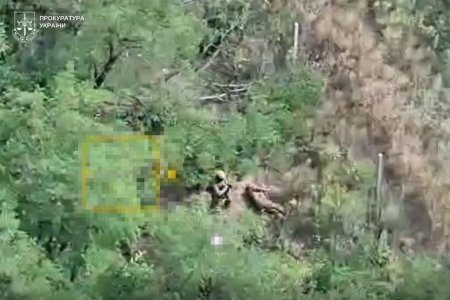
Friends of Serhiy Chumachenko, who was then 47, had approached RIA-South immediately after his abduction on 11 August 2023. Two weeks later, however, it became clear that the Russians had also seized Serhiy Dziamka (b. 1974) and two brothers Petro and Oleksiy Popadeikin. RIA-South noted that this was all part of the latest Russian ‘blockbuster’, with drone images, a supposed ‘seizure’ of the men and ‘interrogations’, during which the men almost certainly recite supposed ‘confessions’ that they have been forced, under threat of renewed torture, to learn off by heart. All four men seem to have then been accused of planning what the Russians tried to claim was ‘a terrorist attack’ in Kyrylivka. They were supposed to have been recruited by an unidentified official from Ukraine’s Security Service and to have been instructed to blow up a car in the centre of Kyrylivka, and to make an attempt on the life of Russian-installed ‘mayor of Kyrylivka’.
Serhiy Chumachenko describes how he supposedly got instructions by telephone and planted a bomb. He seems to have learned ‘his lines’ by heart and also uses suspiciously incorrect language. He says, for example, that he “followed the head of the settlement”, a term which RIA-South believes he could not possibly have used about “notorious traitor Kateryna Umanets”.
Oleksiy Popadeikin ‘confesses’ to having brought the bomb and to having received instructions via Telegram to hide the explosive near an electricity post, to bring the Tavria [car]] and leave keys in the ignition. His supposed ‘confession’ ends with him saying that he didn’t have time to finish the fourth task because he was caught.
Petro Popadeikin was, purportedly, responsible for setting up the hiding places.
Serhiy Dziamka can be heard stressing that he acted under pressure and saying that “Ruslan’ had asked him to find out the address of the Russian-installed ‘’mayor’ and what car the police drive in.
RIA South notes two further incriminating elements. All of the men suddenly come out with the same claim, namely that the SBU work in collaboration with criminal bosses and “influential people”. It has, since 2014, been a standard feature of most political trials that the FSB seek to discredit Ukraine’s Military Intelligence and SBU and to force people to claim that any supposed ‘spying’, etc. was for mercenary gain. They need to blame official Kyiv, but seek to avoid, acknowledging that the men and women could be motivated by patriotism and the wish to defend ones country against the Russian aggressor state.
The FSB also claim that the entire group had long been under observation, with all their movements, correspondence, etc, closely monitored. Ever eager to pretend vigilance and competence, the FSB have thus made a farce of all of the indictments. These, after all, claim that the men are guilty of ‘terrorism’, yet let them continue with this for considerable periods.
The FSB has been using such videoed ‘confessions’ made while a person was held incommunicado, without charges having been laid, and without a proper lawyer, since May 2014, two months after Russia’s invasion and annexation of Crimea. In many cases the men and women have later retracted such alleged ‘testimony’ and described the electric shocks, mock executions, beatings, threats against their families, and other forms of torture and duress used to extract it. This is standardly ignored by ‘judges’ from Russia’s notorious Southern District Military Court and by those installed in occupation ‘courts’.
If four men were ‘arrested’ on the same day, you would surely expect there to be some kind of ‘smoking gun’ evidence and that the men would be put on trial together. Instead, three of the men have been sentenced to very different terms of imprisonment, with the smallest sentence passed by an occupation ‘court’ about which next to nothing is known.

On 24 July 2025, Oleksiy Popadeikin was sentenced to 20 years’ maximum-security imprisonment, with the first three years in a prison, the harshest of Russian penal institutions. A massive fine of 700 thousand roubles was also imposed.
He was accused of having, from 22 February 2022 to 8 August 2023, agreed to the suggestion of a friend to “take part in a terrorist organization” [Article 205.4 § 2 of Russia’s criminal code). This truly surreal charge is how Russia refers to the claim that the men carried out tasks set by an unidentified official from Ukraine’s Security Service [SBU]. Popadeikin’s role in this so-called ‘terrorist organization’ had supposedly been to remove explosive devices and substances from a secret stash and to move them, and keep them in places indicated by the “leaders of the terrorist organization” [Articles 222.1 § 4 and 223.1 § 3), in fact, his garage. He was also accused of having undergone ‘training in terrorist activities’, under Article 205 § 3.
It was claimed that the plan had been to blow up the vehicle of the Russian-installed ‘mayor’ of Kyrylivka (Andriy Nazarenko) and the head of the occupation ‘police’ (Yuriy Balabin).
Even had there been such a plan, it was directed against a perfectly legitimate target. It is, however, very likely that the FSB ‘needed’ to seize several men, and ‘evidence’ was extracted through torture.
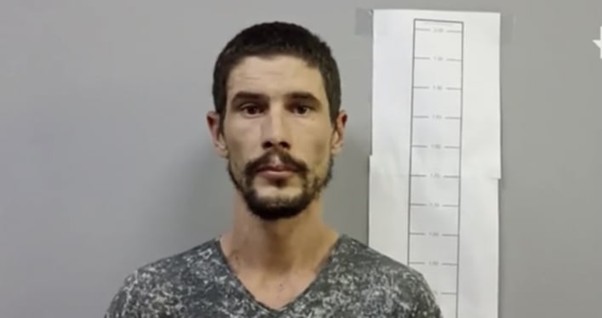
There is no mention of Petro Popadeikin, who was seemingly taken prisoner on the same day as his brother.
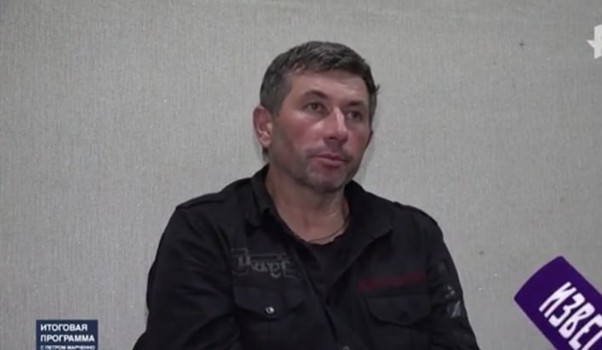
On 29 April 2026, Serhiy Dziamka was sentenced by the occupation ‘Melitopol inter-district court’ to ten years’ maximum-security prison colony and a 500 thousand rouble fine. The sentence is clearly much less severe than the other two, but then the indictment has become even more absurd. He was accused of having collected a parcel handed to him as “potatoes from Ruslan”, with the parcel in fact (or so they claim) having been an explosive device and a detonator. He was accused of having kept this and then transported it.