Russia has filled Mother’s Day with pain and sorrow for hundreds of thousands of Ukrainian mothers. There are no words of solace, but in those cases where sons and daughters are held in Russian captivity, every voice in their defence can help to ensure that they are released. This is especially true of those hostages seized in occupied Donbas before the full-scale invasion of Ukraine. Many were subjected to horrific torture and, after years in captivity, urgently need medical care.
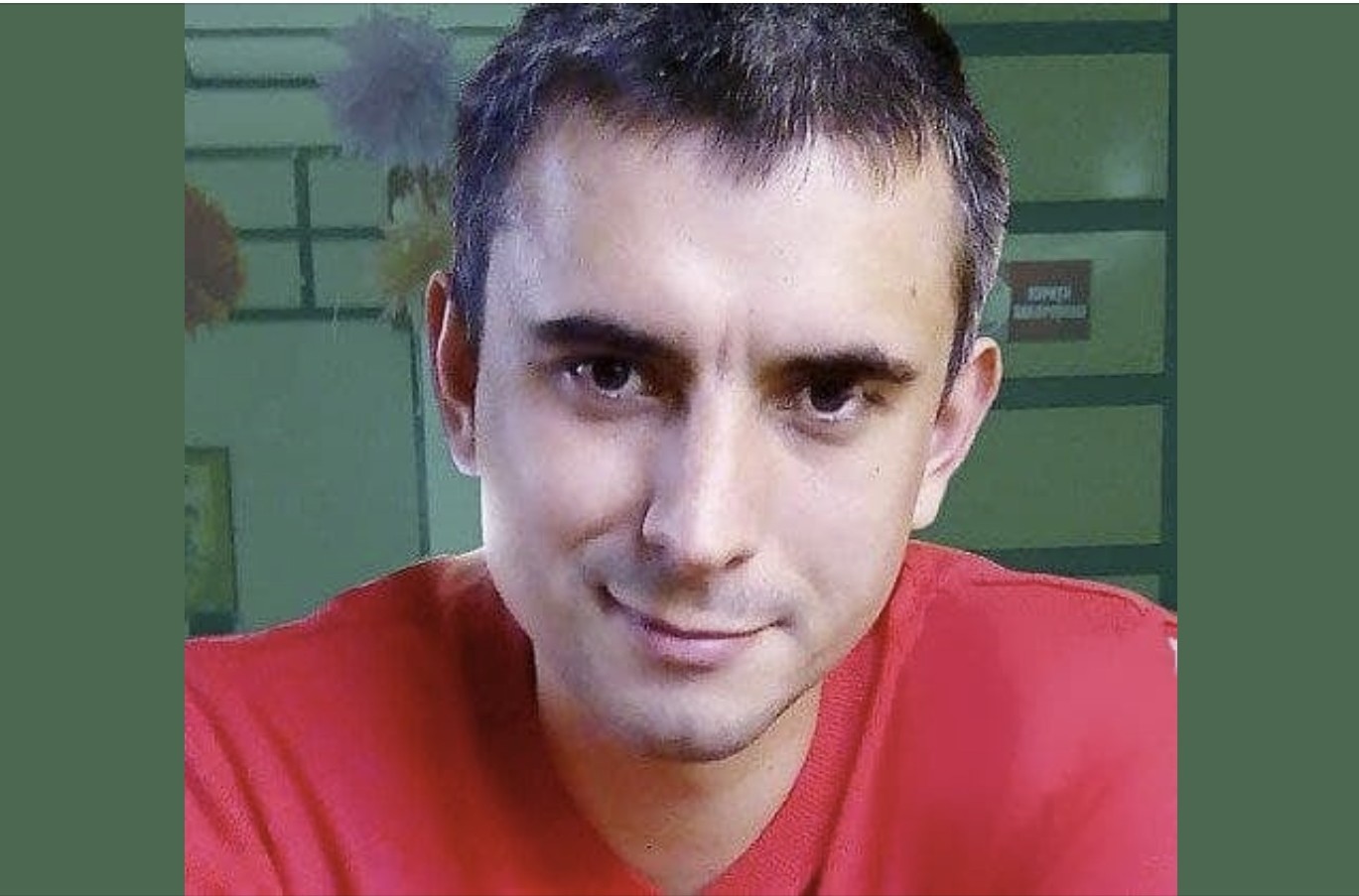
Halyna Dzytsiuk has not seen her son, Victor Dzytsiuk since 2017 when he was abducted in occupied Donetsk oblast and tortured almost to death in the notorious Izolyatsia secret prison. Her husband has lung cancer and is undergoing chemotherapy. He is hoping against hope to survive until his son is released and safely back in free Ukraine. Halyna is understandably bitter, recalling the assurances from key Ukrainian officials that the length of time in captivity and grave illnesses in the family will be priority considerations when seeking prisoner exchanges. While it is Russia that bears responsibility for the torture and ongoing captivity of Ukrainian civilian hostages, we know from those who have been released that publicity and pressure can help in individual cases.
Victor Dzytsiuk (b. 1988) was living and working in Horlivka, a city near Donetsk within Russia’s proxy ‘Donetsk people’s republic’ [‘DPR’]. He was seized at a militant-controlled checkpoint near Donetsk on 23 November 2017 while driving with his family. An armed man in camouflage gear had approached the car and asked Dzytsiuk to come with him “for a talk”. He was then detained by members of the so-called ‘DPR ministry of state security’, while his wife and daughter were taken back to occupied Donetsk. The situation differed very slightly from the standard abduction, in that Dzytsiuk was allowed to return home that day after a lie detector found nothing. His passport was not, however, returned to him, and he was told to come back for it nine days later. He was taken prisoner then and remains in captivity to this day.
As is almost always the case, this was no arrest, but, effectively, an enforced disappearance, with the so-called ‘DPR ministry of state security’ denying any knowledge of Victor’s whereabouts. Halyna used to stand outside their building for hours, meeting other women who were also searching for husbands or sons and who were fed the same lies.
Virtually all the information available has come from former hostages who were imprisoned at some stage with Victor. Thanks to them, the family learned that, while Halyna was being fobbed off by the ‘DPR ministry’, her son was being subjected to savage forms of torture at ‘Izolyatsia’, the secret prison in Donetsk where both men and women were tortured, not only to extract supposed ‘confessions’, but for their torturers’ ‘entertainment’.
It was Oleksandr Timofeiev, who was with Dzytsiuk at Izolyatsia who recounted after his release that “the lad went grey in a week from the torture. Victor was tortured with electric currents and brutally beaten. He got it worse than anyone. In March 2018, he lost consciousness and was sent to the medical unit in the SIZO” [seemingly the Donetsk SIZO, or remand prison.].
The family believe that the ‘DPR militants’ decided to treat maps of the area on his telephone as ‘proof’ that he was spying for Ukraine’s Security Service [SBU]. They were nothing of the sort, and merely needed for Victor’s work which was involved with the building of roads.
Victor Dzytsiuk was sentenced in 2020 to 16 years’ imprisonment. This was purportedly for both ‘spying’ and ‘organizing acts of sabotage’. Halyna says that there were five charges, all of them standardly used for political ‘trials’. He was accused of working for Ukraine’s Military Intelligence (HUR), with this also a typical part of all such cases. The timing was disastrous. While fake occupation ‘courts’ handed down monstrous sentences on supposed ‘spying’ charges, it was rather assumed that the victims would, eventually, be part of a prisoner exchange. Such exchanges, however, almost stopped in the two years up till Russia’s full-scale invasion of Ukraine, and have primarily focused on prisoners of war since then, not on such civilian hostages.
Eight and a half years in Russian / Russian occupation captivity must adversely affect anyone’s health and Victor Dzytsiuk had already faced five months of torture at Izolyatsia. He also suffers from psoriasis which has become acute since his imprisonment, with the lack of any medical care in the prison causing scabs that become badly infected.
Please publicize, in any way that you can, Victor Dzytsiuk’s ongoing persecution, and help in this way to get him released!