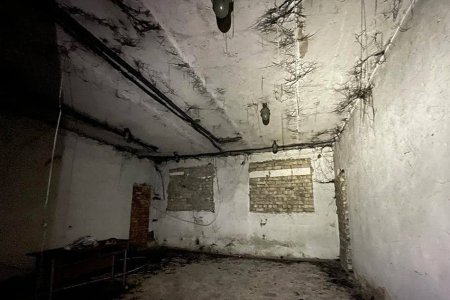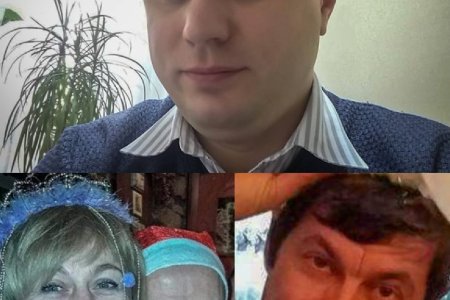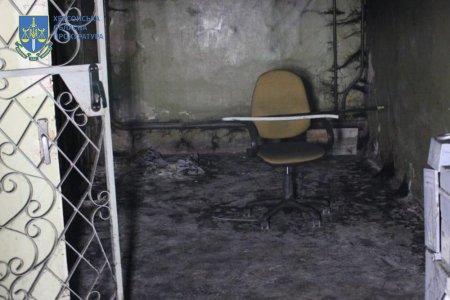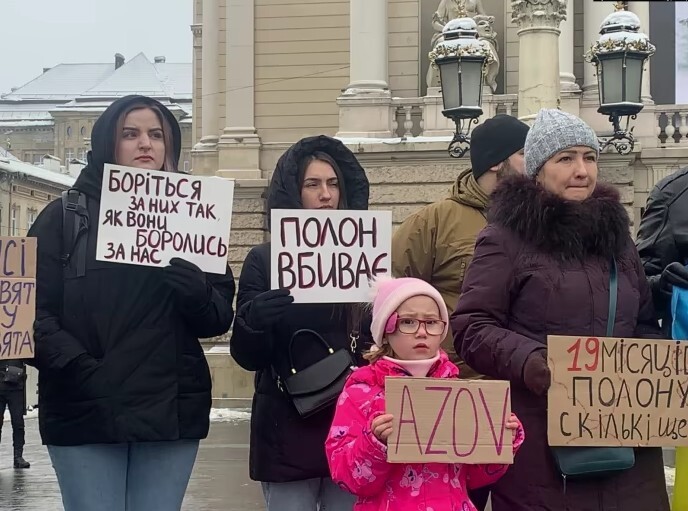
According to Bohdan Okhrimenko, Head of Ukraine’s Coordination Headquarters on the Treatment of Prisoners of War, Russia returned the bodies of 375 Ukrainian prisoners of war or civilians who died in Russian captivity,. Postmortems uncovered signs of torture, emaciation or indicators that they had been denied vital medical care. These were people whose captivity had either been confirmed by the International Committee of the Red Cross (in 145 cases), or from other sources, including from former prisoners who could confirm having seen the person alive in a Russian prison. In accordance with the Third Geneva Convention, Russia bears responsibility for the lives and health of those in its custody and such a huge number of deaths is already appalling. The real figure could, moreover, be even worse. The Russian invaders abducted huge numbers of Ukrainian civilians, and in many cases have never acknowledged that they are in their custody. There is terrifying silence about the whereabouts of Anastasia Hlukhovska, a Melitopol journalist, almost three years after her abduction. There has been no information about 77-year-old Kherson-based Spanish volunteer Mariano Garcia Calatayud [Mario] and there is concern that he may not be alive after over four years in Russian captivity.
Russia is increasingly brazen in its flouting of international law and has, since 2022, withdrawn from both the European Convention on Human Rights and the European Convention for the Prevention of Torture. In accordance with the latter Convention, Russia was obliged to allow observers from the Committee for the Prevention of Torture to carry out unannounced visits to any places where people are deprived of their liberty. Now there is only the International Committee of the Red Cross which has been criticised by very many former prisoners and by the families of those still in Russian captivity.
Its crimes against Ukrainian prisoners of war and civilian hostages have been well-documented, and not only by Ukrainian investigators. The UN’s Independent International Commission of Inquiry on Ukraine found back in September 2023 that Russia’s use of torture against Ukrainians was widespread, systematic and part of Russian state-endorsed policy. A year later, it issued a new report confirming that Russia’s coordinated state policy of torturing Ukrainian prisoners of war and civilian hostages is a crime against humanity. There have been numerous other reports. All are important and should help to ensure accountability at some point.
Studies, however, cannot secure the release of prisoners of war and civilian hostages, despite the evident danger to their very lives in Russian captivity.
The situation is especially difficult in the case of civilian hostages whom Russia had no right to take. There are no mechanisms for returning them, nor even for ascertaining where they are being held, and their state of health. Russia also increasingly comes up with fake charges and a ‘trial’, with hostages who have sometimes been held incommunicado already for months or years, being sentenced on ‘spying’ or other typically ‘political’ charges. This situation can only get worse since Russia is foisting its citizenship on residents of occupied territory and then using such citizenship as a weapon and opportunity to place them on trial as ‘Russians’.
Russia has also used kangaroo courts to sentence Ukrainian prisoners of war to 20 years or even life on fabricated and flawed ‘terrorism’ charges, or similar. Here, however, there has been some limited success in obtaining the POWs’ release. So far this year, 20 such POWs’ have been freed, while in October 2022, over 40 POWs were freed, with half of them being men who had been sentenced to life imprisonment. Virtually all such ‘terrorism trials’ are based on politically motivated rulings declaring the Azov Regimen or other units of Ukraine’s Armed Forces ‘terrorist organizations’.
There remain over a thousand civilians and prisoners of war who have been in custody since 2022. Such prisoners are clearly the Coordination Headquarters’ priority, as their ability to endure Russian treatment must be seriously drained after so many years. The Coordination Headquarters were created in 2022, and there are so many prisoners of war that such a focus is understandable. There are, however, many Ukrainians who have been in captivity in occupied Donbas since 2017-2018 or even earlier, and they too need to be prioritized (see, for example, Hryhory Sinchenko; Oleh Shevandin; Victor Dzydziuk; Natalia Vlasova (b. 1981); Serhiy Hruzynov (b. 1974) and Victor Shydlovsky (n. 1972) and very many others.
The problem is not only that Ukraine does not abduct Russian civilians and doesn’t, therefore, have people to exchange for all the Ukrainian civilian hostages whom Russia is imprisoning. A second difficulty is that Russia is clearly not that interested in getting its own citizens back, and not in the slightest concerned about ensuring the freedom of men from other countries fighting for Russia as mercenaries.
In his interview to Ukrinform, Okhrimenko was asked who the Russians most ask to have exchange. “Virtually nobody”, he said, “sometimes they have to be persuaded to take their own citizens. That applies also to foreign nationals who fought for Russia”. The Geneva Conventions make it clear that it is the country for whom they were fighting that bears responsibility for them, however Russia has shown interest only in the North Koreans taken prisoner.
Typically, Russia has not identified one official responsible for dealing with civilian hostages. Okhrimenko notes that when they approach the Russian defence ministry, the latter answers that they deal exclusively with prisoners of war.
See also:
While others are celebrating, Ukrainian POWs are being tortured in Russian prisons