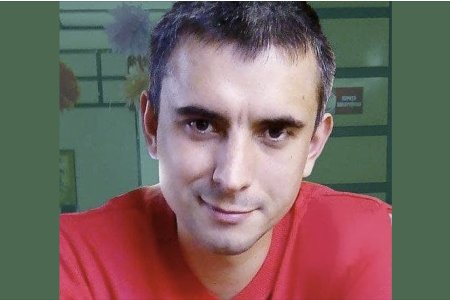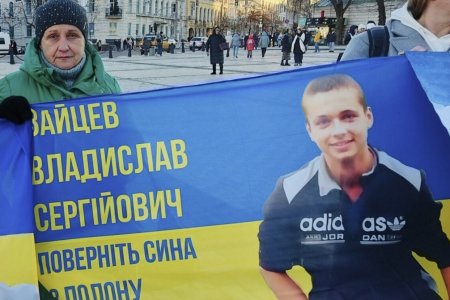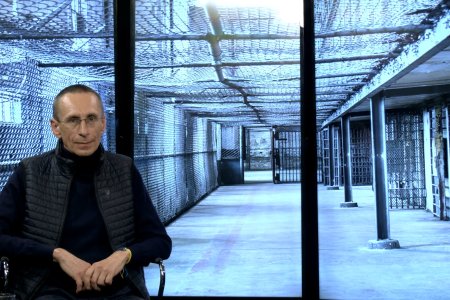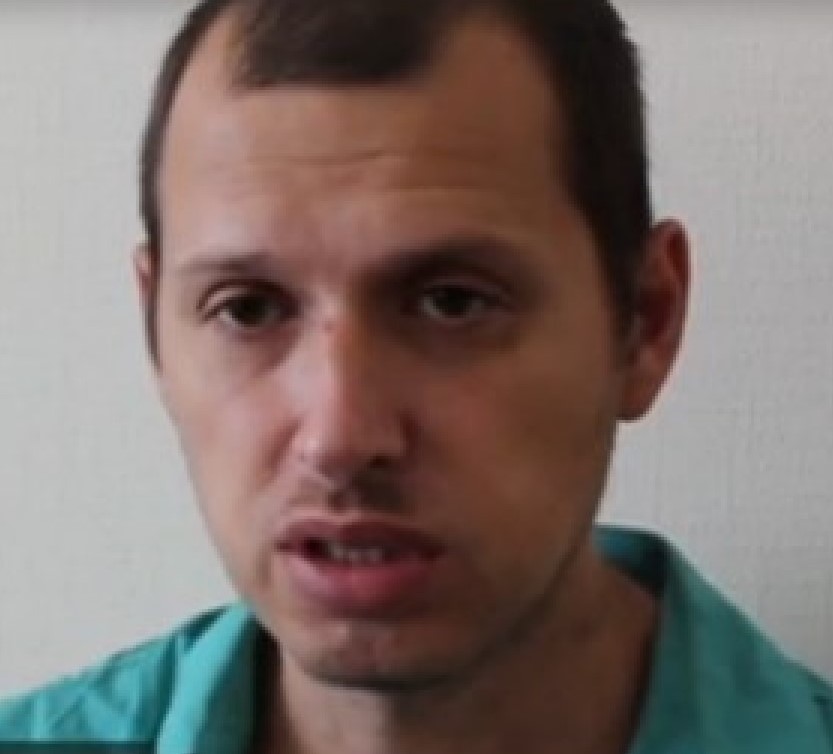
Yevhen Brazhnikov is in custody in France and may finally be tried over his role in the torture of hostages at the Izolyatsia secret prison in occupied Donetsk. While it is for the court to determine whether the charges of war crimes and crimes against humanity are justified, Brazhnikov’s part in the torture at Isolyatsia has been confirmed by nine former hostages who were all hoping to testify against him back in 2021 when he fled to France to escape trial in Ukraine.
It was reported on 8 May 2026 that a Ukrainian national from Donetsk, ‘Yevhen B., b. 1979’, had been arrested in France and placed in detention. It appears that he was, in fact, detained on 7 April. . He is accused of involvement in war crimes and crimes against humanity from 2016-2019 by representatives of the Russian proxy ‘Donetsk people’s republic’ or ‘DPR’ at the Izolyatsia secret prison in occupied Donetsk. The investigators allege that he voluntarily collaborated with the so-called ‘DPR ministry of state security’ and took part in the torture, psychological pressure and degrading treatment of hostages at Izolyatsia.
According to Alina Kondratenko from the Media Institute for Human Rights, Ukraine’s Prosecutor General’s Office has said that they are not planning to seek Brazhnikov’s extradition but will provide whatever assistance is required.
This is probably wise considering Ukraine’s poor track record first in prosecuting Brazhnikov at home and then in persuading the French authorities to arrest him once he fled to France in 2021.
Brazhnikov apparently served in Ukraine’s police force until 2010. According to Stanislav Pechonkin, a former Izolyatsia prisoner, Brazhnikov had, in 2014, actively helped run pro-Russian rallies and attacked participants of pro-Ukrainian demonstrations and in the Russian proxy ‘DPR’ was in charge of security at a Donetsk factory. Pechonkin believed that Brazhnikov was himself flung into the Izolyatsia prison over a banal deal involving weapons, however the so-called ‘DPR ministry of state security’ claimed that he had been trying to organize a coup on instructions from Ukraine’s Security Service. He was found guilty of illegal possession of arms and sentenced to 8 years.
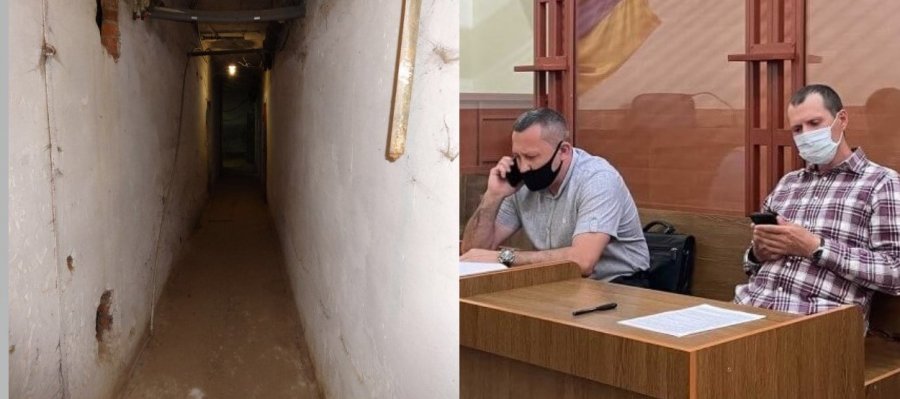
It is not quite clear why Brazhhnikov ended up initially at Izolyatsia. The Izolyatsia Cultural Centre, on the territory of a former factory complex, was seized by Roman Lyahin and other militants in June 2014 and swiftly turned into a secret prison where men and women were savagely tortured, both to force out supposed ‘confessions’, and for the torturers’ ‘entertainment’.
Given his apparent prisoner status, it was not necessarily surprising that Brazhnikov was released as part of a major prisoner exchange in December 2019. It became clear almost immediately, however, from the testimony of former hostages like writer and journalist Stanislav Aseyev and Stanislav Pechonkin that Brazhnikov had enjoyed a privileged position at Izolyatsia and had actively participated in their torture and that of others.
Stanislav Aseyev had been released in the same 29 December 2019 prisoner exchange after 31 months in ‘DPR’ captivity, most of which was at Izolyatsia. He had spoke vocally from the outset about the failings in the exchange system which had led to people like Brazhnikov being released and had called for Brazhnikov to be tried and receive the maximum possible sentence.
Although Brazhnikov has himself dismissed the allegations, claiming there to be no material evidence, “only” other people’s testimony, the latter is overwhelming. There were nine former hostages all eager to give testimony, and, seemingly, other witnesses to the general treatment meted out against Izolyatsia prisoners.
Brazhnikov was formally charged in March 2020 and placed under 24-hour house arrest. Nine former Izolyatsia hostages, with victim status, were due to give testimony, namely: Stanislav Aseyev; Roman Hys; Oleh Kulakov; Ihor Kulysh; Stanislav Pechonkin; Kyryllo Polikarpov; Oleksandr Repetylo; Oleh Suherei and Serhiy Usatiuk.
The indictment against Brazhnikov was formally announced on 13 May 2021. The charges were of war crimes (ill-treatment of civilians), under Article 438 § 1 of Ukraine’s Criminal Code and of abetting the actions of a terrorist organization and ill-treatment of civilians (Article 258-3 § 1). Brazhnikov was accused of having tortured and inflicted bodily injuries on Izolyatsia inmates to get them to ‘confess’ to supposed crimes.
It was only in September 2021 that Ukraine’s Supreme Court finally agreed (after to refusals) to transfer the trial to Kyiv, making it possible for the nine former prisoners to provide testimony. The trial was due to take place at the Obolon District Court in Kyiv.
The trial did not begin. In November 2021, Brazhnikov somehow managed to flee to France, with Graty reporting on 26 November that his lawyer had passed a written application to the court asking that his client be allowed to take part in the proceedings by video link from Franch where he had supposedly asked for asylum. There was no independent confirmation of this at the time, however Aseyev reported on 18 January 2022 that the panel of judges had also rejected the lawyer’s application and had issued a warrant for Brazhnikov’s arrest.
In welcoming news of Brazhnikov’s arrest in France on 7 April 2026, the International Federation for Human Rights [FIDH] reported that the arrest came four years after FIDH, Truth Hounds and the Ligue des droits de l'Homme (LDH) had alerted the authorities of his presence on French soil,
It is very much to be hoped that this trial is, finally, carried through to the end.
Ukraine has, thankfully, been more successful, albeit belatedly, in prosecuting Denys Kulykovsky (‘Palych’] who answered to Russia’s FSB, but who himself both gave orders to torture Ukrainian hostages at Izolyatsia and took part in such torture.
See: Ukraine sentences ‘chief butcher’ of Russian-controlled Izolyatsia secret torture prison to 15 years