During the latest hearing in the trial of five Crimean Tatars from Dzhankoi, a supposed ‘witness for the prosecution’ was unable to describe the defendants. and could not provide other basic information. This was despite the prosecution presenting him as a man who had taken part in meetings with the five defendants over a period of almost two years.
The hearing took place at Russia’s notorious Southern District Military Court on 14 May 2026. The alleged ‘witness’ was known only by the pseudonym ‘Islamov’ and would have been ‘testifying’ from another room. On very many occasions, lawyers for the defence in such cases have noted that the ‘witnesses’ appear to be speaking with suspicious delays, as though they are consulting with somebody in the room. Attempts to draw the court’s attention to this are invariably unsuccessful, as are appeals against the secrecy which deprives the defendants and their lawyers of the opportunity to verify their testimony.
Presiding judges typically block questions likely to demonstrate that the ‘witness’ is lying. It is possible that the questions on 14 May were simply too basic to thwart. A person who claimed to have attended meetings together with the five defendants from the autumn of 2021 until the summer of 2023 should surely have been able to describe the men’s appearance and say what they did for a living. Bakhtiyar Ablaev also asked what he personally had done at the alleged meetings, what hobbies he has and what transport he used to get to the mosque. The supposed witness was unable to say. He also did not know the second, Muslim name of Rustem Mustafayev, something all the latter’s acquaintances and friends know.
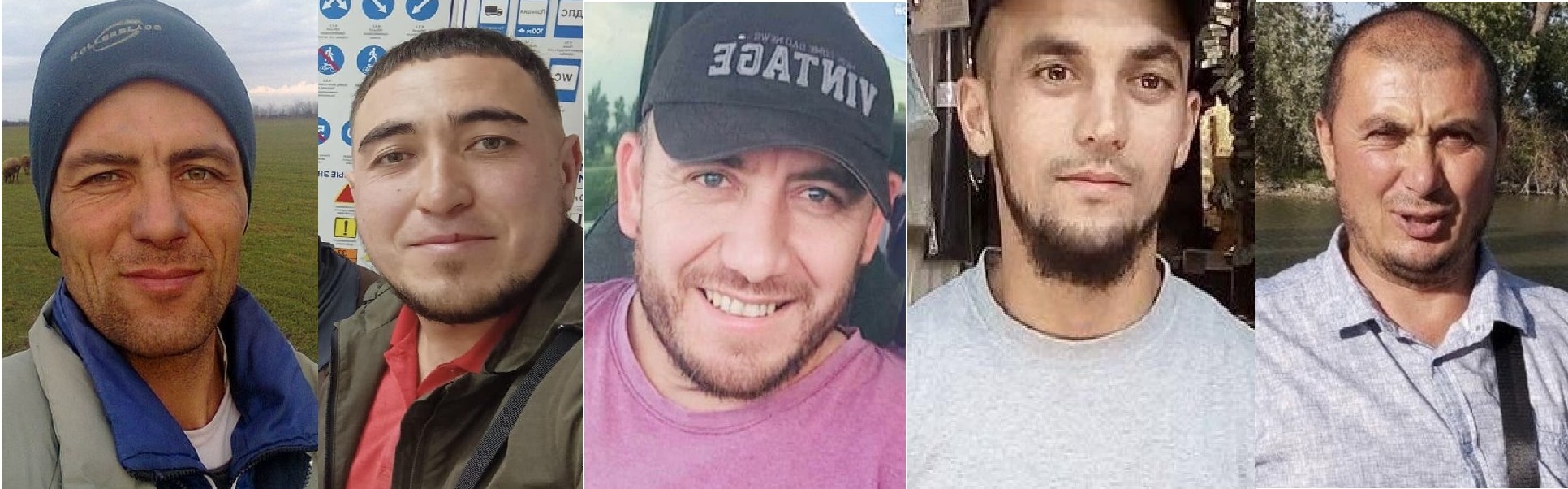
The presiding judge also announced that the men may soon be moved from SIZO [remand prison] No. 1 in Rostov-on-Don to SIZO No. 3 in Novocherkassk. While it is likely that SIZO No. 1 is indeed overcrowded, not least because of the Ukrainian prisoners of war whom Russia is illegally fabricating ‘trials’ against, the move will mean that the men are forced to take part in the hearings by video link. These hearings are often the only opportunity that the men have to see members of their family.
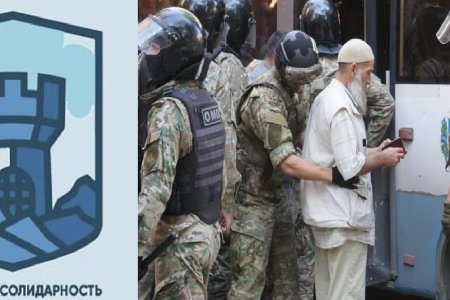
Russia began its internationally condemned arrests and trials of Crimean Muslims on fabricated ‘terrorism’ charges back in 2015 and soon began using the prosecutions as a way of trying to crush the vital Crimean Solidarity human rights movement. A huge percentage of the men and, since October 2025, women imprisoned are civic journalists or activists who had earlier faced administrative prosecution for their human rights work. The Russian FSB also target multiple members of the same families.
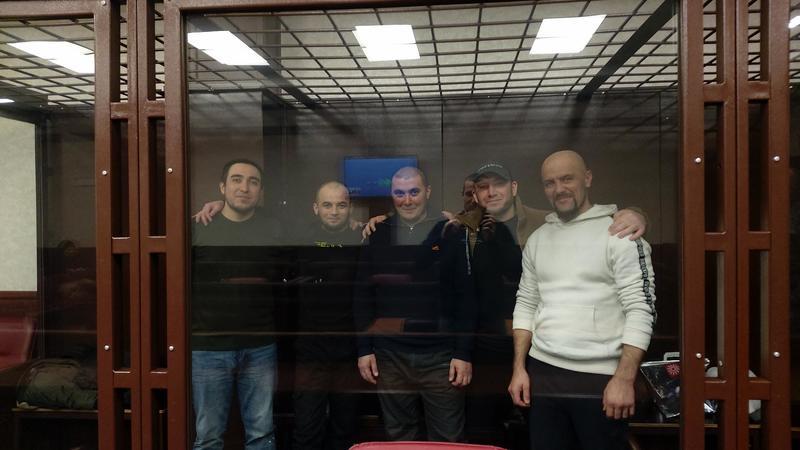
Of the five men now on trial Emir Kurtnezirov (b. 22 May 1994), is an agronomist and the son of Remzi Kurtnezirov (b. 1962), a local Imam and also a political prisoner. Emir Kurnezirov had only recently married Safiye Yakubova who had, before his arrest, already had four political prisoners in her family – her father Eldar Yakubov; her uncle Ametkhan Umerov; as well as two more distant uncles Rustem Osmanov and Mustafa Abdurakhmanov. Safiye told Graty that she and Emir first met through the Crimean Solidarity website, with Emir then seeing her in Rostov at the trial of her father.
On 5 February 2025, two months after his wedding, Emir Kuznezirov was arrested together with Bakhtiyar Ablaev (b. 26 July 1988); Rustem Mustafayev (b. 22 July 1987); Abibulla Smedlyaev (b. 3 May 1991) and Mirzaali Tazhybayev (b. 11 May 1980).
As in all such cases, the ‘terrorism’ charges (under Article 205.5 § 2 of Russia’s criminal code) are based solely on unproven claims of ‘involvement’ in Hizb ut-Tahrir, a peaceful, albeit controversial, transnational Muslim organization which is legal in Ukraine. Russia’s FSB cite a flawed and extremely secretive ruling from the Russian supreme court in 2003 which declared a number of organizations, including Hizb ut-Tahrir, ‘terrorist’, although the ruling was superseded in 2006 by a law on countering terrorism, according to which there would be no grounds for calling Hizb ut-Tahrir terrorist. In occupied Crimea, the FSB standardly bring a second grotesque charge of ‘planning to violently seize power’, under Article 278.
The real nature of these profoundly flawed charges can be gauged simply by scrutinizing the armed searches and arrests on 5 February 2025 and the supposed ‘evidence’ of involvement in Hizb ut-Tahrir.
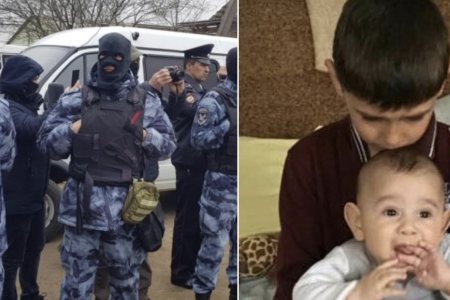
Although the armed ‘operations’ are invariably presented by Russian propaganda media as ‘breaking up terrorist cells’, the reality is much more squalid. The FSB and other officers, many in masks and armed, who burst into the men’s homes never pretend to be searching for anything except so-called ‘prohibited religious literature’. Indeed, they scarcely pretend to be searching, as they normally bring material which they then claim to have ‘found’. Shefika Mustafayeva reported on 5 February that the armed men who came for her husband pulled out three books that they had never set eyes on from behind the stove, a place that no devout Muslim would use for religious literature. Leniza Smedlyaeva stated that two books had appeared that she had never seen before, while Emir Kurtnezirov’s wife, Safiye Yakubova also reported that the men had planted two ‘prohibited’ books.
Safiye and Emir Kurtnezirov, in particular, had every reason to expect armed ‘searches’ at any moment, and it is simply absurd to suggest that, even had they wanted to, they would have held material in their home that would be touted as ‘evidence’ against them.
The only other ‘proof’ presented for charges that carry sentences of 12 to 17 years’ maximum-security imprisonment come from illicitly taped conversations, often in a mosque and from the supposed secret witnesses. The conversations are normally on religious topics or about religious persecution and innocuous, however the FSB sends transcripts (frequently with mistakes in them) to its puppet ‘experts’ who provide the demanded assertions that this or that is ‘incriminating’.
The third source of fabricated evidence comes from fake secret witnesses, whom the FSB often use in multiple ‘trials’. The individual ‘Islamov’ is by no means the first of these who clearly do not know the men whom they are helping to imprison on shockingly cynical charges.