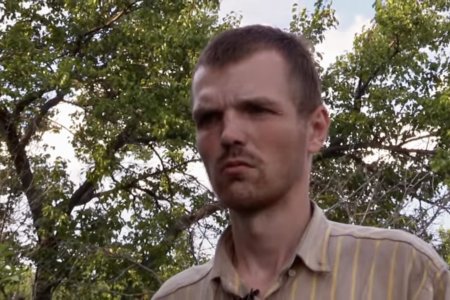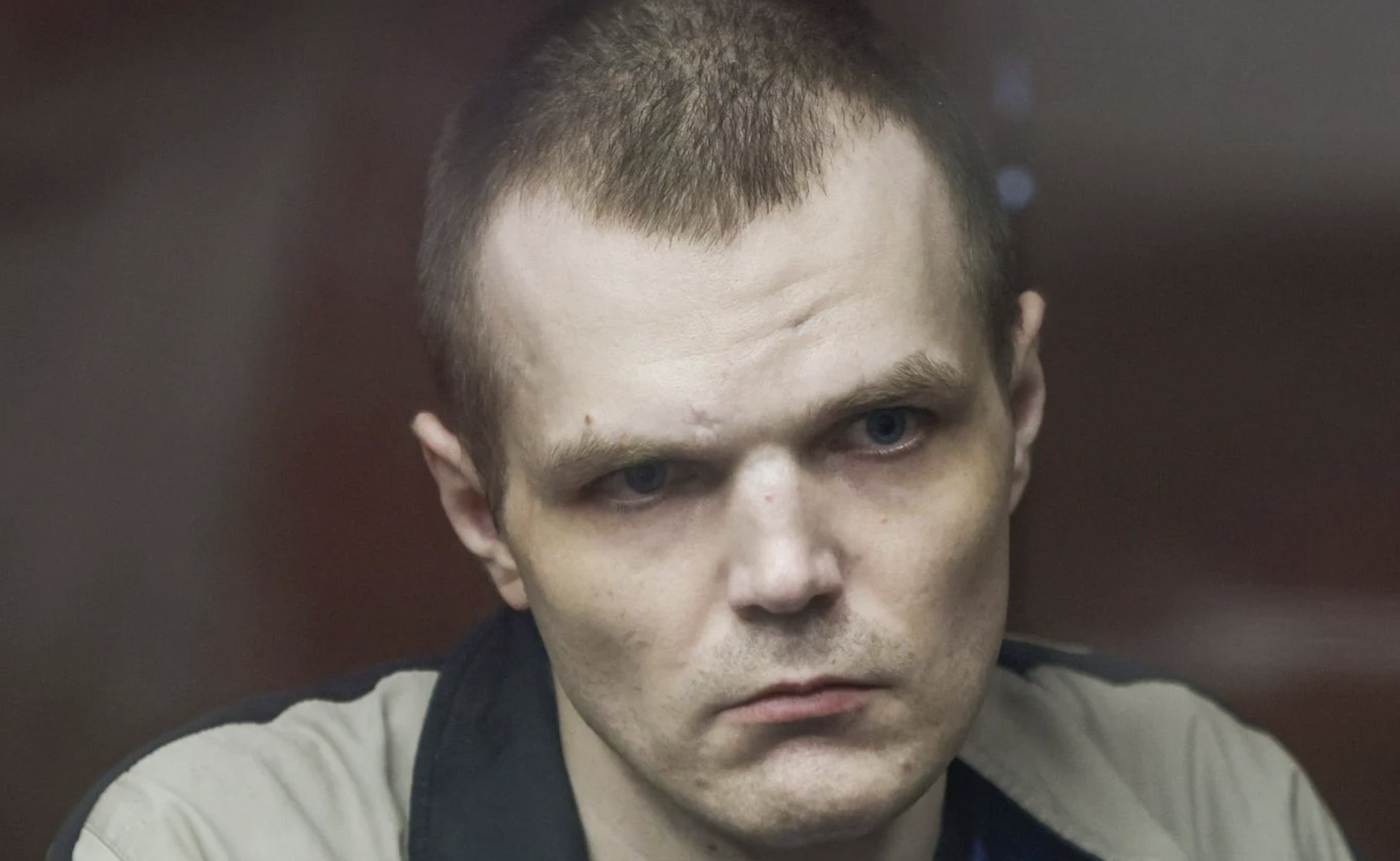
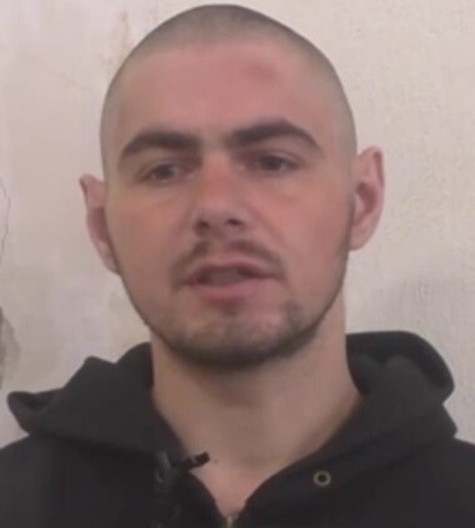
Russia’s Southern District Military Court has passed monstrous sentences of 29, 25 and 22 years against three Ukrainian political prisoners who had already been sentenced on different charges of up to 26 years. Although the Ukrainians were essentially accused over unprovable conversations in the Russian prison where they are illegally held. the charges laid were of ‘planning a terrorist attack’ and ‘involvement in a terrorist organization’. Russia has already fabricated ‘trials’ based solely on alleged conversations in order to extend the sentences of Ukrainian political prisoners like Oleh Prykhodko and Hennadiy Lymeshko, however the savagery of the sentences passed in this case was unprecedented.
The cynical lawlessness about the men’s prosecution was, in contrast, nothing new. Volodymyr Makarenko (b. 30.07.1997), who was sentenced on 26 June 2026 to 22 years’ maximum-security imprisonment, is a Ukrainian prisoner of war who has protected status under the Third Geneva Convention. That had not stopped Russia from staging a lawless ‘trial’ against 15 POWs on surreal ‘terrorism’ charges for having defended their own country as part of the Ukrainian Armed Forces Aidar Battalion and sentencing Makarenko on 17 October 2025 to 18 year.
Dmytro Papenko (b. 14.10.1976) is from occupied Sevastopol and is claimed to be ‘Russian’ purely because Russia has made it impossible to live in occupied Crimea without taking Russian citizenship. He appears to have been in captivity since December 2022 and was sentenced in 2024 to 21 years on ‘treason’ and ‘terrorism’ charges. The ‘trial’ at the Southern District Military Court was behind closed doors, with even the date of the sentence unknown, and there are no grounds for believing that Papenko had a fair trial.
Hryhory Sinchenko (b. 11.05.1991) has spent a substantial part of the last ten years imprisoned either on cynical charges laid by Russia’s proxy ‘Donetsk people’s republic’ [‘DPR’] or directly by Russia. He has suffered appalling torture, with this evident from his face during the announcement of a 26-year sentence on totally illegal charges back in February 2025.

News of the new charges became known when the indictment was passed to the Southern District Military Court on 17 October 2025. The three political prisoners were charged with attempting a ‘terrorist act’ in a SIZO [remand prison] in Rostov-on-Don. It was claimed that, in July 2024, Dmytro Papenko suggested to Volodymyr Makarenko and Hryhory Sinchenko that they “take part together in criminal activities” and that both other Ukrainians agreed. Papenko had purportedly planned a ‘terrorist act’ for 4 November 2024, but this was thwarted.
Even the scrappy information available about this supposed ‘terrorist plot’ was teeming with discrepancies and the ‘evidence’ came solely from testimony provided by two other prisoners, only one of whom ‘testified’ in court. Russia has been using other prisoners to fabricate charges since one of the first political trials of Ukrainians in 2015 (against Mykola Karpyuk and Stanyslav Klykh). Prisoners can be very easily pressurized, tortured or bribed into ‘testifying’ against other prisoners, with this doubtless what happened in the case of the prisoner, known as ‘Santa’, who testified against Makarenko, Papenko and Sinchenko. Effective confirmation of the methods used was provided by the three defendants who “admitted guilt” at the beginning of the trial. During the hearing on 2 April when ‘Santa’ testified, one of the defendants’ lawyers stated that the men had not wanted to take part in questioning the supposed witnesses “because they’re beaten up”.
There is, of course, one other possibility, namely that the supposed ‘witnesses’ were never actually in the same cell as the men. Virtually all Russian trials of Crimean Tatar, other Ukrainian political prisoners are based on the testimony of men who may never have actually set eyes on the defendants. Only the prosecutor and the ‘judges’ see evidence of a person’s identity, and the judges block efforts by the defence to either ensure that the person testifies openly or to prove through questioning that the individual is lying. Even the supposed witnesses’ voices are concealed, with it quite possible that they are, in fact, FSB operatives.
‘Santa’ was questioned on 3 April, and only by the judge and the prosecutor. He spoke via video link but could not be seen. He claimed that, in July 2024, he had been in SIZO-5 in the same cell as Makarenko and Papenko and learned that they were planning, together with Sinchenko who was in a neighbouring cell, to seize and overpower a prison officer, steal his uniform and keys and use them to release the other prisoners. He asserted that he could hear this and that he understood that the main person, from whom the initiative came, was Papenko, and that Sinchenko who was in Cell No. 70, was mentioned. He claimed also that there had been a plan to collect “a bag with weapons” and that they needed petrol for Molotov cocktails. In this highly implausible way, they were supposedly planning to seize the SIZO in order to demand an end to the war between Russia and Ukraine; the release of Ukrainian prisoners, and also to returned occupied territory to Ukraine.
The other ‘secret witness’ was referred to as ‘Makhno’, with his ‘testimony’ simply read out.
During the trial, Sinchenko’s lawyer pointed out that the prosecution had not explained how exactly the defendants in two different cells were supposed to have communicated with each other. He also noted that Sinchenko had been moved to a SIZO in Taganrog two months before the purportedly planned ‘seizure’ and could therefore not have taken part in the “act of terrorism”.
This, and a great deal more, was simply ignored, including the glaring differences between the main ‘testimony’ from secret witnesses and the eventual sentences passed on 26 June 2026 by ‘judge’ Timur Khabasovich Mashukov.
The men were all convicted of planning an ‘act of terrorism’ under Article 205 § 2a & b of Russia’s criminal code, while Sinchenko was also supposed to have “incited to terrorism” under Article 205.1 § 1.1. This meant that Sinchenko got by far the longest sentence, although the secret witness claimed that it was Papenko who was the driving force. It was, moreover, impossible how Sinchenko could have played this role when he was first held in a different cell, and then in a different SIZO. It was claimed that all three men had collected metallic items needed for their supposed plot, although this was all in the conditions of a SIZO, where searches are common. It was surely inconceivable that they could have collected enough metal objects for the alleged aim of seizing and setting alight to the SIZO.
Hryhory Sinchenko was sentenced to 29 years’ maximum-security imprisonment, with the first seven years in a prison, the harshest of Russian penal institutions. A fine of 200 thousand roubles was also imposed,
Dmytro Papenko was sentenced to 25 years, with the first seven in a prison;
Volodymyr Makarenko was sentenced to 22 years, with the first five in a prison.
The court report does not indicate how these sentences are to be calculated given those already passed against the men.
Torture
The men are all held prisoner in Russian penal institutes where torture is widely used, especially against Ukrainian prisoners of war and civilian hostages. Some of the men on trial with Volodymyr Makarenko have described the torture to which they were subjected, with there being no reason to either doubt such testimony, or hope that Makarenko received better treatment.
See: Russian military court upholds torture and trashes law to call defence of Ukraine ‘terrorism’
Russia’s treatment of Hryhory Sinchenko, since he was first seized in occupied Donetsk in 2016, has been horrific.
See: Russia passes horrific sentence against young Ukrainian patriot after years of savage torture