Time is running out for any chance that Russia will free Lenur Khalilov so that the political prisoner who is critically ill can be with his family in Crimea. Since Russia has not only flouted its own legislation and constitution through its persecution of Khalilov, but also by revoking the entirely legal ruling ordering his release on health grounds, hope was always minimal. Diplomats from countries which, unlike Ukraine, still have embassies in Russia could, nonetheless, intercede on his behalf. Unlike the Crimean human rights defender and journalist who has spoken out about Khalilov’s state, they can do so safely, and should, since Russia’s lawlessness, like its brutality, recognizes no borders.
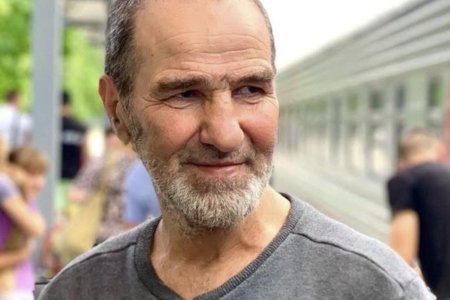
As of the beginning of July, 58-year-old Lenur Khalilov’s life is “literally fading away.” He is virtually unable to move by himself and needs to either be in a wheelchair or helped by others. He was moved over two months ago from the prison colony to the Arkhangelsk region prison hospital where he received something referred to as ‘targeted therapy’. This has had no effect on his cancer which is continuing to spread, and does not even ease the pain he experiences.
He is once again trying to secure his release on health grounds, with his wife also seeking any avenue to get him freed. Time is, however, very short and Russia has not shown any sign that appealing to the humanitarian principles which it once endorsed will make any difference.
Lenur Khalilov (b. 8 December 1967) is a recognized political prisoner who should never have been imprisoned at all. If Russia is denying that, it could not deny the medical grounds for releasing him in August 2025. He had recently being taken to a harsh-regime (maximum-security) prison colony from the notorious Vladimir Central prison and was almost immediately moved to a prison hospital. It was there that a full medical examination was carried out, which identified a number of very serious conditions, including chronic hepatitis C; high blood pressure; cysts in the liver and one kidney and kidney stones. Critical to his release was the diagnosis, provided by an oncologist, of liver cancer which had already spread to lymph nodes. It was a matter of time before the cancer spread to other vital organs and immediate treatment was prescribed.
Since malignant cancers requiring treatment is on Russia’s list of diseases which preclude imprisonment, Khalilov and his lawyer applied to the court for his release on the grounds of illness. The hearing before the Isakogorsk district court in Arkhangelsk took place on 20 August 2025, with the prosecutor, responsible for overseeing the prison colony’s compliance with the law present.
The ruling passed by judge N.Y. Belaya was based solely on a qualified medical diagnosis which was very easily checked against the List of illnesses precluding imprisonment, passed by Government resolution no. 54 from 6 February 2004. The judge, therefore, rightly concluded that Khalilov “cannot be held in a prison institution in general conditions and needs treatment in a specialized institution”.
Lenur Khalilov was released from custody a few days later and returned to a huge welcome back home in Crimea. The respite, and Russia’s compliance with its own legislation, provided fleeting. By 14 October 2025, Khalilov was back in custody. Russian prosecutor N.S. Ryazanov had appealed to the Arkhangelsk regional court at the beginning of September, claiming that the court had not given “due assessment to other circumstances, including the attitude of the prisoner to the treatment carried out; his compliance with medical recommendations; his current state of health; the possibility of receiving the necessary treatment without release from the sentence; information about a permanent place of residence; relatives and family who can and agree to care for him and the actual need for such care.”
Ryazanov asserted that Khalilov, who was sentenced to 18 years’ imprisonment for his religious independence, was a terrorist’, ‘a particularly dangerous criminal’ and that releasing him would not be just in relation to the public. He further claimed that “the necessary medical care was provided in full measure.”
This has proven a particularly brutal lie, with Khalilov’s wife reporting back in May that her husband was receiving nothing except weak painkillers.
12-18-year sentences for religious independence and human rights activism
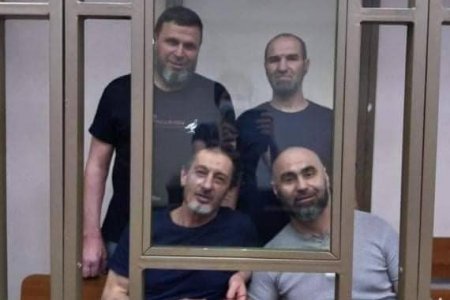
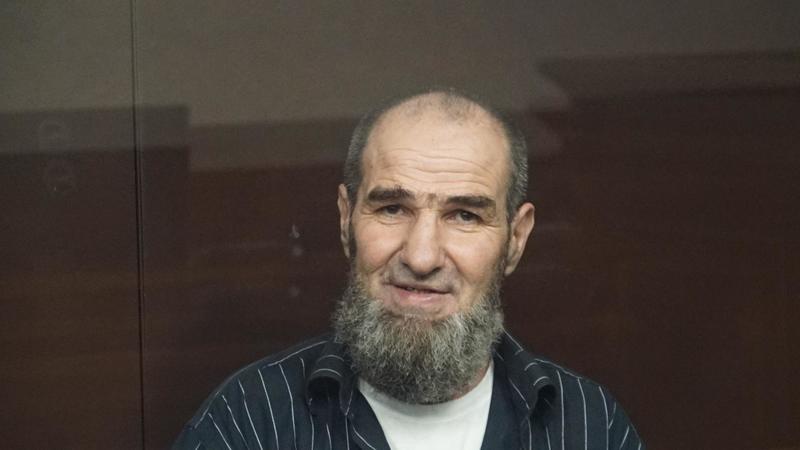
Four Crimean Tatars from around Alushta were arrested on 10 June 2019. after armed ‘searches’ which made no pretence of looking for anything but ‘prohibited religious literature’. Lenur Khalilov; Ruslan Mesutov (b. 1965); Ruslan Nagayev, (b. 1964); and Eldar Kantimirov (b. 1980) were sentenced to 18, 18, 13 and 12 years, respectively.
Although in most aspects one of Russia’s most notorious conveyor belt ‘trials’ where long sentences are guaranteed from the moment the armed searches begin, there was one specific detail. Lenur Khalilov was imam and head of the independent ‘Alushta’ religious community which the occupation regime was trying to crush, while Ruslan Mesutov was an active member of the community, as was another political prisoner and Amnesty International prisoner of conscience Muslim Aliev. The arrests on 10 June 2019 came just two weeks before the Alushta community’s legal challenge against the occupation regime’s seizure of the 19th century Yukhary-Dzhami Mosque which the community has legally occupied since 1994. Ruslan Nagayev was probably also targeted for his ‘religious dissidence’, while Eldar Kantemirov’s had actively defended political prisoners, with this, in occupied Crimea, enough to have the FSB come for you.
The men were accused only of unproven involvement in Hizb ut-Tahrir , a peaceful transnational Muslim organization which is legal in Ukraine. Russia became the first country in the world (joined in 2016 by Uzbekistan) to declare Hizb ut-Tahrir ‘terrorist in a 2003 Supreme Court ruling passed behind closed doors. with neither Hizb ut-Tahrir members, nor human rights NGOs given a chance to make submissions. No adequate explanation has ever been provided for labelling as ‘terrorist’ an organization which is not known to have committed, or even threatened, acts of terrorism or violence in Russia or anywhere else in the world.
Lenur Khalilov and Ruslan Mesutov were charged with the more serious ‘organizer’ role under Article 205.5 § 1 of Russia’s criminal code; Eldar Kantimirov and Ruslan Nagayev with ‘involvement in such an alleged ‘group’ (Article 205.5 § 2). All four men were also charged, under Article 278, with ‘planning to violently seize power’. The prosecution explained this truly surreal charge by claiming that the four men, as supposed members of Hizb ut-Tahrir, were planning a state coup via ‘“the total Islamization of the population”.
Just as there was no recognizable crime, there was no real evidence, only fake assessments’ by FSB-loyal ‘experts’ and so-called ‘secret witnesses’ who may well Such ‘evidence’, it should be stressed, is only of alleged involvement in a peaceful movement which is legal in Ukraine.
The ‘trial’ took place at the Southern District Military Court in Rostov (Russia) under presiding judge Roman Viktorovich Saprunov, together with Maxim Mikhailovich Nikitin and Rizvan Abdullayevich Zubairov, Like prosecutor Yevgeny Kolpikov, they had taken part in other such political ‘trials’, and provided the monstrous sentences demanded of them on 16 August 2021. The 18-year sentences against Khalilov and Mesutov; 13-year sentence against Nagayev and that of 12 years against Kantemirov – were all in the harshest of Russia’s appalling penal institution, with the first two years in a prison, the very worst, and then in harsh-regime or maximum-security prison colonies, which are all thousands of kilometres from the men’s homes and families in Crimea.
The sentences were all upheld on 14 August 2022 by the Vlasikha military court of appeal.