The Mariupol City Council reported on Dmytro Shurda’s critical condition, citing material from the Ukrainian TV program TSN.
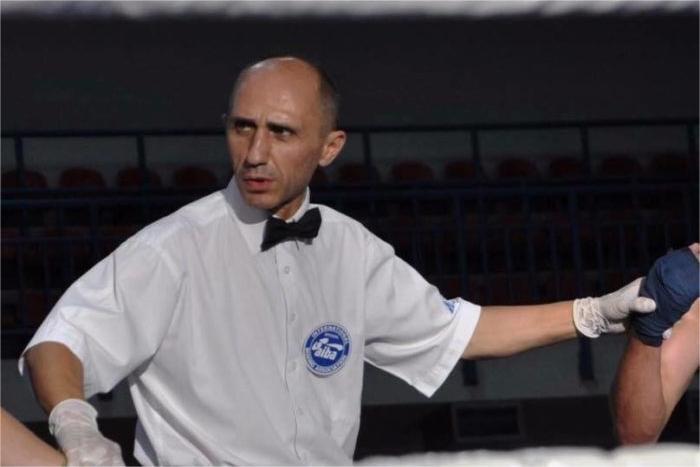
Dmytro is 60 years old. He is a famous boxer, a well-known coach, a referee, and the secretary of the Mariupol Boxing Federation. When the full-scale invasion began, he was at a competition in Lutsk. To save his family who remained in Mariupol, he broke into the besieged city in early March. However, leaving was not easy. It took ten days to find fuel for the car. In the meantime, Dmytro and his family volunteered.
“My daughter, husband and I collaborated with the volunteer center, helping the residents of Mariupol survive that hell,” said Dmytro’s wife, Svitlana Shurda, in June 2023.
On March 16, Svitlana and her daughter managed to leave Mariupol. Dmytro did not leave: he gave up his seat to women and children — and miraculously eight people fit in the car. He promised to leave at the earliest opportunity.
“We rode packed like sardines. But we were very grateful to God that we managed to get out. We drove to Berdiansk and spent the night there. Then to Tokmak, where we also stopped for the night. And on the third day we reached Zaporizhzhia,” recalled Dmytro’s daughter Nika.
When Svitlana and her daughter Nika escaped from the occupation, they learned that Dmytro was in captivity.
“When my husband tried to leave Mariupol on March 17, 2022, he was detained at a checkpoint,” Svitlana said. In an interview with TSN, she suggested that he was detained because they found a photo of a red-and-black flag on his phone. He has been in captivity since then.
In April, Dmytro managed to contact his family by phone. He was in a hospital in Donetsk with a heart attack. “After that, a long treatment and rehabilitation are needed, but he was returned to the colony again,” said Svetlana. “While Dmitry was in captivity, his daughter Nika became the European champion in diving among juniors, but her father found out about it six months later.”
In the spring of 2023, the family saw a video of the captive Dmitry on the Internet. In it, he sends greetings to his family and fellow boxers. He says that he is fine. But, as Roman Makarenko, who was then in captivity with Dmitry and was later released, told reporters, Shurda was already feeling very bad at that time:
“It was 2023. Everything was bad, very bad with him. He had two strokes there. They treated him, and an ambulance came to him. It happened when he was still in Horlivka. And then, when we were brought to Torez, he was already diagnosed with tuberculosis and HIV infection.”
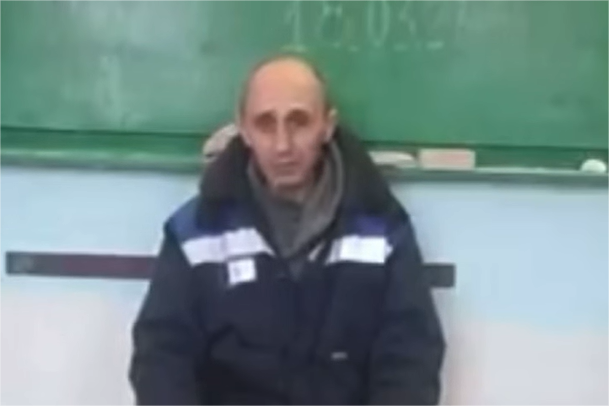
In the fall of 2024, Dmitry Shurda was transferred to the Altai Territory of the Russian Federation, and later to the Smolensk region — to SIZO No. 2 in the city of Vyazma. Marine Oleksandr Kim returned from captivity during one of the last exchanges. He said that he had seen Dmytro, and his condition was critical: “There are about 30% of seriously ill prisoners there who receive medication in the morning during the morning check-up. And I will tell you frankly: his condition is the worst compared to all the others.”
“International Humanitarian Law prohibits the occupying party from persecuting and taking civilians prisoner, as well as from relocating them into the depths of its own territory. Despite this, according to the director of the Kharkiv Human Rights Group, Yevhen Zakharov, at least 15,000 Ukrainian civilians are held captive in the Russian Federation and in the Ukrainian territories occupied by it. Some of them are undergoing trials. They are tried under general criminal articles—usually terrorism, espionage, etc. After a verdict, the chances of finding the civilian’s whereabouts, finding out about their condition, and passing something on through a lawyer increase. However, the majority of illegally detained civilians remain behind bars without trial or sentence.
‘The majority who are not convicted, both military and civilian, are held in incommunicado captivity, without any contact with the outside world,’ said Yevhen Zakharov. ‘The lion’s share of them are constantly subjected to torture and cruel treatment in various forms. And if prisoners of war can still count on being released through an exchange, then civilians have little chance of being released in this way… Ukrainian civilians are being held in captivity without any legal grounds, and the only possible correct solution would be to release them without any prior conditions.’
Many Ukrainian prisoners have critical health problems, which should be a separate reason for their immediate release. However, people continue to be held behind bars and tortured. We wrote about the deaths in captivity of civilian prisoners — Viktoria Roshchina, Yevhen Matveyev, Oleksiy Vynnychenko, Oleksandr Markov. According to the Ombudsman Dmytro Lubinets, at least 406 Ukrainian prisoners of war died from torture in captivity — both military and civilians. Meanwhile, the Office of the Prosecutor General reported on pre-trial investigations into the deaths of 311 prisoners in enemy places of detention.
On 13 July, the European Union and Ukraine issued a joint statement on civilians held in Russian captivity. ‘We urgently call on Russia and Belarus to ensure the immediate, safe and unconditional return to Ukraine of all arbitrarily detained, unlawfully deported and forcibly transferred Ukrainian civilians, including children. We strongly condemn Russia’s systematic refusal to confirm the identity, location, and fate of Ukrainians held in captivity or reported missing, in violation of its obligations under international humanitarian law and international human rights law, and call upon all States to intensify coordinated pressure on Russia to fulfil these obligations without further delay. ’