Russia’s illegal ‘trials’ of Ukrainians seized on occupied territory still seem copy-pasted from the same basic template, however the sentences passed have increased dramatically. In the last week alone, two men from occupied Zaporizhzhia oblast – Denys Zhirakov and Serhiy Moskalenko – received 24- and 25-year sentences, respectively, although none of the attacks which they had alleged ‘planned’ had taken place.
The ‘trials’ took place at the Southern District Military Court in Rostov, rather than on occupied territory. This did not, however, make them any easier to monitor. All hearings would have been behind closed doors and the men’s names were concealed on the schedule of hearings. The list of violations of the men’s rights is much longer, with nothing about these trials with predetermined outcomes seriously resembling trials, with Russia, as occupying state, in any case prohibited by international law from using Russian legislation against Ukrainians abducted from occupied territory.
Serhiy Moskalenko b. 26 November 1990 is from Berdiansk, one of the cities in Zaporizhzhia oblast which came under Russian occupation at the beginning of Russia’s full-scale invasion of Ukraine. In as much as any detail of the indictment, can be trusted, he has been in Russian detention since July 2024 at the earliest.
He was accused of planning a series of what Russia’s called ‘terrorist attacks’ against the Russian-installed employees of the occupation police and members of the Russian ruling ‘United Russia’ party. All of this was, purportedly, on instructions from Ukraine’s Military Intelligence, or HUR.
The court’s press service was either in a hurry when they reported the sentence with some odd time discrepances or was simply intent on repeating the allegation that Moskalenko had been helping Ukraine’s Military Intelligence.
In September 2022, he was claimed to have, “at the request of a person he knew”, taken explosive substances and devices out of a hiding place and taken these to a garage at his dacha where he held them until 22 July 2024. Then at the end of 2023, Moskalenko had been asked to provide help to Ukraine during a phone call with an officer from HUR and had agreed. On 1 July 2024, he was supposed to have received an instruction to kill “a member of the ‘United Russia’ party by detonating a homemade explosive device. On 11 and 16 July 2024, he allegedly carried out surveillance of the occupation police and the territory of the occupation Berdiansk inter-district court.
He was claimed to have been stopped from carrying out “the crime” because he was detained on 22 July 2024.
If any part of this is true, the impugned actions would be those of a partisan, showing resistance against the armed invaders of his country and doing so by planning an attack on entirely legitimate targets. Although not to be expected that the aggressor state would view resistance kindly, the charges are absurd. Moskalenko had been added to Russia’s so-called ‘register of terrorists and extremists’ long before any verdict and was charged under Russian ‘terrorism’ legislation and with ‘treason’. The latter, under Article 275 of Russia’s criminal code, is purely because Russia has foisted its citizenship on Ukrainians living on occupied territory. He was charged with ‘involvement in a terrorist organization’ (Article 205.4 § 2), ‘undergoing training in terrorist activities’ (Article 205.3); ‘preparing a terrorist attack’ (Article 205 § 3b); and possession, transportation, etc. of explosives (Articles 222.1 § 3c and 222.1 § 4 – 2 episodes).
All of these cases end in ‘convictions’ and this was no exception. Serhiy Moskalenko was sentenced to 25 years’ maximum-security imprisonment, with the first five years in a prison, the harshest of Russian penal institutions. A fine of 800 thousand roubles was also imposed. The sentence was handed down by ‘judge’ Denis Vitalievich Vovchenko from the Southern District Military Court after enough hearings to suggest that Moskalenko rejected some or all of the charges.
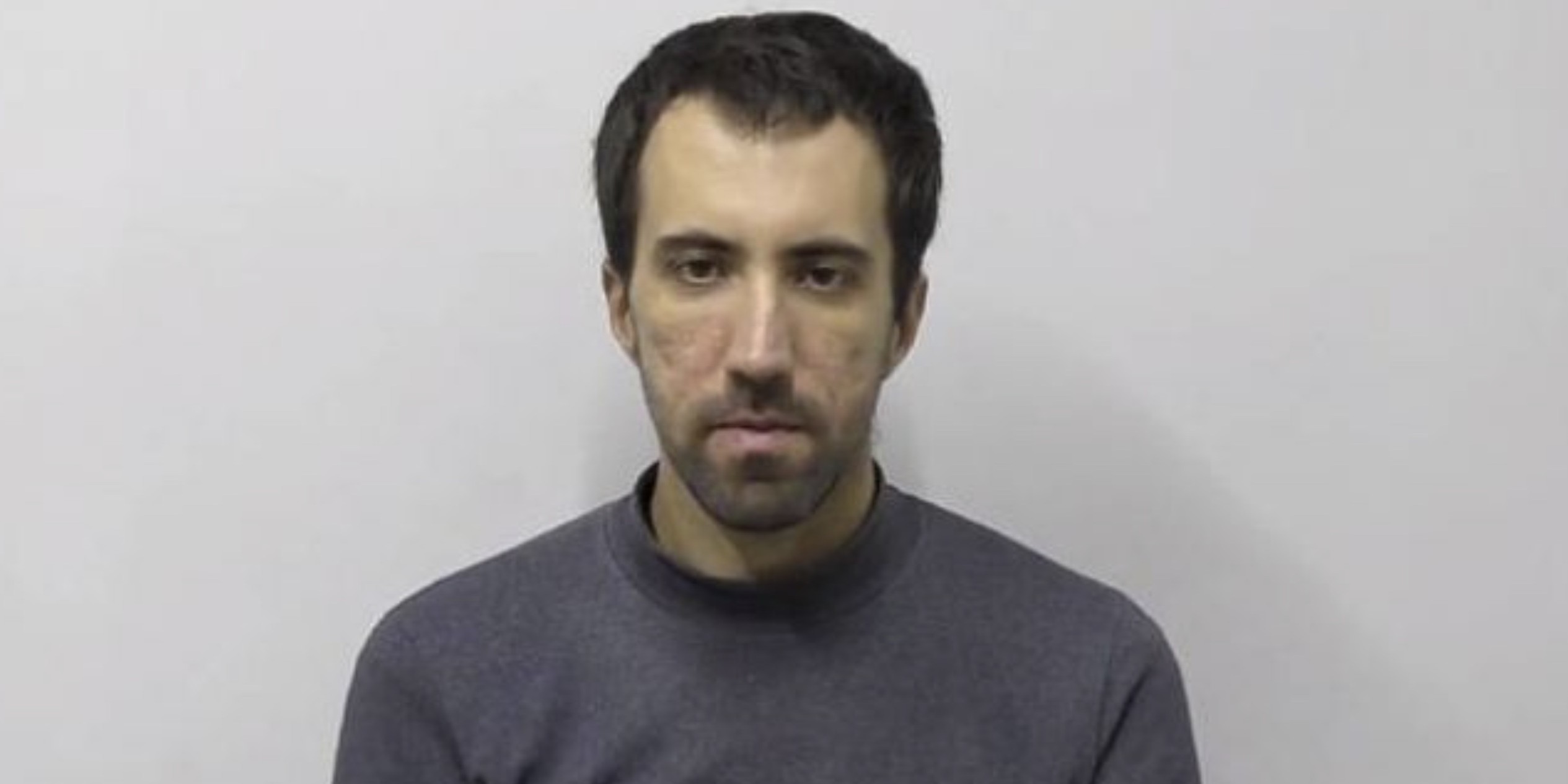
This is important as a video was produced, probably during the period which can last months or years when Moskalenko was held incommunicado, before charges were laid. On it, Moskalenko ‘repents’ and advises others not to help Ukraine. Even looking at him, it is clear that he is reciting words that he is being forced to say. From other political prisoners, we know that such videoed ‘confessions’ and / or ‘repentance’ are extracted through savage torture and threat of its repetition. We are talking about the kinds of torture, such as electric currents passed through the body while water is being poured on it, or from a person’s genitals, which will not kill, but will cause unendurable pain. Nor are only the so-called 'investigators', or the FSB who abduct the person and hold them incommunicado complicit in this. It is clear that the 'prosecutors' and 'judges' are also involved. Even where such ‘confessions’ are later retracted, and the person spells out to the court just how they were extracted, this never makes any difference to the verdict and sentence.
See also:
Denys Zhirakov Russia passes horrific 24-year sentence against Melitopol man ‘for possession of explosives’