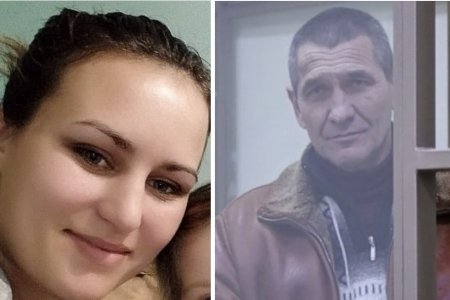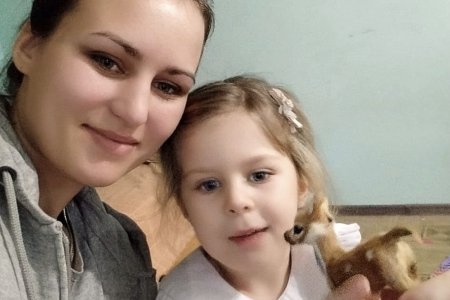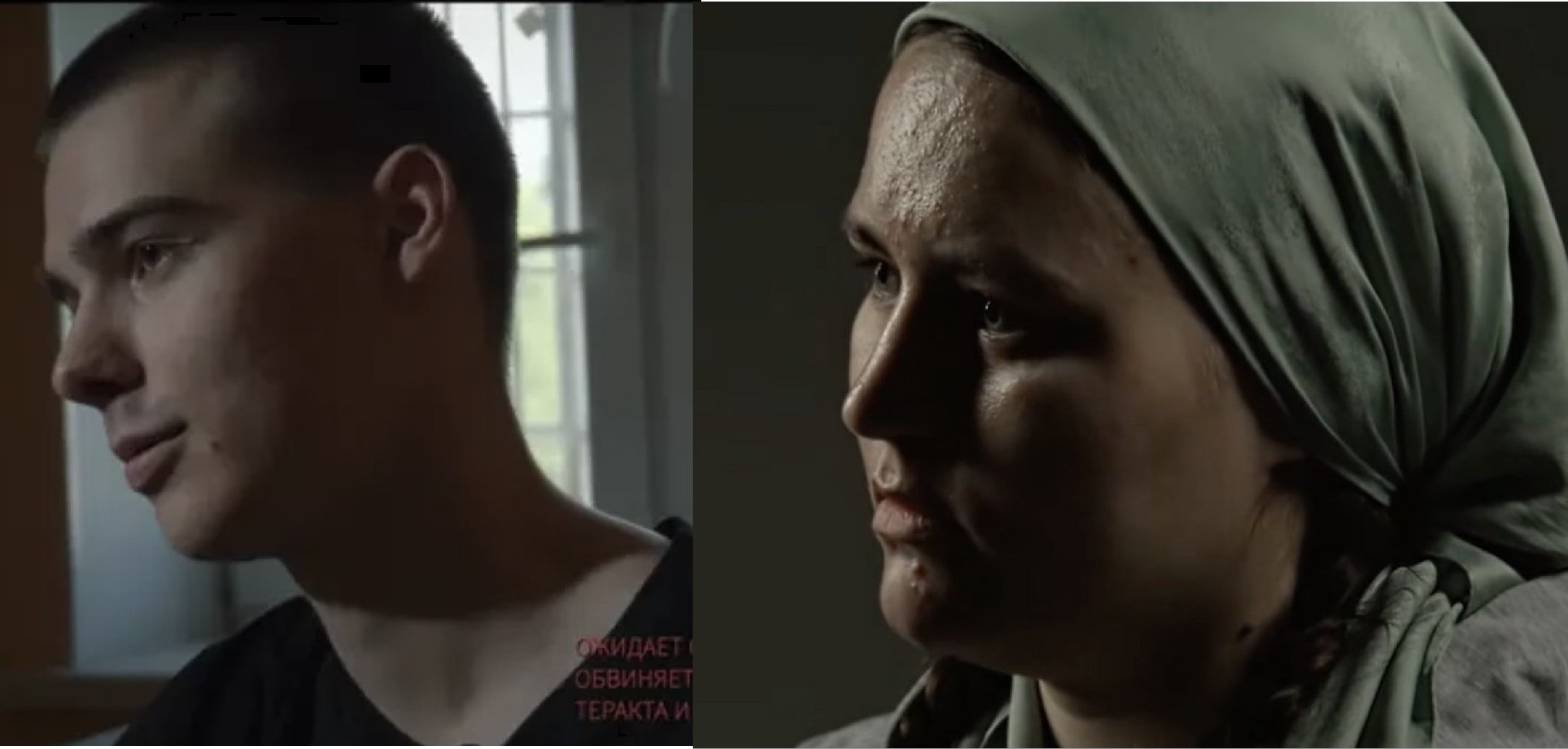
News has emerged of a very young Ukrainian held prisoner in occupied Crimea and either facing or already sentence to years in Russian captivity. Nothing at all was known of 20-year-old Herman Tomas until he was shown on the propaganda film produced for the state-controlled Rossiya 1 TV channel and first broadcast on 13 November 2026. The other Crimean used for Russian propaganda was Sakha Manhubi, the 26-year-old mother of two, whose ‘arrest’ was announced by the FSB around 18 months after they abducted her and held her incommunicado.
Both young people have been in Russian captivity, probably without access to an independent lawyer, for a long time. That and the experience of those political prisoners, like journalist Vlad Yesypenko, who were earlier filmed being interrogated or ‘interviewed, give every reason for assuming that the young Crimeans were forced not only to take part but to learn their supposed ‘testimony’ off by heart..
This was the second part of a film by Andrei Medvedev, a Russian state media propagandist and politician. The first, entitled ‘Treason’, showed several Russians, convicted of ‘treason’ and ‘terrorism’, with this, apparently, shown in schools.
Part II focuses on two Crimeans and two Russians, with the claim repeated several times that the young people had been working with Ukraine’s Security Service [SBU]. This is, in fact, a standard assertion in most cases involving ‘treason’, ‘sabotage’ and ‘terrorism’ charges since at least 2022. So too is the attempt to present any such cooperation as having been for money. In this case, Medvedev’s title is ‘Treason. Expendable Material’, with this Russian state-sponsored propaganda clearly trying to suggest that it was Ukraine’s SBU that was treating the young people as ‘expendable’.
Herman Tomas is only 20 now and was, therefore, a child when Russian invaded and annexed Crimea. He is heard asserting that he was contacted by somebody from SBU who suggested that he work for them to earn some money. He says that he had needed money after his father died, with this, seemingly, in order to take his family from Crimea to a country in Europe. The young man’s mother is also shown, with her words suggesting that a sentence against her son has already been passed, but without any details. She says that he was constantly talking about how he didn’t like living under occupation and that he dreamed of leaving Crimea.
The film’s authors even decided to dabble in psychology. They claim that Herman Tomas’ father beat him. with this adversely affecting his psyche. They also suggest that his hatred of Russia arose after his father went bankrupt which he blamed on the new occupation regime.
If the aim was to present the young man as having only had a mercenary motive, this went wrong. At one point, he says: “I was born in Ukraine. And the minister, in my opinion, is a person who came from outside to me who impose their laws.”
The unnamed ‘minister’ is the supposed target of an alleged plot in which the young man was accused of being involved. The prosecution claimed that he had collected explosives from a hiding place and kept them at home. He was also alleged to have carried out surveillance of an unnamed occupation official and looked for a place to plant a bomb. It was further claimed that the SBU were planning to use the young man to carry the bomb which they would detonate by remote control, killing him as well. There has never been anything like this, but it clearly suited the Russian narrative, which also showed young Russians who were claimed to have carried out acts of ‘terrorism, sabotage and treason’ on the commissioning of Ukraine’s SBU.
The If there were no war Project reported on 15 November 2026, after the film was broadcast, that Herman Serhiyovych Tomas (b. 5 February 2000) was charged, under Russian legislation, with ‘treason’ (Article 275 of Russia’s criminal code); with ‘terrorism’ (Articles 205 § 1 and 30 § 1). They identify the court which passed sentence as being the Southern District Military Court in Rostov but do not say when he was convicted, and how long the sentence was. The charges have become common, making it difficult to track down the case given that the court conceals names in almost all cases. The monitors can say only that he was arrested no later than March 2026. This, however, is only because he was added to the notorious Russian [Rosfinmonitoring] ‘Register of terrorists and extremists’ on 24 March 2026. It is, unfortunately, quite possible that he was effectively abducted and held incommunicado, without any formal charges or status, much earlier.
Sakha Manhubi (b. 28 January 2000) is called ‘Oleksandra Laptieva’ in the film, although this is not the name by which she is known. According to the If there were no war Project, Sakha’s father, Andriy Laptiev was also taken prisoner in October 2026, almost two years after his daughter was abducted by the FSB. Nothing is currently known about the charges against him.
The film claims that Sakha Manhubi was commissioned by Ukraine to ‘spy’ on Russian boats and military transport in occupied Kerch and blames her for the death of the captain of a Russian boat. Here too, it is asserted that she “received financial remuneration for her actions.” The FSB claim that the young woman “coordinated a missile strike” on the Kavkaz port in Krasnodar region. How she is alleged to have done this will probably remain a mystery as all these ‘trials’ on ‘state treason’ charges are held behind closed doors. She is also supposed to have gathered information about the places of deployment of military sites and air-control systems in occupied Crimea and passed this to Ukraine’s Military Intelligence [HUR].
At present, the only charge against her is of ‘treason’, under Article 275 with this rather suggesting that the claims about coordinating attacks, etc. are for their propaganda effect, and in no way able to be substantiated.
Sakha Manhubi is divorced and was bringing up very small children (aged 4 and 5 when she vanished in November 2024.) She appears to be the Russians’ first Karaim political prisoner.
Initially the young woman simply vanished on 2 November 2024, however her mother soon learned that she had been taken away by men in masks who provided no explanation but were clearly from Russia’s FSB. They had carried out a search of the apartment before taking the young woman away. The family were told, unofficially, by the occupation ‘police’, that Sakha was in FSB custody, although all formal applications for information were either unanswered or received fob-offs.
It became known after a few months that the young woman was held in SIZO No. 2, one of two remand prisons which the Russians opened after the full-scale invasion of Ukraine. SIZO No. 2 is believed to be under the control of the FSB, and to be used for political prisoners, including very many who are held incommunicado.
It was only at the end of January 2026 that the Russians officially ‘remanded Sakha Manhubi in custody, and a full 18 months before the FSB claimed on 8 April 2026 that they had “detained an agent of Ukraine’s Security Service” and even produced a video in which the young woman, described as “an agent of Kyiv” was seen providing a ‘confession’ which corresponded to the FSB allegations.